


More news on this day
President Donald Trump cut short a weekend stay at Camp David and returned to Washington, D.C., on Saturday, September 19, 2026, as new U.S. security messaging and fresh regional attacks underscored mounting volatility across the Middle East.
Get the latest news straight to your inbox!
A sudden return to Washington as alerts and attacks ripple across the region
Public schedule guidance indicated the president had originally planned to remain at the Maryland retreat through Sunday before returning to the White House. Coverage of the schedule change placed Trump’s return on Saturday evening, with a public arrival in the capital after the itinerary was revised during the day.
The early departure coincided with heightened U.S. caution for Americans in the region. Published coverage described new State Department security messaging urging greater vigilance and warning of potential travel disruptions tied to the evolving security environment.
Reports also pointed to renewed hostilities involving Yemen’s Houthi movement, including an attempted strike toward Riyadh, adding to a pattern of tit-for-tat pressure points that have increasingly involved Gulf air defense, shipping concerns, and U.S. diplomatic posture.
Camp David’s role in a presidency shaped by crisis management
Camp David has traditionally served as a secluded venue for sensitive diplomacy and security briefings, but it has also been used by presidents as a place to conduct high-level meetings away from Washington’s daily churn. In Trump’s second term, the retreat has repeatedly appeared as a backdrop for national security decision-making tied to the Middle East.
In late July, publicly posted materials from the federal record and White House releases documented Trump convening senior officials at Camp David, reflecting the administration’s effort to show coordinated messaging on domestic priorities and foreign policy. That meeting occurred amid ongoing conflict dynamics that have remained a central issue for the administration through 2026.
While the White House did not publicly connect the weekend schedule change to any single trigger, the timing highlighted how quickly Middle East developments can compress presidential calendars, pulling attention back to Washington when real-time decisions and communications become more consequential.
What “rising tensions” means for travelers right now
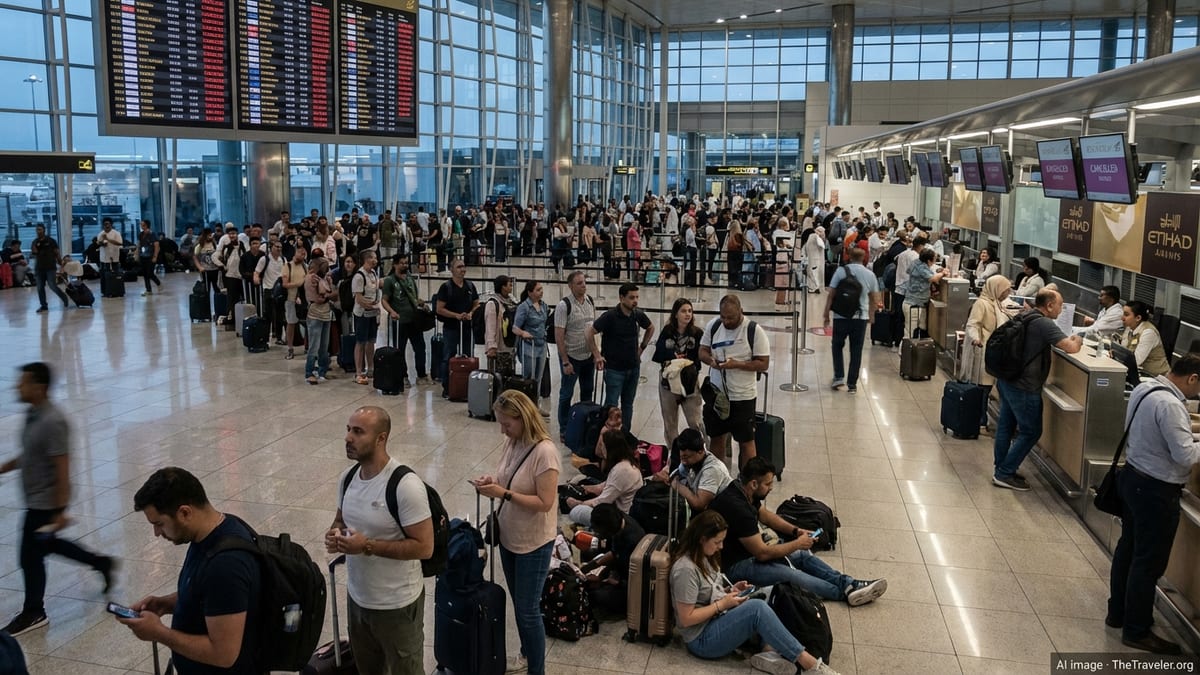
For travelers, the most immediate takeaway is the practical impact of security alerts: disruptions can follow quickly, including tightened screening, sudden flight reroutes, and changes to embassy and consular operating posture. Recent coverage emphasized that U.S. messaging has focused on heightened vigilance and readiness for travel interruptions in parts of the region.
Americans already abroad often face a different risk profile than those planning to depart. In periods of escalation, airline schedules can shift with little notice, and travel insurers may treat incidents differently depending on the wording and date of official advisories. Travelers typically benefit from documenting reservations, keeping alternate routing options in mind, and ensuring they can access official communications from airlines and U.S. government channels without relying on a single platform.
For those with upcoming itineraries to major hubs such as Riyadh, Jeddah, Tel Aviv, Dubai, Doha, or Amman, the travel question is less about a single incident and more about the direction of the news cycle. Even when commercial airports remain open, regional airspace constraints and force-protection measures can cascade into delays across international networks.
Broader context: a persistent Iran-centered conflict and regional spillover
The schedule change arrived against the backdrop of a conflict environment that has repeatedly expanded beyond one front. In recent weeks, major outlets have described an administration weighing next steps in an Iran-centered war that has alternated between intense military activity and attempts at de-escalation, alongside a longer-running effort to shape a post-war regional strategy.
In parallel, reporting has described continued U.S. force posture and defense planning in the region, reflecting the reality that escalation risks do not always originate from direct U.S.-Iran exchanges. Proxy activity and regional rivalries, including attacks tied to the Houthis, can create flashpoints that pressure decision-makers in Washington as well as capitals across the Middle East.
Energy markets and commercial shipping remain key secondary arenas. While many travelers experience the conflict indirectly through airfare changes and airport security measures, broader instability can feed into fuel-price volatility and airline cost pressures, shaping the travel landscape beyond the region itself.
What to watch next for travelers and the wider aviation network
Near-term developments to watch include whether U.S. advisories are updated, expanded, or narrowed in the coming days, and whether major carriers adjust routes that pass near sensitive air corridors. A shift in the tone of official messaging, especially around travel disruptions, often precedes operational changes that passengers feel first as delays and rebookings.
Travelers should also pay attention to whether regional states escalate air defense responses or impose temporary airspace measures that affect overflight routes. Even when a traveler’s destination is outside the immediate area, global networks can be affected if carriers must reroute long-haul flights or adjust crew scheduling around longer flight times.
For now, Trump’s shortened Camp David stay serves as a signal of how quickly Middle East events can intensify on a weekend and how rapidly the U.S. government can shift into a more urgent posture, with ripple effects that reach travelers through schedules, security processes, and the broader risk environment.