


More news on this day
Travel disruption risks for flights to and within Saudi Arabia increased over the weekend after published coverage described a hostile aerial threat near Riyadh and smoke seen in the vicinity of King Khalid International Airport, prompting renewed attention to airspace and airport-security conditions across the region.
Get the latest news straight to your inbox!
What happened and why it matters for travelers
Multiple news organizations reported that an overnight alert referenced a hostile aerial threat near Riyadh, followed by reports of explosions in the area and a plume of smoke visible near King Khalid International Airport on Saturday, September 19, 2026. Separate coverage described Saudi Arabia intercepting an attempted ballistic missile attack on Riyadh, framing the incident as part of a broader escalation linked to the Houthi movement in Yemen.
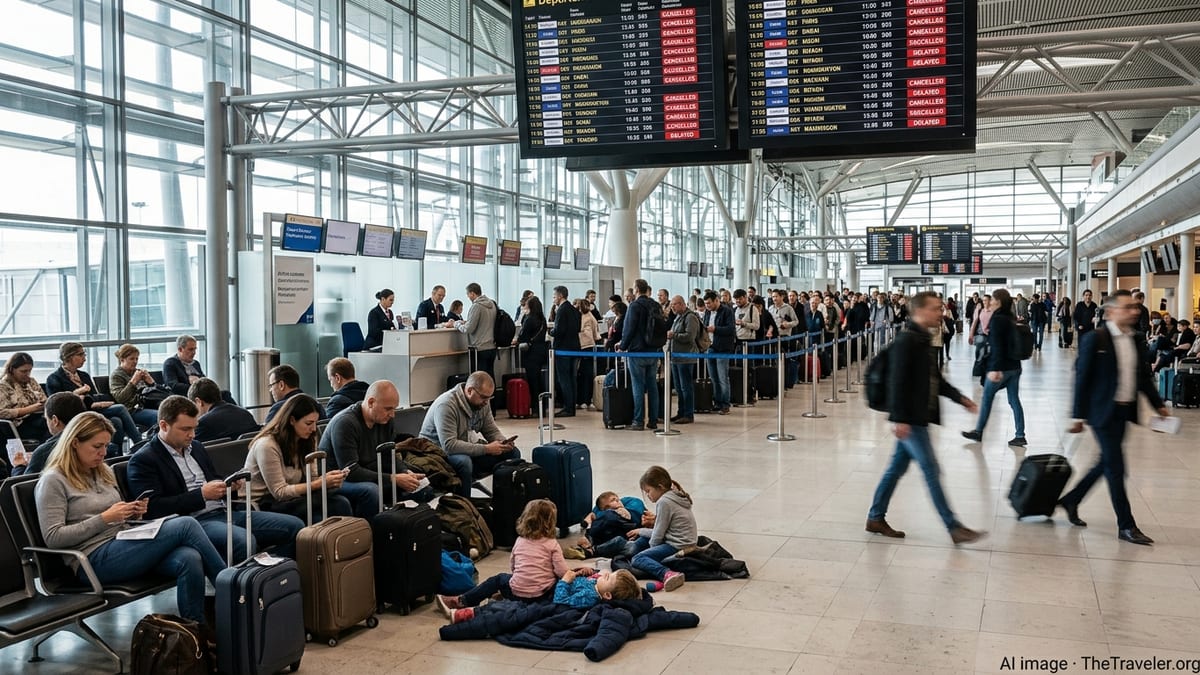
For passengers, the immediate consequence of an incident near a major hub is rarely a blanket shutdown of air travel. More often, disruption appears as rolling delays, temporary ground stops, altered arrival and departure flows, and heightened screening that can cascade through airline networks. Riyadh is a central connector for domestic services and for international traffic across the Gulf, South Asia, and Europe, so even short-lived operational constraints can have knock-on effects well beyond one airport.
Reports also noted visible operational issues tracked by flight-monitoring services around the time of the incident. While such trackers are not official sources, they can reflect real-time congestion when arrivals are sequenced more conservatively or departures are held for security or air-traffic reasons.
Airspace risk advisories are already in place
Government and aviation-safety messaging already in circulation underscores that the risk environment is not new. The U.S. Department of State lists Saudi Arabia at Level 3, “Reconsider travel,” and highlights that threats can include missiles and unmanned aerial systems. The advisory also points travelers to aviation risk notices affecting civil aviation in the broader Persian Gulf and nearby waters.
In Europe, the European Union Aviation Safety Agency conflict-zone information has included an information note for Saudi airspace, advising civil operators to factor potential risk into routing and risk assessments during the current validity period. In parallel, some national aviation authorities have issued operator-facing notices urging robust risk assessments before operating into Saudi airspace, a signal of heightened caution rather than a universal prohibition.
For most travelers, these advisories will not translate into immediate cancellations on every route. Instead, they can influence airline planning in ways passengers feel indirectly, including longer routings, changes to preferred alternates, and schedule padding to protect on-time performance.
Where disruptions are most likely to show up
Saudi Arabia’s largest passenger gateways remain Riyadh (King Khalid International), Jeddah (King Abdulaziz International), and Dammam (King Fahd International), with major domestic and regional connectivity also flowing through airports in the southwest. Published UK government travel guidance has highlighted that airports nearer the Yemen border can be temporarily closed and that cities and infrastructure sites have been targeted since mid-2026.
That regional-risk framing matters because disruption is not confined to the precise location of a single incident. Airlines and air-traffic managers may adjust flows across a wider area to keep aircraft clear of potential threat corridors, particularly during periods when alerts are active. Travelers can see this as extended taxi times, airborne holding, last-minute gate changes, or diverted flights that land at alternate airports before continuing.
Even when airports remain open, additional security measures can slow processing. That can be most noticeable on domestic connections, where travelers sometimes plan tighter turnarounds than on international itineraries. When an alert occurs, those tight connections can become more fragile.
What travelers should do before flying
Passengers with upcoming trips to Saudi Arabia should monitor their airline’s app and text alerts closely, because schedule changes during security incidents are often implemented with short notice. It is also worth checking the departure airport’s flight-status tools and the arrival airport’s public flight boards for the most current operational picture, especially for early-morning departures when overnight developments can affect the first wave of flights.
Given the possibility of intensified screening, travelers should plan extra time at the airport. That includes allowing more buffer for document checks and any added access controls for terminals or curbside drop-offs. For connecting itineraries, choosing longer layovers can reduce the chance of misconnects if departures are held or arrivals are metered.
It can also help to review ticket conditions. When disruptions are linked to security or airspace constraints, airlines sometimes offer rebooking flexibility on specific dates or routes. When that flexibility is offered, the fastest path to a workable itinerary is often self-service rebooking in the airline app.
What to watch next
Risk levels for flight disruption are likely to track the pace of escalation. Recent coverage has described an intensifying pattern of missile and drone activity in the region, along with pressure on air defenses and a broader security context that has affected critical infrastructure. In practical travel terms, the key variable is whether further incidents occur near major hubs such as Riyadh and Jeddah or along heavily used air corridors.
Travelers should also watch for updates from official channels that can affect aviation operations, including new or extended notices to air missions and conflict-zone guidance. Those updates can influence how airlines route flights, what alternates they plan, and whether schedules are reduced as a precaution.
For now, published coverage indicates airports and airlines are continuing to operate, but with elevated sensitivity to alerts. That means travelers should prepare for punctuality swings, keep itineraries flexible where possible, and treat flight-status notifications as essential trip planning tools in the days ahead.