

More news on this day
Spring break 2026 is kicking off under intense strain at U.S. airports, as Transportation Security Administration staffing shortages and a wider Department of Homeland Security funding lapse collide with record passenger volumes, producing hours-long security lines and a growing wave of delays and missed flights.
Get the latest news straight to your inbox!
Shutdown, Staffing Gaps and Record Demand Converge
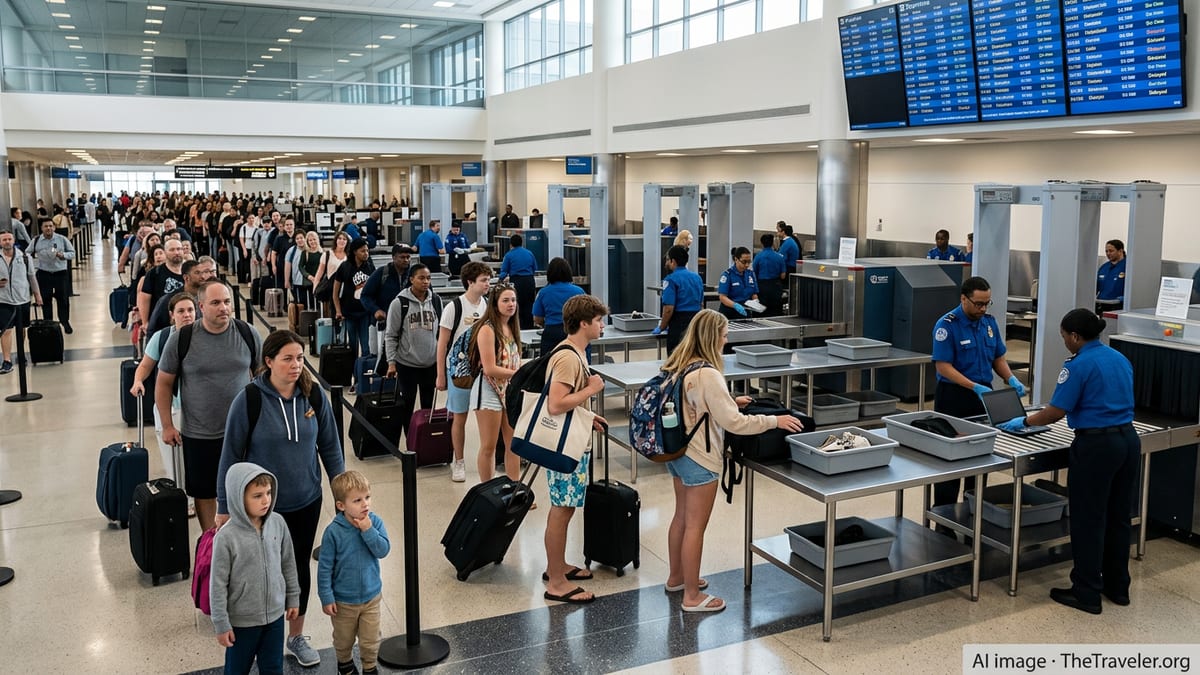
Published coverage in early March indicates that a partial Department of Homeland Security shutdown that began in mid-February has forced thousands of TSA officers to work without pay or reduce their hours, shrinking the screening workforce just as spring break crowds surge through major hubs. Checkpoint queues at airports including New Orleans, Houston, Atlanta and Denver have stretched into parking garages and ticketing halls, with some travelers reporting waits of two to three hours at peak times.
At the same time, industry data compiled by Airlines for America points to another record season for U.S. air travel this spring, with more than 170 million passengers expected to fly, an increase on last year’s already high totals. TSA checkpoint volume trends released by aviation trade groups show that daily screenings are running several percentage points above 2025 levels, reflecting both strong domestic demand and a rebound in international leisure travel.
The pressure is uneven but widespread. Reports from regional outlets suggest that some mid-sized airports, such as Richmond and San Antonio, have so far managed to avoid the worst bottlenecks, while large connecting hubs and popular leisure gateways are struggling to keep up. Even where security lines are moving, terminals and curbside areas are crowded as airlines add capacity to sun destinations and college spring break hotspots.
Airport and airline briefings highlight that this spring’s disruption is not being driven by weather alone. Recent winter storms and airspace constraints have compounded the problem, but the underlying issue remains a mismatch between the number of screeners available and the volume of passengers arriving in concentrated morning and midday waves.
Where Lines Are Longest So Far
Reports from travel outlets and local newsrooms describe particularly severe congestion at airports serving major tourism and convention markets. In New Orleans, where spring break overlaps with cruise departures and events, social media images have shown TSA lines looping through the terminal and into adjacent parking structures, with reported waits exceeding three hours during peak surges.
Houston’s two primary airports have also seen significant strain. Accounts from travelers and airline-focused forums describe security queues at William P. Hobby and George Bush Intercontinental building quickly in the early morning as checkpoints open, with staffing limits making it difficult to clear the rush before the next bank of departures. Similar patterns have been noted in Atlanta and Charlotte, where early-morning waits have approached or exceeded 45 minutes on some days even before irregular operations set in.
In contrast, some airports are reporting heavy crowds but relatively stable processing. Dallas Fort Worth, which expects several million passengers over the core March spring break window, has so far avoided the worst of the shutdown-related slowdowns, according to regional business coverage. Tampa International and other Florida gateways are warning of crowded terminals and recommending early arrivals but have not consistently reported multi-hour waits.
Experts caution that conditions are fluid. Because TSA staffing and passenger loads vary by day and time, a smooth experience one morning can give way to unexpected delays the next, especially if sick calls spike among screeners or if additional lanes cannot be opened quickly. Travelers are urged to treat recent smooth trips as the exception rather than a guarantee.
How Much Extra Time Travelers Really Need
Travel professionals and consumer advocates are converging on a clear message for spring break 2026: build in much more buffer time than usual. Many airlines, particularly those with large operations at affected hubs, are now advising passengers on domestic flights to arrive at least three hours before departure, and even earlier for international itineraries or large families traveling with checked baggage and strollers.
Data-driven wait-time dashboards from TSA and U.S. Customs and Border Protection show that early-morning periods, typically between 5 a.m. and 9 a.m., remain the most vulnerable to long lines. Flight schedules at many hubs are heavily banked in these windows, meaning thousands of passengers converge on checkpoints almost simultaneously. If just a few lanes are short-staffed, small delays quickly cascade into missed flights and same-day rebooking challenges.
Travel experts suggest that passengers consider shifting to less congested departure times where possible. Midday and late-evening departures at some airports are showing significantly shorter waits, although that pattern can vary by location and day of the week. Those who cannot move their flights are being encouraged to complete as many pre-travel tasks as possible in advance, including online check-in, seat selection and baggage fee payment, to avoid additional queues at the airport.
Families and infrequent flyers are being urged to budget extra time beyond general recommendations. Additional minutes spent organizing liquids, electronics and travel documents at the front of the line can slow throughput considerably, and travelers unfamiliar with current screening rules are more likely to be pulled aside for secondary inspection, further extending their time at security.
Expert Strategies to Move Through Security Faster
Despite the shortages, travel specialists say individual choices can still meaningfully reduce the risk of missing a flight. One priority recommendation is to pack with security in mind. Keeping liquids and gels within current size limits, placing them in a single transparent bag, and organizing electronics so that laptops and tablets are easy to remove when required can speed up the entire line.
Seasoned travelers also emphasize the value of traveling with carry-on luggage only, where feasible. With many flights operating near capacity and baggage systems strained, avoiding checked bags eliminates one potential chokepoint and reduces the need to arrive even earlier for bag drop. For those who must check luggage, airlines advise using off-peak counters where available and confirming cut-off times before leaving home.
Enrollment in trusted traveler programs such as TSA PreCheck and Global Entry has grown substantially in recent years, and publicly available information shows that federal agencies have moved to restore and maintain these services after briefly suspending them during the current funding dispute. However, travel writers caution that these lanes are not immune from disruption. In some airports, PreCheck lanes have been closed or merged into standard lines when staff are reassigned, meaning participants should still allow extra time.
Experts also highlight the importance of real-time information. Official airport social media feeds, airline apps and government wait-time tools can provide last-minute updates on checkpoint congestion, terminal changes and gate assignments. Keeping notifications turned on and checking these channels before leaving for the airport allows travelers to adjust their departure time from home or hotel when lines spike unexpectedly.
Planning Ahead for the Rest of Spring Break Season
Industry analysts expect the current turbulence to persist at least through late March, when public school holidays peak in many parts of the United States. Airlines for America forecasts sustained high passenger volumes throughout the month, while travel trade groups argue that staffing at TSA and related agencies has not kept pace with demand growth, especially during peak holiday periods.
Some relief may come if the federal funding impasse affecting Homeland Security is resolved and back pay is restored to frontline workers, which could ease absenteeism and allow more full staffing of security lanes. In the meantime, airports and local organizations are focusing on short-term measures, such as volunteer and community support for unpaid workers, to keep checkpoints functioning and reduce the risk of sudden closures.
Looking ahead, aviation advocates are renewing calls for long-term investments in security staffing, technology and infrastructure to prevent recurring bottlenecks each holiday season. Proposals include adding more full-time TSA officers, expanding automated screening lanes, and enhancing coordination between airports, airlines and federal agencies so that schedules and staffing can be better aligned with demand spikes.
For travelers preparing to fly in the coming weeks, the practical takeaway is straightforward: assume that airport security will take longer than usual, use every available tool to stay informed, and make conservative choices about timing and logistics. In a spring break season defined by surging demand and constrained resources, extra preparation remains the most reliable way to keep a vacation from being derailed before it even leaves the ground.