


More news on this day
Turkish Airlines has launched a sweeping leadership reshuffle in Istanbul, appointing a new chief executive and board chairman in a move that observers say is designed to accelerate high-tech innovation and raise the standard of comfort in every seat across its global fleet.
Get the latest news straight to your inbox!
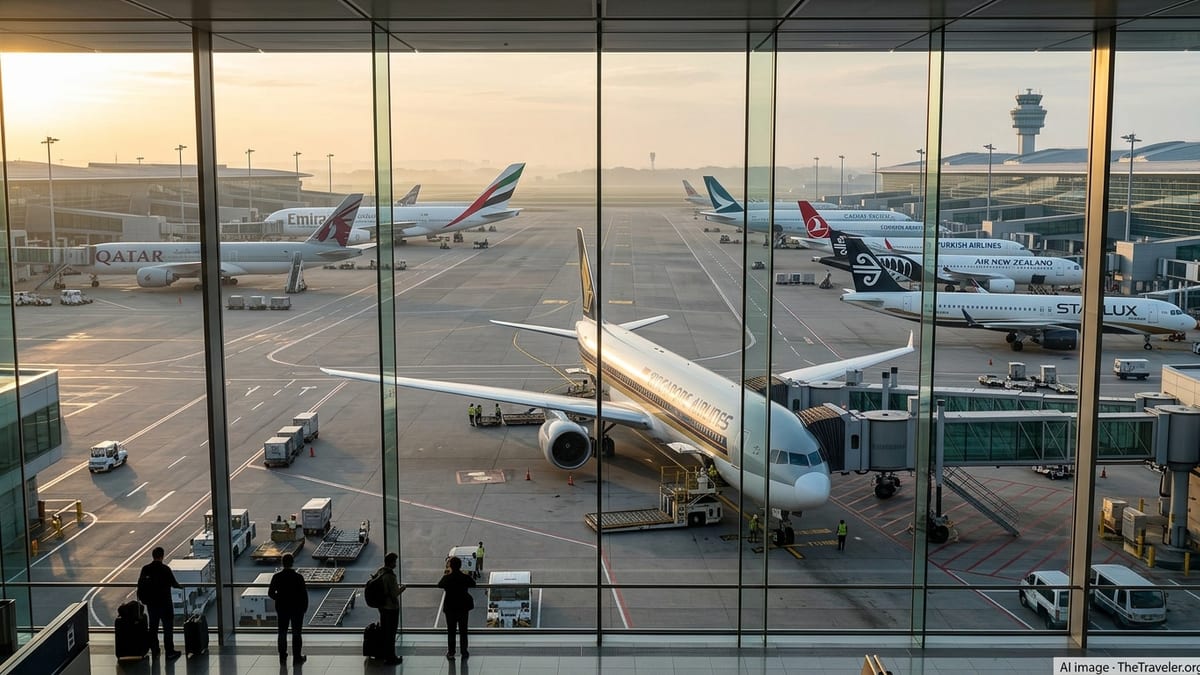
Management Shake-Up at Türkiye’s Flagship Carrier
The airline’s board recently approved the appointment of Ahmet Olmuştur as chief executive officer and Prof. Murat Şeker as chairman of the board and executive committee, according to disclosures filed with Türkiye’s Public Disclosure Platform and summarized in local business coverage. The changes follow the departure of former CEO Bilal Ekşi and former chairman Ahmet Bolat, both long-serving figures who helped steer the carrier through years of rapid expansion and pandemic disruption.
Reports indicate that the transition was framed as part of a broader management reshuffle aimed at aligning senior leadership with Turkish Airlines’ updated corporate objectives. Aviation industry analysis notes that the new structure strengthens the separation of oversight and execution responsibilities, with Şeker taking on the chair role and Olmuştur assuming day-to-day control of operations and strategy implementation.
The leadership reset comes as Istanbul consolidates its position as a major global hub, with Turkish Airlines marketing its network as a bridge between Europe, Asia, Africa and the Americas. Analysts suggest the governance changes are intended to ensure the airline can sustain growth while managing geopolitical volatility, competitive pressure from Gulf carriers and rising expectations from technology-savvy passengers.
Financial press coverage also highlights that the board opted not to distribute dividends from 2025 earnings, citing a more cautious approach to cash deployment. That decision is being interpreted as a signal that Turkish Airlines plans to prioritize investment in technology, fleet and product upgrades at a time when premium and economy passengers alike are seeking better digital tools and onboard comfort.
Data-Driven Strategy and Digital Transformation
The new leadership team inherits an ambitious digital transformation agenda that has been gathering pace over the last several years. Publicly available material from the airline and technology partners describes Turkish Airlines as moving toward a fully data- and AI-driven operating model, using advanced analytics across planning, maintenance, revenue management and customer experience.
In recent collaborations with global technology firms, Turkish Airlines has emphasized the use of hybrid cloud platforms and AI tooling to modernize its applications and infrastructure. Case studies published by enterprise software providers describe how the company’s technology subsidiary, often referred to as a strategic innovation hub, is building scalable platforms for predictive maintenance, disruption management and personalized offers across the customer journey.
Industry commentators expect Olmuştur and Şeker to place even greater weight on these initiatives, integrating them more tightly with front-line passenger products. The thinking, as presented in aviation strategy reports, is that an airline that can anticipate demand, optimize aircraft utilization and tailor offers seat by seat will be better positioned to monetize its network and differentiate itself without relying solely on headline-grabbing premium cabins.
Türkiye’s broader push on artificial intelligence and digital infrastructure is also seen as a favorable backdrop. National strategies promoting AI adoption and major data center investments at and around Istanbul Airport are creating what technology analysts describe as a “digital bridge” that complements the country’s geographic role as a physical transit hub. Turkish Airlines is widely viewed as a key corporate beneficiary of that convergence between aviation and digital infrastructure.
Innovation Touching Every Seat in the Cabin
While much of the public attention often falls on new long-haul business class suites, Turkish Airlines’ stated innovation focus extends to every seat on the aircraft. The airline’s innovation pages and recent industry presentations outline projects that range from upgraded inflight entertainment and connectivity to smarter catering and seating configurations in economy cabins.
Supplier and partner documentation highlights the deployment of more capable inflight entertainment systems, designed to support higher-resolution screens, richer content libraries and improved device integration. Aviation product analysts say this will increasingly allow passengers in all cabins to pair personal devices, access tailored content recommendations and, where connectivity permits, synchronize entertainment choices with mobile apps before boarding.
Digital transformation case studies also describe how AI-backed tools are being applied to cabin planning, with the aim of matching seat maps, meal loading and ancillary products more precisely to the mix of passengers on each flight. For travelers, that can translate into more consistent access to preferred seat types, fewer last-minute changes and a smoother experience when purchasing extras such as extra legroom seats or onboard connectivity.
In parallel, the airline’s cabin interior subsidiary has been showcasing new generation business class products at trade shows, signaling that premium cabins will continue to evolve. Product experts note, however, that the broader strategy appears to emphasize raising the baseline across the aircraft, so that even standard economy seats benefit from better ergonomics, power availability, lighting and digital touchpoints, rather than focusing improvements exclusively at the front of the plane.
Luxury Repositioning and Competitive Pressures
Turkish Airlines operates in one of the most competitive long-haul markets, facing rivals from the Gulf, Europe and Asia that have spent heavily on cabin refurbishments and airport lounges. According to aviation market commentary, the carrier’s latest leadership changes and investment signals are being interpreted as an effort to sharpen its position as both a value and a luxury player, using technology to narrow the perceived gap in comfort and service quality.
Independent assessments such as global airline rankings and passenger surveys have in recent years placed Turkish Airlines among the higher tiers of full-service carriers, particularly for its long-haul catering and lounge network. Analysts suggest that enhancing digital touchpoints, from booking to boarding to inflight, is now essential to keep pace with competitors that are rolling out personalized apps, real-time rebooking tools and high-speed connectivity.
The promise of “luxury upgrades” applied to every seat is seen in this context as a shift toward democratizing elements that were once confined to business class. Industry observers point to features such as larger seatback screens, expanded on-demand dining choices, ambient lighting schemes tuned for better sleep and productivity, and more reliable Wi-Fi as examples of how a more premium feel can filter through the entire cabin.
For Istanbul and Türkiye’s tourism sector, a more competitive flagship carrier with higher onboard standards is expected to support the country’s ambitions to attract higher-spending visitors. Tourism and investment reports describe the airline as a central pillar of national economic strategy, linking new hotel developments, conference facilities and regional airports to a global route network centered on the vast Istanbul Airport hub.
What the New Leaders Will Need to Deliver
With Olmuştur and Şeker now in place, focus is turning to execution. Market watchers note that they face a complex balancing act: investing in technology, cabins and sustainability while maintaining cost discipline in a volatile macroeconomic environment marked by currency swings, regional conflicts and fluctuating fuel prices.
Public financial data show that Turkish Airlines has been expanding capacity, adding destinations and modernizing its fleet while navigating these external headwinds. The leadership transition is occurring at a moment when many global carriers are shifting from post-pandemic recovery toward longer-term fleet renewal and customer experience strategies. That timing raises expectations that the new team will outline a clear roadmap for how innovation projects will translate into tangible improvements at the seat level.
Aviation analysts argue that success will be measured less by isolated product announcements and more by consistency across the travel chain. That includes the reliability of mobile apps, the clarity of ancillary pricing, the performance of inflight connectivity and the degree to which technology helps resolve disruptions proactively rather than reactively. Delivering those outcomes, they say, will require sustained investment in both digital platforms and workforce skills.
For travelers passing through Istanbul in the coming years, the impact of this leadership shift is likely to be experienced not only in redesigned premium cabins but in quieter, more comfortable economy seats, more intuitive digital tools and a sense that technology is being used to make each stage of the journey smoother. As Turkish Airlines pursues its goal of combining high-tech innovation with upgraded comfort in every seat, the performance of its new CEO and board chairman will remain closely watched across the global aviation industry.