

More news on this day
Two passenger trains collided near Bedford in southern England on June 19, disrupting a major rail corridor north of London and leaving a number of people injured, according to early reports from the scene.
Get the latest news straight to your inbox!
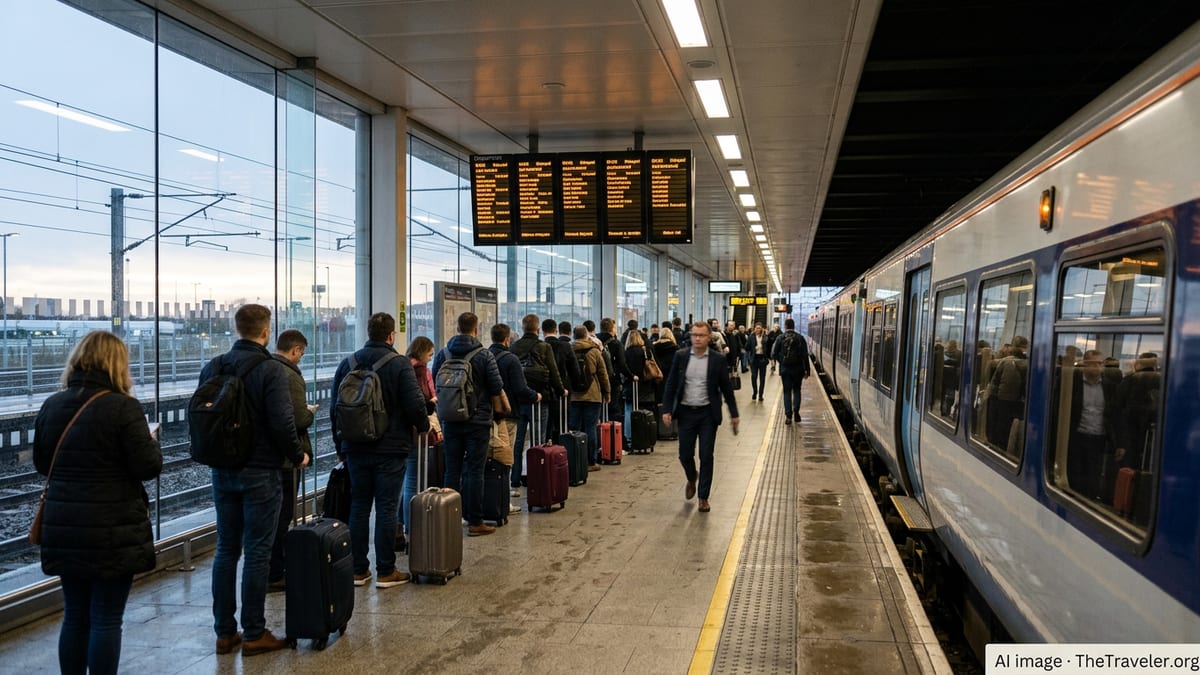
Major Intercity Route Brought to a Standstill
Initial information from rail operators and British media indicates that the collision occurred on lines connecting London St Pancras station with communities in the East Midlands and northern England. The stretch of track near Bedford is a busy section of the Midland Main Line, a route heavily used by business travelers, long-distance commuters and leisure passengers heading to and from the capital.
Published coverage describes emergency services converging on the site after reports of a collision involving two high-speed passenger trains. Images circulating on social platforms show both trains remaining upright but with visible damage to carriages, alongside debris and disturbed ballast on the track.
According to reporting by national outlets, services operated by East Midlands Railway between London, Nottingham, Sheffield and Corby were suspended or severely disrupted following the incident. Passengers planning to travel through the corridor on Friday evening were advised to expect cancellations, diversions and extended journey times as the line remained blocked.
Publicly available information from the scene suggests that some travelers were led along the tracks to safer locations after the collision, while others remained on board until emergency personnel completed safety checks. The extent of all injuries was not immediately clear, though media reports describe bandaged passengers and individuals being assessed by ambulance crews.
Casualties Reported but Full Toll Unclear
Early statements referenced by broadcasters and news agencies note that a number of people were injured in the collision, with assessments ongoing into the evening. Images from the scene show passengers with visible head wounds and others receiving assistance on the trackside, highlighting the force of the impact even though both trains appear to have largely stayed on the rails.
Some outlets report that local hospitals in Bedfordshire were placed on alert for multiple casualties as emergency services implemented established major-incident procedures. Air ambulances and a large convoy of road ambulances were dispatched to the area as part of a precautionary response in case of serious trauma injuries.
Despite early references on social media to the possibility of very serious outcomes, later reporting emphasized that official casualty figures had not yet been confirmed. Publicly available information on Friday evening suggested that, while injuries were significant for some passengers, the overall toll might be lower than first feared given the apparent stability of the train formations.
Investigators are expected to focus on how two passenger services came to be on a collision course on a heavily signalled main line where modern safety systems are designed to prevent such events. Until those inquiries progress, published commentary from rail specialists is avoiding definitive conclusions on the severity and precise mechanics of the crash.
Disruption for Travelers Across England
The collision near Bedford quickly cascaded across rail timetables, affecting journeys well beyond the immediate area. According to service updates posted by the operator, trains between London St Pancras and key destinations such as Leicester, Nottingham and Sheffield were suspended in both directions for several hours.
For travelers, the timing of the incident on a Friday evening compounded the impact. Commuters heading home from London, weekend leisure travelers and international visitors using the line to connect with regional cities all faced short-notice changes to their plans. Some passengers were advised to reroute via alternative main lines, while others were left to arrange last-minute accommodation as connections became unworkable.
Travel advice shared through public information channels urged passengers to check live departure boards and journey planners before setting out, cautioning that disruption could extend late into the night while safety checks and recovery operations continued. Replacement road transport was complicated by congestion on parallel road routes and the wide geographic spread of affected journeys.
The interruption highlights the centrality of the St Pancras to East Midlands corridor to domestic tourism and business travel within England. The route is a main artery for visitors heading to historic cities, conference venues and major sporting events in the Midlands and northern regions, meaning any extended closure quickly reverberates through the wider visitor economy.
Safety Record Under Fresh Scrutiny
The Bedford collision comes in a year when rail safety has already been in the spotlight across Europe, with recent serious incidents reported in Spain and Denmark. Publicly available data from the UK’s rail regulator typically points to a strong overall safety performance, with major passenger-train collisions remaining rare events. Even so, the images of damaged carriages north of London are likely to reignite scrutiny of infrastructure resilience and operational safeguards.
Early discussion in specialist forums and rail-focused media has centred on potential issues involving signalling systems, train protection technology and operational procedures on busy stretches of track. Commentators stress that comprehensive investigations by the Rail Accident Investigation Branch and other agencies are required before any firm conclusions can be drawn.
For regular rail users, the incident may reinforce concerns about crowding and network reliability at a time when passenger numbers have been climbing back toward pre-pandemic levels. Surveys published in recent days have already highlighted that many commuters in Great Britain remain sceptical about value for money on the railways, often citing delays and cancellations as key frustrations.
Industry observers note that, while catastrophic rail crashes are infrequent, each serious incident tends to accelerate planned safety upgrades and investment in digital signalling, driver training and emergency response coordination. The Bedford collision is likely to be examined in that context, as authorities consider whether additional layers of protection or alternative operating practices could reduce the risk of future events on busy main lines.
What Rail Passengers Should Expect Next
For travelers planning journeys in and out of London over the coming days, publicly available information suggests that residual disruption is likely as infrastructure checks continue and rolling stock is repositioned. Timetables may be amended at short notice, and some services could operate with reduced capacity while damaged trains are withdrawn for inspection and repair.
Travel organizations advise allowing extra time for connections, especially for passengers linking main-line services with regional trains or international departures from airports. Flexible tickets and advance reservations may be subject to easements, with operators typically extending validity or waiving change fees after major incidents that prevent travel as planned.
For the wider tourism and hospitality sectors, the immediate priority is assisting stranded guests and adjusting itineraries. Hotels in London and the Midlands may see a short-term increase in last-minute bookings from passengers unable to complete their journeys. Tour operators and event organizers are monitoring developments closely, particularly for group travel relying on the affected corridor.
As investigations progress, rail users and the travel industry alike will be watching for updates on both the cause of the collision and any recommendations aimed at strengthening safety on one of England’s most important passenger routes.