

More news on this day
Two passenger trains collided on Friday evening near Bedford, north of London, injuring multiple people and bringing one of the United Kingdom’s busiest north–south rail arteries to an abrupt standstill.
Get the latest news straight to your inbox!
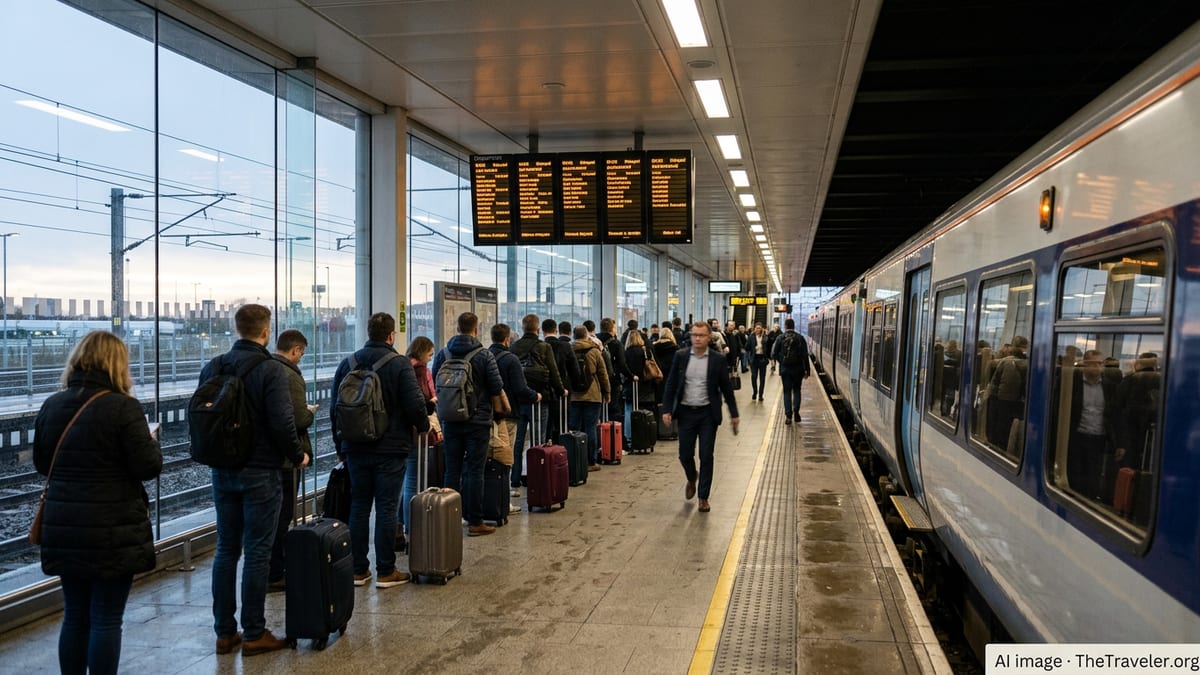
Evening collision on route into London St Pancras
Publicly available information indicates that the incident occurred early on Friday evening, June 19, on the Midland Main Line just south of Bedford, on tracks linking the town with Luton and London St Pancras International. Initial reports describe a collision between two southbound East Midlands Railway services running toward the capital rather than a head-on impact.
Coverage in international and UK media describes one train travelling from Nottingham to London St Pancras and another operating the Corby to London route, with one service apparently stationary when it was struck from behind. Images circulating on social media show the front cab of one high-speed unit badly damaged but both trains remaining upright on the rails, a factor that likely limited the scale of the damage.
The collision triggered a major response from fire, ambulance and police services across Bedfordshire and surrounding counties. Photographs and video posted online show long lines of emergency vehicles, portable lighting towers and triage areas set up beside the track, underscoring the seriousness of the crash on what is normally a fast-flowing stretch of main line.
Passenger accounts gathered by broadcasters and newspapers describe a sudden, violent impact, with some travellers reporting being thrown from their seats and seeing bloodied fellow passengers and significant interior damage in leading coaches. At the time of writing, there are reports of serious injuries but no widely confirmed fatalities.
Injuries reported and hospitals placed on alert
Regional and national coverage indicates that dozens of passengers required medical assessment following the collision, with several suffering suspected fractures, head injuries and cuts caused by flying glass and interior fittings. Photos shared online show people with bandages around their heads being assisted down trackside embankments in the fading evening light.
Local media in Bedfordshire report that Bedford Hospital placed its emergency department on heightened footing, asking residents to attend only with urgent or life-threatening conditions while staff prepared to receive potential casualties from the rail crash. This suggests planners were initially braced for a relatively high number of injured people, even as the full scale of harm remained unclear.
Rail-focused online communities and eyewitness reports also point to the presence of specialist rail incident teams and investigators at the scene soon after the crash, reflecting UK practice of treating any multi-train collision as a major safety event. Their early tasks are expected to include securing on-board data recorders, examining signalling equipment and documenting track conditions before wreckage is moved.
For many travellers caught up in the incident, the disruption extended well beyond physical injuries. Passengers describing their experiences on social media mention lengthy evacuations along the track, difficulties arranging alternative transport late in the evening and the shock of being involved in an accident on a route widely perceived as one of the safest ways to travel.
Severe disruption on the Midland Main Line
The crash has had an immediate impact on rail operations between central England and London. Information published by train operators and rail information services shows that all East Midlands Railway services using the affected section were suspended for the remainder of Friday, cutting direct links from cities such as Nottingham, Derby and Leicester into London St Pancras.
Other operators using the corridor, including Thameslink, have also reported knock-on delays and cancellations as traffic is diverted or held at upstream stations. With the crash site located on a multi-track main line with limited diversionary options, service planners face a complex task in routing essential freight and passenger movements around the blockage.
Travel advice issued through journey-planning platforms and operator channels urges passengers to postpone non-essential trips, use alternative routes via other main lines into London where possible, or switch to coach services. Weekend leisure travel and business trips heading into the capital from the East Midlands are expected to be heavily affected until engineers can confirm the integrity of the track, signalling and overhead power systems.
For Bedford itself, a town that relies heavily on fast rail links for commuting and regional connectivity, the collision brings substantial short-term disruption. With both local stopping services and long-distance expresses sharing the same corridor south of the town, even a partial closure can quickly ripple across daily routines for thousands of residents and visitors.
Early questions over cause and safety systems
While it is far too early for definitive conclusions, the apparent rear-end nature of the collision is already prompting questions about how two modern passenger trains came to be occupying the same stretch of track at the same time. Rail industry commentators are highlighting several broad areas that investigators are likely to examine in the days ahead.
One line of inquiry is expected to focus on the performance of signalling and train protection systems designed to maintain safe separation between services. On busy high-speed corridors such as the Midland Main Line, multiple layers of safety are normally in place to prevent a following train from approaching too closely to one ahead, particularly at line speeds.
Investigators are also likely to scrutinise operating procedures, communication flows and any temporary working arrangements that may have been in place at the time, such as speed restrictions, engineering works or degraded signalling modes. Weather and visibility at the time of the crash, along with the condition of rolling stock and track infrastructure, form additional parts of the standard investigative checklist.
For travellers, the focus remains on whether lessons from previous UK rail accidents have been fully embedded and whether further investment in automatic train protection and traffic management is needed. Public discussion following the Bedford collision is already touching on themes of infrastructure renewal, system resilience and the balance between increased capacity and uncompromising safety margins.
Impact on confidence in rail and on future journeys
The collision near Bedford comes at a time when the UK rail network is under pressure to handle growing passenger numbers while also adapting to long-term changes in commuting patterns. The Midland Main Line is a showcase corridor for recent investment, including new trains and upgraded track, and events such as Friday’s crash are likely to reignite debate over how that investment is prioritised.
For many regular users of the route, the incident serves as a stark and unsettling reminder that even in a system with a strong overall safety record, serious accidents can still occur. Commuters posting online describe a mixture of gratitude that the crash does not appear to have resulted in mass fatalities and anxiety about returning to the same trains and platforms in the coming days.
Tourism and leisure travel may also feel short-term effects. The Midland Main Line is an important gateway for international visitors arriving in London and continuing by rail to historic cities and countryside destinations across the East Midlands. Travel advisers and tour operators are likely to monitor the situation closely, updating itineraries and guidance as more is known about the duration of line closures and any ongoing speed restrictions.
Over the longer term, the Bedford crash is expected to feed into national conversations about rail safety oversight, infrastructure funding and the pace of modernisation. For now, attention remains fixed on supporting those injured, restoring safe services and understanding how a routine evening journey on a well-used route turned, in seconds, into a serious rail emergency.