


More news on this day
Passenger rail services north of London were severely disrupted on Friday evening after two trains reportedly collided near Bedford, prompting a major emergency response and halting a key route for commuters and travelers using London St Pancras.
Get the latest news straight to your inbox!
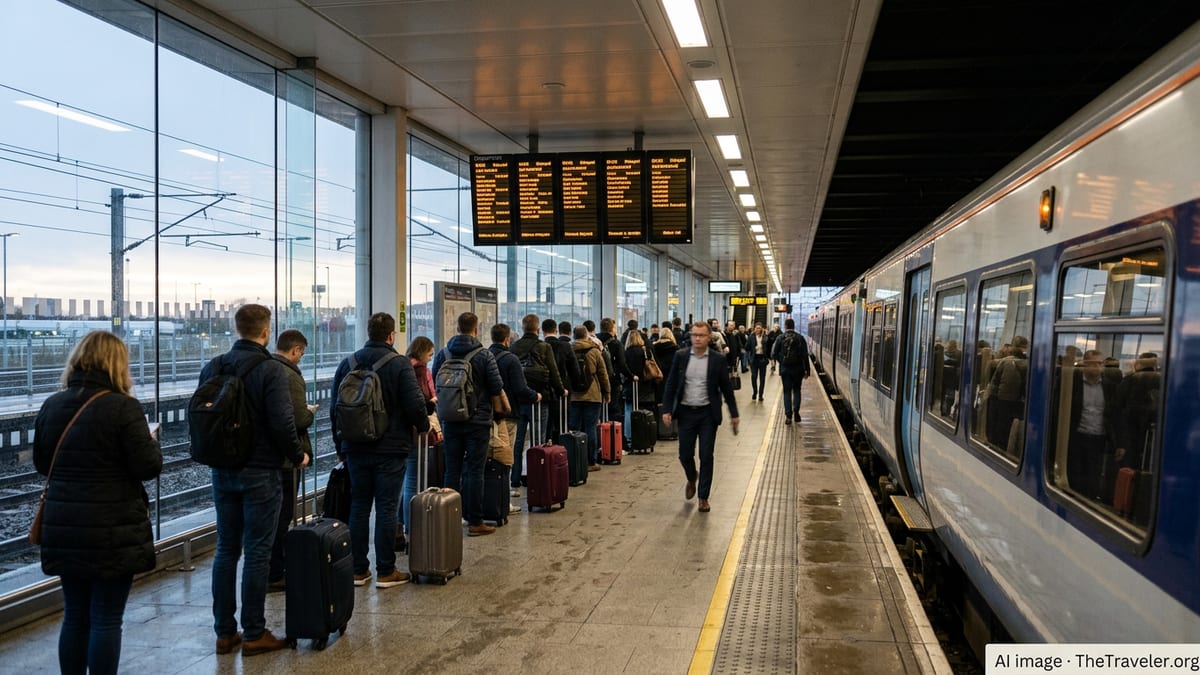
Collision Reported On Busy Evening Commuter Route
Publicly available information indicates that the incident occurred on the main line serving London St Pancras and the East Midlands on the evening of 19 June, near Bedford in central England. Early reports describe a collision involving two passenger services, one of which is understood to be a Luton Airport Express service visible in video footage shared on social media.
Images and clips circulating online show a damaged train upright on the tracks and passengers gathered in an adjacent field, suggesting that an evacuation was carried out soon after the impact. The crash took place at a time of heavy evening traffic, when many travelers use the route for commuting between London and towns and cities to the north.
Rail operators reported that emergency services were dealing with an incident between London St Pancras and Leicester, and that trains on the London St Pancras to Nottingham, Sheffield and Corby routes were affected. Notices to passengers describe significant disruption, with delays and cancellations while the line remains blocked in the Bedford area.
Online accounts from those claiming to have been on board refer to a sudden jolt and extensive damage at one end of a train, though full details of any injuries have not yet been confirmed. Social media discussions reference multiple helicopters over the scene, indicating the scale of the response.
Emergency Response Under Way Near Bedford
Reports indicate that police, fire and ambulance teams, along with specialist rail incident units, were dispatched to the stretch of track south of Bedford soon after initial alerts were received. Bedfordshire Fire and Rescue publicly reported a deployment following a call shortly before 7 p.m. local time.
Footage from the scene shows personnel working around the trains and assisting people away from the tracks into open ground, where groups of passengers can be seen sitting or standing while awaiting further instruction. Lighting rigs and emergency vehicles appear in some images, suggesting preparations for a prolonged operation into the evening hours.
Aerial images and flight-tracking data referenced in online posts point to at least one police or rescue helicopter circling above the area as part of the response. Such aircraft are typically used to provide commanders with a clear view of the site, support searches along the line and assist in coordinating road access for ambulances and support vehicles.
According to published coverage, local hospitals were placed on alert to receive casualties, although the number and severity of injuries remained unclear in the early evening. Some passengers posting on social media described walking away from the scene, while others referred to people being treated at the location.
Major Disruption For Travelers North Of London
The line between London St Pancras and the East Midlands is a key intercity and commuter artery, carrying fast and stopping services to destinations including Leicester, Nottingham, Sheffield and Corby. The reported collision near Bedford immediately disrupted movements along this busy corridor on a Friday evening, traditionally a peak period for leisure and airport travel as well as commuting.
Rail operator updates refer to cancellations and diversions, with passengers advised not to attempt to travel on affected routes or to expect extended journey times. Some services were reported as terminating short of their planned destinations, while others were held at stations south of the incident as the line remained closed.
Travelers bound for Luton Airport and towns in Bedfordshire and the East Midlands faced particular uncertainty, with many turning to alternative routes through other London terminals or via different operators. Online journey planners showed widespread knock-on delays across the local and regional network as trains and crew were displaced by the sudden closure.
For visitors and tourists using rail links from central London to connect with flights, hotel bookings or tours further north, the incident served as a reminder of the vulnerability of tightly timed itineraries. Travel industry observers often recommend allowing additional contingency time when planning evening rail connections, especially on busy long-distance routes.
Early Focus On Safety Systems And Investigation
While the precise sequence of events remains under review, rail commentators and passengers discussing the incident have highlighted the role of modern train protection systems on Britain’s main lines. Some online posts reference a reported issue with an automatic safety system on one train prior to the collision, though this has not yet been fully detailed in official statements.
Published coverage notes that the Rail Accident Investigation Branch has sent inspectors to the site near Bedford to begin gathering evidence. This independent body typically examines data from onboard recorders, signalling logs, trackside equipment and driver actions in order to understand how rail accidents develop and to identify safety recommendations.
In similar rail collisions in Europe and elsewhere in recent years, investigators have often focused on the interaction between human decision making and automated protection systems, the configuration of signals and points, and the maintenance condition of rolling stock and infrastructure. The Bedford incident is likely to receive comparable scrutiny, given the importance of the route and the apparent scale of the emergency response.
For regular rail users and the wider travel sector, the outcome of the investigation will be closely watched. Findings can lead to changes in operating rules, additional driver training, upgraded technology or alterations to timetables and line speeds, all of which ultimately affect how passengers move between London and regional destinations.
Advice For Passengers And Travelers In The Region
Travelers planning to use services through Bedford, Luton and the wider London St Pancras to Midlands corridor are being advised in public updates to check live service information before leaving for the station. Rail operators have indicated that disruption is expected to continue while recovery operations and initial investigations are under way.
Those already holding tickets for affected journeys are typically offered options such as using alternative routes where available or traveling at a later time, though the specifics can vary between operators and ticket types. Accommodation providers and tour companies may also experience knock on effects as guests arrive late or seek last minute changes to bookings.
For visitors unfamiliar with the area, alternative rail routes from London to the Midlands and northern England may include services from Euston, Kings Cross or Marylebone, depending on the final destination. However, increased demand on these lines can lead to crowding and delays, particularly when a major incident diverts passengers from one core route to another.
Travel planners recommend building flexibility into itineraries that rely on single main line corridors, and remaining attentive to rail operator channels and local news during periods of disruption. As the situation near Bedford continues to develop, further information about the status of services and the condition of those involved is expected to emerge over the coming hours.