


More news on this day
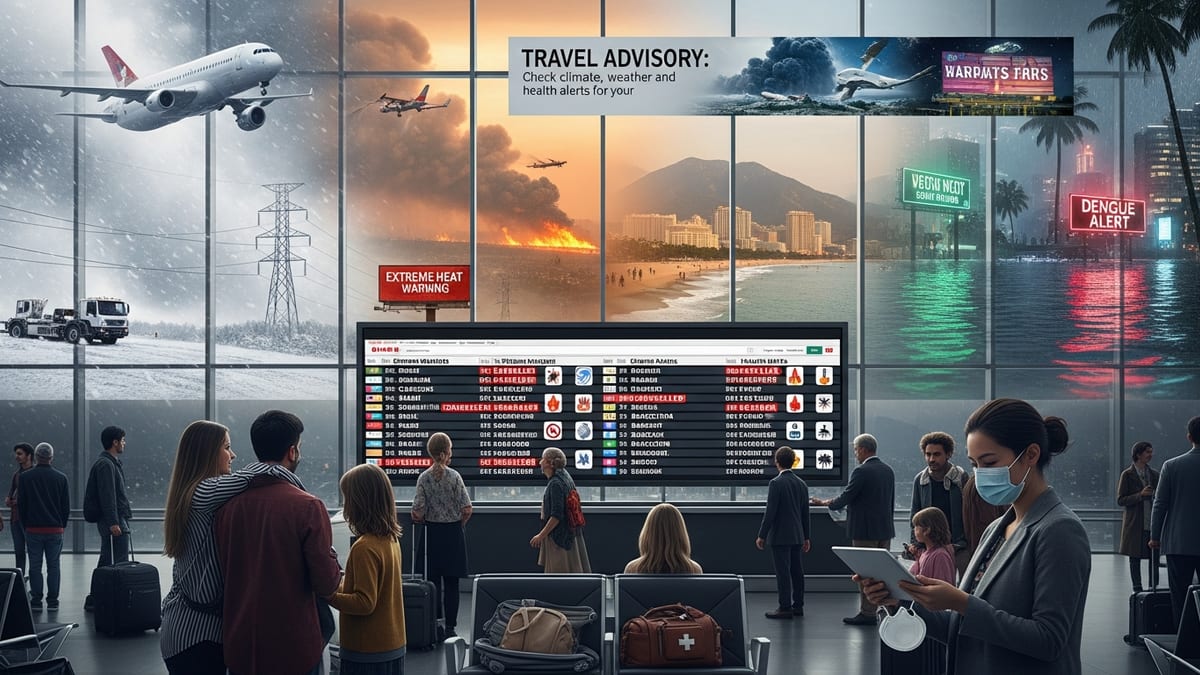
Severe weather sweeping eastern and southern China has caused extensive disruption to air travel, with publicly available aviation data indicating 3,585 flight delays and 258 cancellations across Shanghai, Beijing, Guangzhou, Shenzhen and other major hubs, affecting thousands of domestic and international travelers at the height of the summer holiday season.
Get the latest news straight to your inbox!
Storm Systems and Airspace Constraints Hit Major Hubs
According to published coverage from Chinese financial and metropolitan outlets, a combination of heavy rain, thunderstorms and the outer bands of Typhoon Bavi triggered large-scale schedule disruptions across the country’s busiest airports over the past several days. Shanghai’s two main airports, Pudong and Hongqiao, saw close to one third of flights adjusted or canceled in a single day as the storm system moved inland, with knock-on delays rippling through Beijing, Guangzhou and Shenzhen.
Reports indicate that air traffic control measures in the key East China and South China control regions further constrained operations as controllers reduced movements for safety. When departure and arrival slots are tightened at high-volume hubs such as Shanghai Pudong, Beijing Capital, Guangzhou Baiyun and Shenzhen Bao’an, airlines must trim schedules, consolidate services and re-time flights, which in turn creates rolling delays on aircraft and crews scheduled to operate multiple sectors.
Industry analyses of China’s air network have long noted the sensitivity of these interconnected hubs to weather-related disruption. When several large airports in the same region are affected at once, recovery can be slow, particularly during peak travel periods when spare capacity is limited. The current wave of delays and cancellations underscores how quickly localized storms and a single typhoon landfall can cascade across the national network.
Shanghai and Beijing Shoulder the Heaviest Disruption
Shanghai appears to have borne some of the most visible impacts. Local media coverage notes that on one day alone, the city’s two airports planned hundreds of cancellations as airlines and airport operators worked to keep remaining traffic within safe operating margins while wind and rain intensified. Pudong, a key international gateway, and Hongqiao, a major domestic hub, both saw departure boards dominated by delayed and canceled flights.
In Beijing, both Capital International Airport and the newer Daxing airport experienced a surge in delays as weather systems moved north. Flight plans for more than two thousand combined movements were adjusted over a 24-hour period, and publicly available data shows that both airports were placed under yellow-level delay responses before conditions gradually improved. Even after the alert status was lifted, residual congestion continued to push back departure times and extend connection windows.
Travelers connecting through the capital reported long queues at check-in and transfer counters, as well as crowded waiting areas, as aircraft repositioning and crew duty-hour limits forced last-minute reassignments. With Beijing serving as a key connection point for routes to Europe, North America and Southeast Asia, disruptions there had implications for passengers far beyond China’s borders.
Guangzhou, Shenzhen and Southern Gateways Feel the Shockwaves
Further south, Guangzhou Baiyun and Shenzhen Bao’an airports also saw substantial disruption, with regional and point-to-point domestic flights among the hardest hit. Coverage from national business outlets describes widespread cancellations on routes linking these southern gateways to eastern cities such as Shanghai and Hangzhou, as well as delays on medium-haul services to central and western China.
Operationally, the concentration of several major carriers in the Pearl River Delta magnified the impact. Guangzhou is a primary hub for China Southern Airlines, while Shenzhen hosts both Shenzhen Airlines and additional operations from other large carriers. When these hubs reduce movements due to thunderstorms or typhoon-related wind shear, aircraft rotations can quickly fall behind schedule, forcing airlines to cancel lower-demand sectors in order to preserve capacity on trunk routes.
Published commentary on Chinese social media and travel forums reflects frustration among passengers facing last-minute changes, but it also highlights the safety-first logic underpinning these decisions. Lightning activity, low cloud ceilings and strong crosswinds can all limit the availability of runways, which in turn restricts how many takeoffs and landings can be handled in a given hour.
Travelers Confront Missed Connections, Rebookings and Longer Journeys
For travelers, the operational and meteorological challenges have translated into missed connections, unexpected overnight stays and rerouted journeys. Passengers connecting between domestic flights in Shanghai and Beijing have reported being moved to later departures or diverted to nearby cities before completing their itineraries by high-speed rail. Others have described being automatically rebooked for flights departing a day or more later, or being offered refunds instead of alternative same-day options when capacity was saturated.
Publicly available information from airline customer notices indicates that major Chinese carriers have been waiving change fees on affected routes and encouraging travelers to adjust their plans in advance when possible. However, the sheer volume of passengers affected by nearly 4,000 delayed or canceled flights has at times overwhelmed hotlines and service desks, leading to long waits for assistance.
Travel advisories issued by several airport operators and reported in local media recommend that passengers bound for storm-affected regions check their flight status frequently on official channels, arrive at the airport earlier than usual during peak periods, and be prepared for rapidly changing conditions. With thunderstorm season continuing in much of China, observers suggest that flexible itineraries and generous connection times are prudent for anyone flying through Shanghai, Beijing, Guangzhou or Shenzhen in the coming days.
Summer Travel Season Faces Ongoing Weather Risks
The latest wave of disruptions comes at a time when China’s air travel market is experiencing strong seasonal demand, placing additional pressure on carriers and airports to balance safety with the need to keep people moving. Aviation regulators have repeatedly emphasized safe operations in challenging weather, and airlines are adjusting schedules with an eye toward both immediate storm impacts and the broader pattern of convective activity that typically persists through late summer.
Forecasts and recent experience suggest that further bouts of heavy rain, typhoon remnants and thunderstorms are likely to affect key coastal and inland hubs in the weeks ahead. For travelers planning complex, multi-city itineraries across China, industry commentators recommend building in buffer time and considering rail alternatives on shorter segments when extreme weather is in the forecast.
As operations gradually normalize after this latest bout of severe conditions, the data on 3,585 delays and 258 cancellations serves as a reminder of the scale and interconnectedness of China’s aviation network. Even a single disruptive weather system can reverberate across thousands of kilometers, affecting not only major metropolises such as Shanghai, Beijing, Guangzhou and Shenzhen, but also the many secondary cities that depend on them for access to the wider world.