


More news on this day
Thousands of travelers across Asia faced cascading disruptions on June 27, as a wave of weather-related operational constraints contributed to 136 flight cancellations and 5,846 delays impacting major carriers at hubs in Japan, India, Malaysia, Thailand and the United Arab Emirates.
Get the latest news straight to your inbox!
Storm Systems Amplify Regional Flight Disruptions
Publicly available aviation tracking dashboards and airport departure boards on June 27 indicate that the latest turmoil is closely linked to powerful tropical systems sweeping across parts of East Asia and the broader region. Data compiled from tracking platforms shows that the heaviest disruption is concentrated around Japan and neighboring air corridors, with effects rippling outward to South and Southeast Asia and into the Gulf.
The aggregate figures of 136 cancellations and 5,846 delays reflect a snapshot of operations as storms and heavy rain continue to interfere with visibility, wind thresholds and airport flow rates. Japan Airlines, All Nippon Airways and affiliated operators such as ANA Wings are among the carriers most exposed in the current pattern, given their dense networks linking Tokyo with domestic points and regional gateways.
Reports from regional news outlets in Japan describe widespread schedule adjustments as twin tropical storms Mekkhala and Higos pass near the archipelago, prompting several hundred weather-related cancellations over a multi day period. That backdrop of instability has heightened vulnerability across Asia’s interlinked route map, as aircraft and crews struggle to return to position and onward sectors suffer knock on delays.
While the operational picture remains fluid, the numbers underline how quickly a cluster of severe weather events can translate into continent-wide disruption when they intersect with some of the world’s busiest air corridors.
Tokyo, Delhi, Kuala Lumpur, Bangkok and Dubai Under Pressure
Major hubs in Japan, India, Malaysia, Thailand and the United Arab Emirates are bearing much of the strain as delays radiate along popular business and leisure routes. At Tokyo’s main airports, Haneda and Narita, publicly available flight boards show waves of late departures and arrivals, particularly on routes linking the capital with Sapporo, Fukuoka, Okinawa and key overseas cities.
In New Delhi, schedule data for the day reflects a high volume of late running services as carriers work around weather constraints further east and aircraft arriving from affected areas miss their planned slots. IndiGo and other Indian airlines are contending with knock on delays on regional routes that connect the Indian capital to Southeast and Northeast Asia, compounding routine monsoon season challenges at home.
Further south, Kuala Lumpur International Airport has seen disruption ripple across services operated by Malaysia based carriers and regional partners, including flights feeding into Japan, Thailand and China. Tracking sites show departure banks with clusters of late flights, suggesting that upstream weather and airspace constraints are feeding directly into the Malaysian hub’s timetable.
Bangkok’s Suvarnabhumi and Don Mueang airports, key bases for Thai Airways, Thai AirAsia and other regional operators, are similarly affected as rerouted flights and weather avoidance measures compress available capacity. In the Gulf, Dubai and other UAE airports have recorded delays on services linking to Japan, India and Southeast Asia, demonstrating how far the operational shockwaves can extend from the original storm zones.
Wide Range of Carriers Affected Across Asia and the Gulf
The scale of the current disruption is reflected in the breadth of airlines impacted. Japan Airlines, All Nippon Airways and ANA Wings feature prominently in cancellation and delay tallies related to the storms skirting Japan, particularly on services to and from Okinawa and Kyushu, where rainfall and strong winds have been most intense over recent days.
China Southern and other Chinese carriers are also listed among those grappling with delays on routes threading past the weather systems and into Japanese and Southeast Asian airspace. Publicly available data from prior days shows that traffic flows between major Chinese coastal cities and Japan have been intermittently affected as operators adjust routings and schedules around the storms’ projected paths.
In South and Southeast Asia, IndiGo and other Indian airlines, along with Batik Air and Lao Airlines, are managing pushed back departure times and altered rotations as aircraft arrive late from weather impacted hubs. For some regional routes with tight turnarounds, even modest initial delays have cascaded into multi hour disruptions later in the day.
Gulf carrier Emirates appears among the airlines experiencing schedule pressure as long haul flights to and from Tokyo, Bangkok and other Asian gateways encounter congested airspace and revised slot allocations. Given the airline’s extensive connecting network through Dubai, even isolated delays can affect onward itineraries spanning Europe, Africa and the Americas.
Travelers Face Long Waits and Limited Rebooking Options
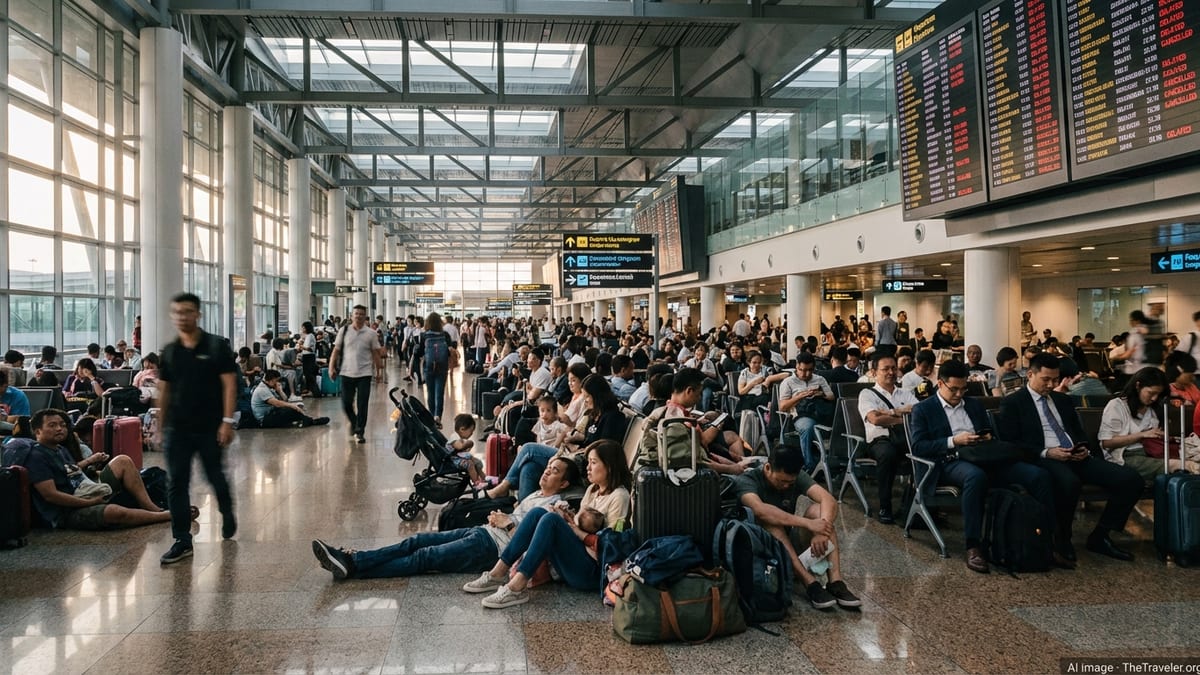
For passengers caught in the disruption, the practical impact has included extended waits at departure gates, missed connections and short notice itinerary changes. Social media posts and local media coverage from airports in Tokyo, Bangkok and Dubai describe crowded terminals and long lines at customer service desks as travelers seek rebooking or alternative routings.
Publicly available guidance from airlines across the region generally encourages passengers to monitor flight status closely on official apps and websites before heading to the airport. Some carriers have introduced limited flexibility measures for affected routes, such as waiving change fees or offering one time date changes, although these policies vary by airline and fare type.
With many flights operating at or near capacity during the busy summer travel period, rebooking options have in some cases been constrained, particularly for those aiming to travel on the same day. Travelers transiting through multiple hubs have been especially vulnerable to missed onward connections when initial sectors departed late from storm affected regions.
Airport operators in the affected cities are using public announcements and information screens to highlight major clusters of disruption, while also advising passengers to allow additional time for check in, security and immigration formalities when services do operate as scheduled.
Outlook for Operations in the Coming Days
Meteorological agencies in Japan and across the wider region indicate that heavy rain and unsettled conditions may persist as the tropical systems continue to move through or near key air corridors. While some improvement is expected once the core of the storms passes, residual effects on ground operations, such as waterlogged runways and localized flooding, may continue to restrict capacity in the short term.
Aviation analysts note that airlines often require several days to fully restore normal operations after a major weather event, as aircraft and crews are repositioned and maintenance checks are rescheduled. Given the scale of the current disruption and the interconnected nature of Asia’s major hubs, additional delays and isolated cancellations remain possible even after weather alerts lift.
Travelers with imminent itineraries involving Tokyo, New Delhi, Kuala Lumpur, Bangkok or UAE hubs are being advised by publicly available travel notices to monitor developments closely and remain flexible with timings where possible. Those with nonessential travel may find it easier to adjust dates once airlines have had time to stabilize rotations and clear any backlog of displaced passengers.
For now, the latest wave of storms has underscored the vulnerability of Asia’s complex aviation network to extreme weather, and how quickly disruption in one corner of the region can reverberate across multiple countries, airlines and long haul connections.