


More news on this day
Air passengers across Asia faced cascading disruption on June 27, 2026, as a wave of severe weather and tropical systems contributed to 136 flight cancellations and 5,846 delays from Tokyo to Dubai.
Get the latest news straight to your inbox!
Storm Systems Drive Widespread Disruption From Japan to India
Publicly available flight tracking dashboards and airport departure boards for June 26 and 27 indicate that the latest wave of cancellations and delays is closely linked to powerful storm activity in and around Japan, with knock-on effects spreading along key routes into South and Southeast Asia. Data summarised by aviation analysts shows that, across the region, at least 136 flights were cancelled and 5,846 delayed within a 24-hour period, affecting both domestic and international traffic.
Japan has been at the center of the disruption, as twin tropical systems have swept near the archipelago, prompting airlines to cut services into and out of southern hubs. Japan Airlines and All Nippon Airways have together cancelled more than 100 flights on routes linking Tokyo with Okinawa, Kagoshima and surrounding islands, according to multiple regional news reports and airline operation updates.
The turbulence has not been confined to Japan. Routes linking Tokyo with New Delhi, Bangkok, Kuala Lumpur and Dubai have seen elevated delay levels, as aircraft arriving late from weather-affected sectors cascade into subsequent rotations. Operations information compiled from major Asian airports shows that airlines including IndiGo, China Southern, ANA Wings, Batik Air, Lao Airlines and Emirates are among those experiencing schedule disruptions.
In India, New Delhi’s Indira Gandhi International Airport has reported heavy congestion on arrival and departure banks, with weather-related ground holds and air traffic flow restrictions contributing to delays. Regional media coverage and flight board data point to a pattern in which many services are operating, but significantly behind schedule, rather than being scrubbed outright.
Tokyo, Bangkok, Kuala Lumpur and New Delhi Bear the Brunt
Tokyo’s Haneda and Narita airports remain among the most affected nodes, as storms impacting southern Japan ripple through the wider network. Public data from airport information systems suggests that carriers such as Japan Airlines, ANA, ANA Wings and a number of Chinese and Southeast Asian operators have adjusted frequencies, rerouted aircraft or cancelled sectors into Tokyo while conditions remain unstable.
In Bangkok, Suvarnabhumi Airport has recorded elevated numbers of delayed departures on regional connections to Japan, India and the wider Mekong region. Flights operated by Thai-based carriers, as well as services from Lao Airlines and other regional airlines, have been pushed back as aircraft and crews arrive late from storm-affected routes further north. Aviation-focused outlets describe Bangkok functioning as both a pressure valve and a bottleneck, absorbing rebooked passengers while also contending with its own weather and congestion constraints.
Kuala Lumpur International Airport has seen similar knock-on impacts, with Malindo, Batik-branded operators and other regional carriers adjusting schedules on Japan and India routes. Flight status boards compiled in real time show substantial delays on services to Tokyo, Osaka and key South Asian destinations, even when flights remain technically operative. Passengers transiting Kuala Lumpur toward the Middle East have also faced missed connections as upstream delays accumulate.
New Delhi has emerged as a critical stress point for South Asia. IndiGo and other Indian carriers serving Japan, Southeast Asia and the Gulf have been managing a dense bank of late-running arrivals and departures. While only a fraction of services have been cancelled outright, high percentages of daily flights are departing behind schedule, creating long queues at check in, security and boarding gates during peak waves.
Middle East Hubs Feel Secondary Shockwaves
The ripple effects of Asia’s weather chaos have extended into the Gulf, particularly at Dubai International Airport and other United Arab Emirates hubs. Aviation monitoring sites and Middle East travel reports describe instances of Emirates and other Gulf-based carriers adjusting rotations on Asia-bound routes as delayed incoming aircraft from Tokyo, Bangkok, Kuala Lumpur and Delhi throw off carefully timed connection banks.
While the overall number of flight cancellations in the UAE related to this episode remains limited compared with the broader Asian total, the operational impact of thousands of delayed passengers has been significant. Publicly available schedule data indicates that airlines have in some cases substituted smaller aircraft, consolidated services or retimed flights in order to recover their networks, placing additional pressure on already busy late-night and early-morning departure waves from Dubai.
Regional observers note that Middle Eastern carriers are particularly sensitive to rolling delays in Asia because of their reliance on tight, hub-and-spoke connections. Even when a flight from Tokyo or Bangkok eventually departs, a late arrival into Dubai can cause passengers to misconnect to onward services to Europe, Africa or North America, forcing mass rebookings and temporary accommodation arrangements.
Information released by airlines serving the India–UAE and Southeast Asia–UAE corridors suggests that some carriers have opted to cap new bookings on popular departures until backlogs clear. This has limited the ability of stranded travelers in Asia to secure immediate alternative routings via the Gulf, even where seats technically remain available.
Airlines Prioritise Safety While Passengers Face Long Waits
The latest disruption underscores the vulnerability of Asia’s dense flight networks to overlapping extreme weather events. Industry analysts point out that, because many services are delayed rather than cancelled, aircraft and crew duty limits can be quickly reached, triggering last-minute flight substitutions or further cancellations later in the operating day. This effect is particularly visible on narrow-body routes linking secondary Japanese, Thai and Malaysian cities with major hubs.
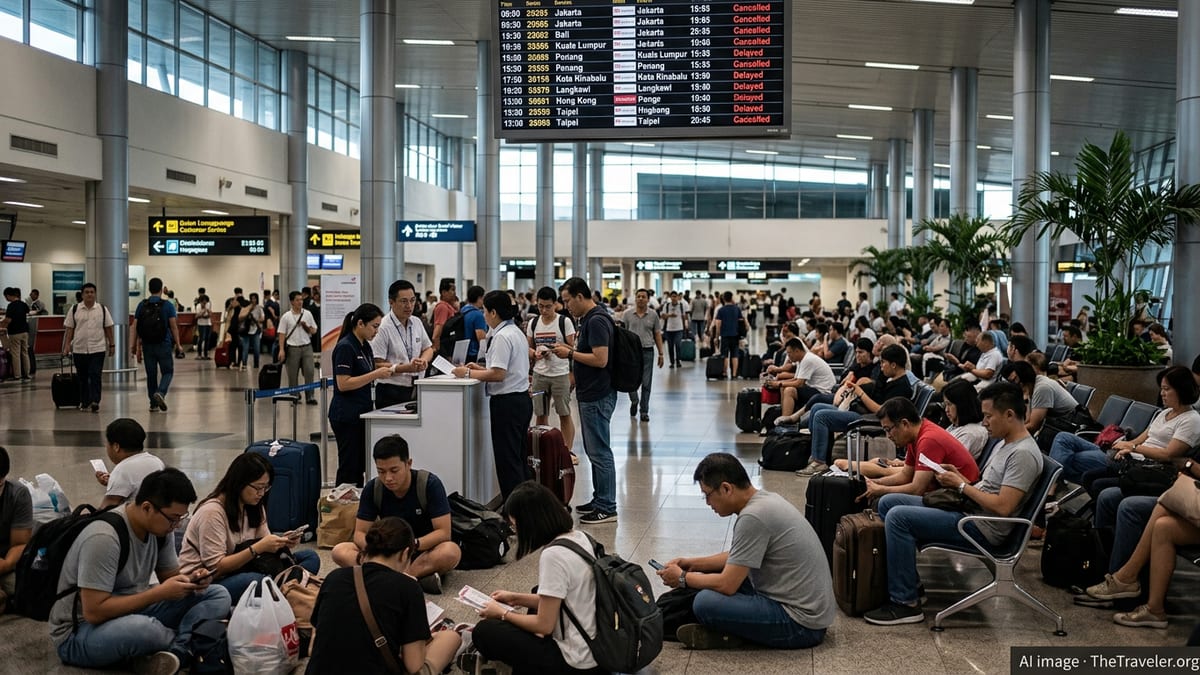
Carriers across the region have publicly emphasized their focus on safety and regulatory compliance, noting in operational updates that decisions to cancel or significantly delay flights reflect constraints on visibility, crosswinds and airport ground handling. Despite this, passenger frustration has grown as social media posts and local news coverage show crowded terminals, long queues at rebooking counters and limited same-day alternatives on popular leisure and business routes.
Consumer advocates in several countries have reiterated that the level of compensation or assistance available to affected travelers depends heavily on local regulations and whether disruptions are deemed to be outside an airline’s control. In many Asian jurisdictions, weather-related cancellations and delays primarily trigger obligations for rebooking on the next available flight rather than cash compensation.
Travel industry commentators advise that passengers with upcoming itineraries through Tokyo, New Delhi, Kuala Lumpur, Bangkok and major UAE hubs should monitor flight status regularly, allow extra time for connections and consider flexible or changeable tickets where possible. With typhoon season intensifying and climate-linked extremes becoming more common, aviation data specialists suggest that similar multi-country disruption events are likely to recur in the coming months.