


More news on this day
Flight schedules across the Middle East remain volatile as airlines continue to adjust services to the United Arab Emirates and Riyadh in response to shifting security conditions and airspace restrictions, leaving many travelers uncertain about upcoming trips.
Get the latest news straight to your inbox!
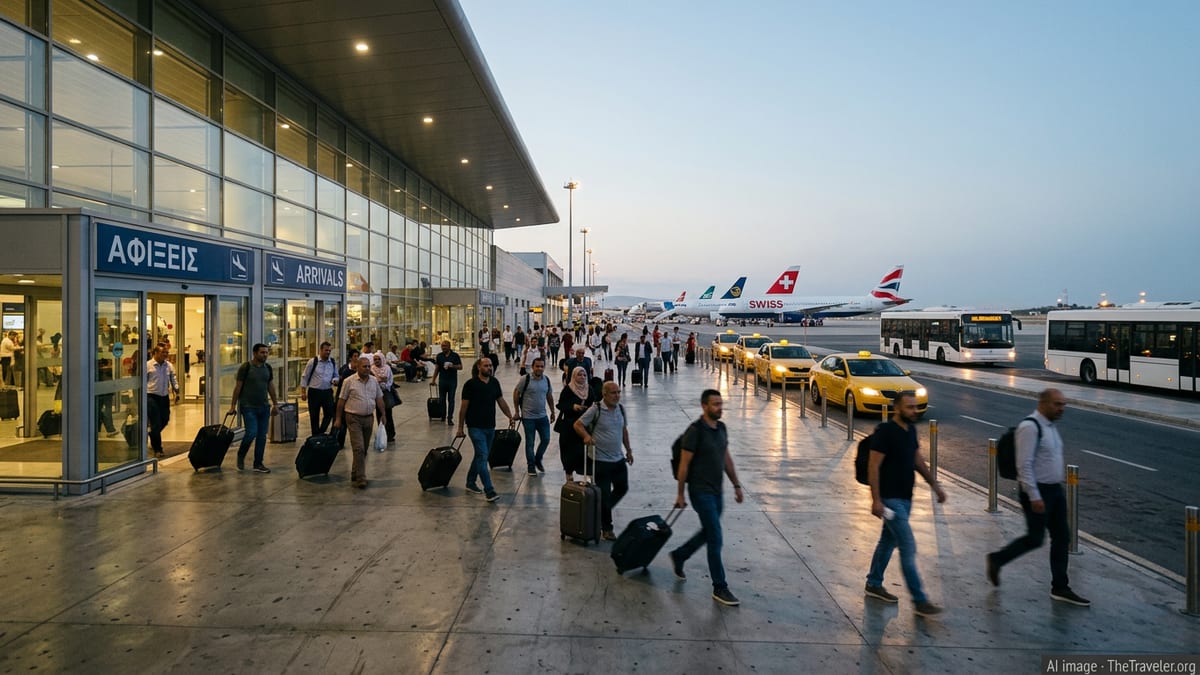
Current Status of Flights to the UAE and Riyadh
Air travel into and out of key Gulf hubs has been repeatedly disrupted in 2026, particularly following regional conflict and airspace closures affecting routes over Iran and neighboring countries. Publicly available information indicates that airports in the United Arab Emirates, including Dubai International and Abu Dhabi International, have at times suspended or sharply reduced operations, triggering widespread cancellations and diversions. Services to Riyadh have generally remained more resilient, but have still been affected by reroutings and selective cancellations as airlines navigate changing risk assessments.
Reports compiled by aviation trackers and international consultancies describe a pattern in which airspace closures over parts of the Middle East initially forced thousands of cancellations, with some carriers suspending services entirely for defined periods. As limited corridors reopened, airlines began operating reduced schedules to the UAE, prioritizing long haul connections and essential routes. In Saudi Arabia, including Riyadh, airports have typically stayed open, but schedules have been adjusted as airlines avoid certain overflight paths or temporarily scale back regional links.
Travel advisories from several governments continue to highlight the potential for short notice disruption on flights to and from the UAE, while describing the situation in Saudi Arabia as fluid. This means that even when airports appear operational, individual flights can still be rescheduled, rerouted or cancelled if carriers reassess risks along specific corridors or encounter congestion in alternative airspace.
Travelers planning to fly to Dubai, Abu Dhabi or Riyadh over the coming weeks are therefore facing an environment where published timetables are less reliable than usual. Industry updates suggest that national carriers in the region have been quicker to restore limited services, while some international airlines continue to maintain suspensions or heavily reduced frequencies on selected routes.
How Airlines Are Adjusting Schedules and Routes
Airlines serving the Middle East have responded to the evolving situation through a mix of outright cancellations, extended suspensions of particular routes, and complex reroutings that add time and distance to journeys. Some European and Asian carriers announced temporary halts to flights into Dubai and Riyadh earlier in the year, citing security assessments and the closure of key overflight corridors. Others opted to operate with reduced frequency while routing around restricted airspace, often via longer northerly or southerly tracks.
Industry briefings show that, during the peak of the crisis, several major carriers suspended flights to multiple Gulf destinations for set periods, sometimes through the end of a given month, before gradually resuming with limited schedules. In parallel, Gulf-based airlines such as Emirates, Etihad and Saudia have tended to restore operations in phases, initially focusing on core routes and widebody services that connect their hubs with Europe, Asia and North America, while remaining cautious about regional links most exposed to potential cross border escalation.
These adjustments have important implications for passengers. Rerouted flights can lead to significantly longer travel times and knock on delays, even when services are not cancelled outright. In addition, reduced schedules mean that rebooking options are more constrained when disruptions occur, making it harder for travelers to secure same day alternatives. Publicly available timetables and airport departure boards may not reflect last minute changes until shortly before departure, reinforcing the need for direct, frequent checks with airlines.
Observers note that schedule stability varies by carrier and route. National airlines with large local operations in the Gulf have strong incentives to maintain connectivity and have invested heavily in contingency planning, but they remain bound by regional airspace decisions and operational limits at affected hubs. Smaller or more geographically distant airlines, by contrast, may choose to keep suspensions in place longer, especially where passenger demand has softened or alternative routings prove uneconomical.
Government Advisories and Passenger Rights
International travel advisories play a central role in shaping airlines’ decisions and travelers’ expectations. Several governments currently advise against non essential travel to parts of the Middle East, with some specifically highlighting the UAE due to the broader regional security environment. Others warn of unpredictable disruption across Gulf airspace and urge travelers to anticipate sudden schedule changes, even on routes that have recently operated without incident.
For passengers, the practical question is often what happens when a flight is cancelled or significantly delayed. Consumer protections vary depending on the point of departure, the airline’s home country and the type of ticket purchased. In many jurisdictions, travelers departing from airports in the European Union or flying with EU based carriers may be entitled to rebooking, refunds, and in some cases compensation when cancellations are not caused by extraordinary circumstances. In contrast, flights originating elsewhere may fall under more limited local rules, particularly when disruptions are linked to security events or airspace closures that airlines categorize as beyond their control.
Public guidance from airlines and regulators consistently emphasizes that travelers should read fare rules and conditions of carriage closely. Some carriers are offering flexible policies, including fee free date changes, rerouting where available, or full refunds for affected itineraries, especially on routes most exposed to ongoing instability. Others are handling cases on an individual basis, referencing local law and the specific cause of disruption. Because there is no single global standard, understanding which protections apply to a specific booking is essential.
Travel insurance is another factor. Many standard policies exclude coverage for war or conflict related disruption, while others include limited benefits for trip cancellation or interruption when official advisories change after a booking is made. Policy wording can be highly technical, so travelers are being encouraged by consumer advocates to check their coverage closely and to consider specialist policies when planning itineraries through higher risk regions.
Planning a Trip: Practical Steps for Travellers
For those with upcoming travel to the UAE or Riyadh, preparation now involves more than simply checking in online. Aviation specialists suggest that travelers build additional flexibility into their plans by allowing extra time before important events, avoiding tight connections, and considering alternative routings that do not rely on a single at risk hub. When possible, booking through airlines with a strong regional presence or multiple daily frequencies can improve the chances of being re accommodated quickly in the event of disruption.
Monitoring is critical. Flight status tools, airport information pages and official airline channels are typically updated more quickly than general news reports, particularly in the hours leading up to departure. Because conditions may change rapidly, travelers are advised to keep contact details up to date in their bookings so that automated alerts can reach them, and to check their flights repeatedly in the 24 hours before travel, including just before leaving for the airport.
Flexibility on dates and destinations can also help. Some travelers are choosing to route via alternative hubs outside the most affected airspace, even if this adds a connection, while others are delaying non essential trips until schedules stabilize further. In certain cases, shifting a journey by a few days can move it outside a published suspension window, reducing the risk of cancellation. However, such decisions involve trade offs between convenience, cost and risk tolerance that each traveler must assess individually.
Importantly, experts caution against relying solely on anecdotal social media posts when evaluating the situation. While first hand accounts from other passengers can provide useful context, they may not reflect the latest operational reality for a specific airline or route. Cross checking information with official flight status data and current advisories remains the most reliable way to gauge actual risk to a particular itinerary.
What to Watch in the Coming Weeks
Looking ahead, the trajectory of flight operations to the UAE and Riyadh will depend heavily on regional security developments and the pace at which airspace restrictions are eased or reinstated. Industry analysis suggests that airlines are prepared to ramp services up or down quickly, using short term schedule updates to reflect changes in risk assessments as new information emerges.
Travelers can expect that airports like Dubai International, Abu Dhabi International and Riyadh’s King Khalid International will remain central to global connectivity efforts, and carriers will be keen to restore as much capacity as conditions allow. However, intermittent disruption is likely to persist, especially if tensions flare or if military activity once again affects key corridors. Even in more stable periods, some airlines may opt for longer routings that keep aircraft clear of certain regions, sustaining longer flight times and higher fares.
Observers will be watching several indicators, including whether major international carriers reinstate suspended routes to Gulf hubs at previous frequencies, how quickly regional low cost airlines resume cross border services, and whether government advisories begin to relax travel warnings. Changes in any of these areas could signal a gradual normalization of travel patterns, even if the broader geopolitical environment remains uncertain.
Until such trends become clear, travelers heading to the UAE and Riyadh are being encouraged by publicly available guidance to remain cautious, informed and adaptable. Building contingency plans, understanding rights and restrictions, and maintaining close contact with airlines will be key to navigating a region where flight schedules continue to be shaped by factors far beyond the usual operational considerations.