


More news on this day
Passengers transiting one of the country’s busiest hubs say major U.S. airlines are quietly offering several thousand dollars in travel credits to travelers willing to abandon their flights at the last minute, highlighting how far carriers will go to manage oversold planes and operational meltdowns.
Get the latest news straight to your inbox!
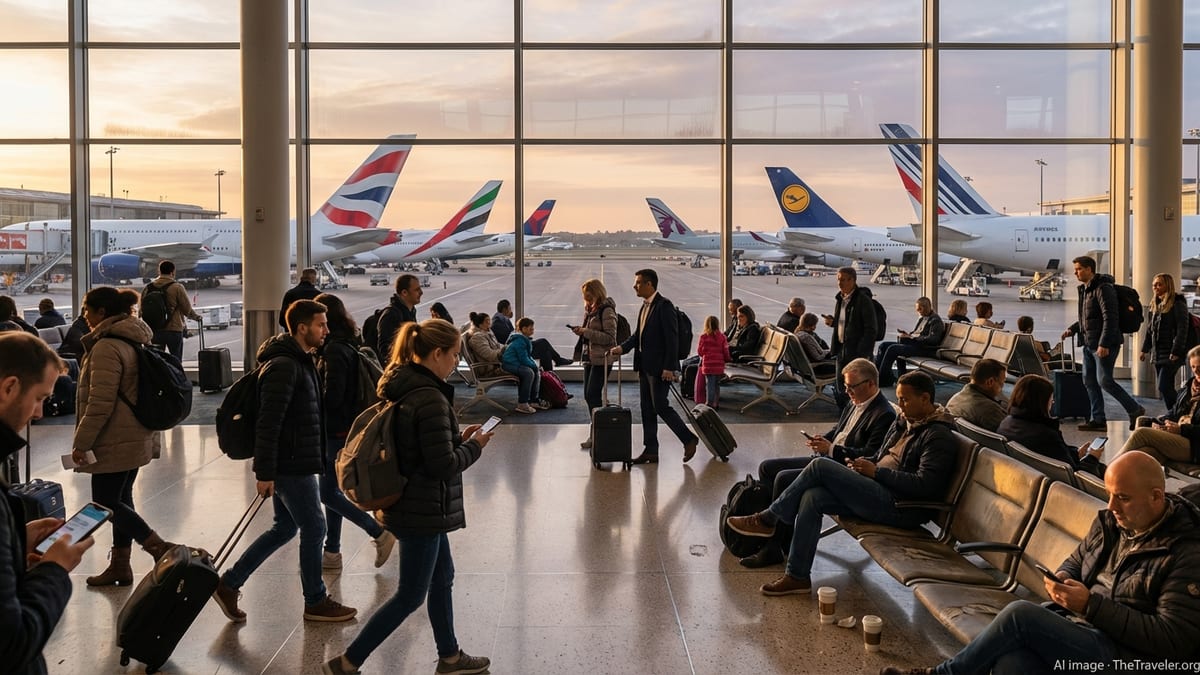
Surging Payouts As Airlines Try To Fix Oversold Flights
Reports circulating on social media and traveler forums in mid-2024 describe scenes at a major U.S. airport where gate agents for large carriers, including Delta, American and United, repeatedly raised compensation offers into the thousands of dollars for passengers willing to give up their seats. In some instances, travelers say individual offers exceeded 2,000 dollars in credits for a single delayed or oversold departure.
The episodes appear to center on a large connecting hub where tight summer schedules, strong demand and residual disruption from major technology outages left flights going out nearly full. When more confirmed passengers showed up than there were available seats, airlines leaned on aggressive “volunteer” auctions at the gate rather than risk involuntarily bumping passengers.
Travelers describe a pattern in which initial offers start relatively low but escalate quickly as boarding time approaches and not enough people step forward. By the time final calls are made, those still at the gate sometimes face four-figure incentives to travel later the same day or, in peak disruption periods, even the next day.
While such payouts are not new, the frequency and scale of the offers at this particular hub stand out to seasoned flyers, who note that compensation in the 200 to 500 dollar range used to be more common for routine overbooking situations.
Regulations Allow Airlines To Bid High For Volunteers
Under U.S. Department of Transportation rules, airlines are allowed to oversell flights but must first ask for volunteers before they deny boarding to anyone holding a confirmed ticket. Publicly available government guidance explains that for voluntary bumping there is no legal cap on how much a carrier may offer in cash, vouchers or credits. Carriers are free to bid up compensation until enough passengers accept alternative arrangements.
By contrast, when a traveler is involuntarily bumped because a flight is oversold, federal rules limit the mandatory cash compensation based on the price of the ticket and length of delay, with maximum amounts that are significantly lower than some of the voluntary offers passengers now report seeing at busy hubs. This creates an incentive for airlines to continue raising the voluntary offers at the gate until they secure enough takers.
Industry analysts say that in a high-demand environment, giving a few travelers several thousand dollars in credits can still be cheaper for an airline than rerouting large groups, cancelling a flight or allowing a serious delay to cascade through its network. The trade-off is particularly stark at mega-hubs where a single full flight connects to dozens of onward journeys.
Airlines also increasingly use sophisticated forecasting tools to decide how many seats to oversell on a route based on historical no-show rates. When those models are off, or when technology failures and storms force last-minute aircraft changes, the cost of betting wrong is now playing out at the gate in the form of eye-catching offers.
Recent Disruptions Drive Extreme Last-Minute Deals
The spike in large compensation offers at the unnamed hub appears closely tied to broader operational shocks across the U.S. system. In July 2024, for example, a widespread technology outage linked to a software update caused thousands of cancellations and delays across major U.S. carriers. Subsequent reporting highlighted how one large airline in particular struggled to recover, leaving passengers stranded for days at its primary hub and prompting extensive rebooking and compensation efforts.
When airlines face multi-day backlogs, they sometimes consolidate lightly booked flights, swap aircraft types or reposition crews at short notice. Those steps, combined with already strong summer demand, can turn what would have been routine flights into oversold services. At the affected hub, travelers say this dynamic resulted in repeated last-minute appeals for volunteers, often at peak morning and evening departure banks.
In some cases, passengers have reported being rebooked on flights later the same day with hotel and meal coverage, making the high-value offers particularly attractive to flexible travelers and frequent flyers who view large credits as future travel currency. Others, bound by tight work schedules or international connections, describe watching as fellow passengers pocketed thousands while they stayed on overscheduled aircraft.
The scenes underscore how fragile airline schedules can be once disruption begins. Even as federal data show overall cancellation rates improving compared with the worst of the pandemic years, individual bad days at a key hub can still generate chaotic gate situations and unexpected windfalls for a lucky few.
What Travelers Should Know Before Accepting Big Offers
Consumer advocates advise that passengers tempted by substantial last-minute deals take a moment to clarify key details before surrendering a confirmed seat. Government guidance on bumping practices notes that travelers should understand whether compensation is a cash payment or a travel voucher, how long credits are valid, and whether there are blackout dates or fees attached to future bookings.
It is also important to confirm rebooking arrangements in writing, including the exact departure time and routing of the replacement flight. At times of widespread disruption, “later today” can become much later if subsequent departures are also delayed or cancelled, and gate agents may be juggling limited options across multiple oversold services.
Travelers with checked bags should ask whether their luggage will remain with them or continue on the original flight. Some passengers caught up in recent disruptions at major U.S. airports have reported being separated from their bags for days after accepting rebookings, particularly when they shifted to different airlines or alternate routings.
Finally, passengers should weigh the value of the offer against their own schedules and obligations. While four-figure credits can offset the cost of future trips, they may not be worth missing a once-in-a-lifetime event, a nonrefundable cruise departure or important work commitments at the destination.
High-Dollar Gate Auctions Reflect Deeper Capacity Strain
The growing number of accounts describing five-figure totals handed out to groups of volunteers on single flights highlights ongoing tension between booming demand for air travel and the limited capacity of U.S. networks and airport infrastructure. Even as airlines add seats and refine forecasting models, relatively modest disruptions can still push them to the point where generous compensation becomes the most efficient release valve.
At the same time, recent policy actions at the federal level are reshaping the broader landscape of passenger rights, from automatic refunds for cancelled or significantly changed flights to new disclosure rules on fees. Those changes do not directly regulate how much airlines must pay volunteers at the gate, but they are part of a wider effort to strengthen the position of travelers when trips go wrong.
For now, the scenes playing out at one major U.S. airport serve as a vivid reminder that the price of a seat is not always fixed until the aircraft door closes. For flexible passengers who know their rights, and who can afford the delay, the current strain on airline operations can occasionally translate into an unexpected and lucrative change of plans.