


More news on this day
A freight train derailed after colliding with a lorry at a level crossing in the Europoort area of the Port of Rotterdam on Sunday 26 July, disrupting cargo movements through one of Europe’s most important logistics hubs, according to local media and infrastructure operator updates.
Get the latest news straight to your inbox!
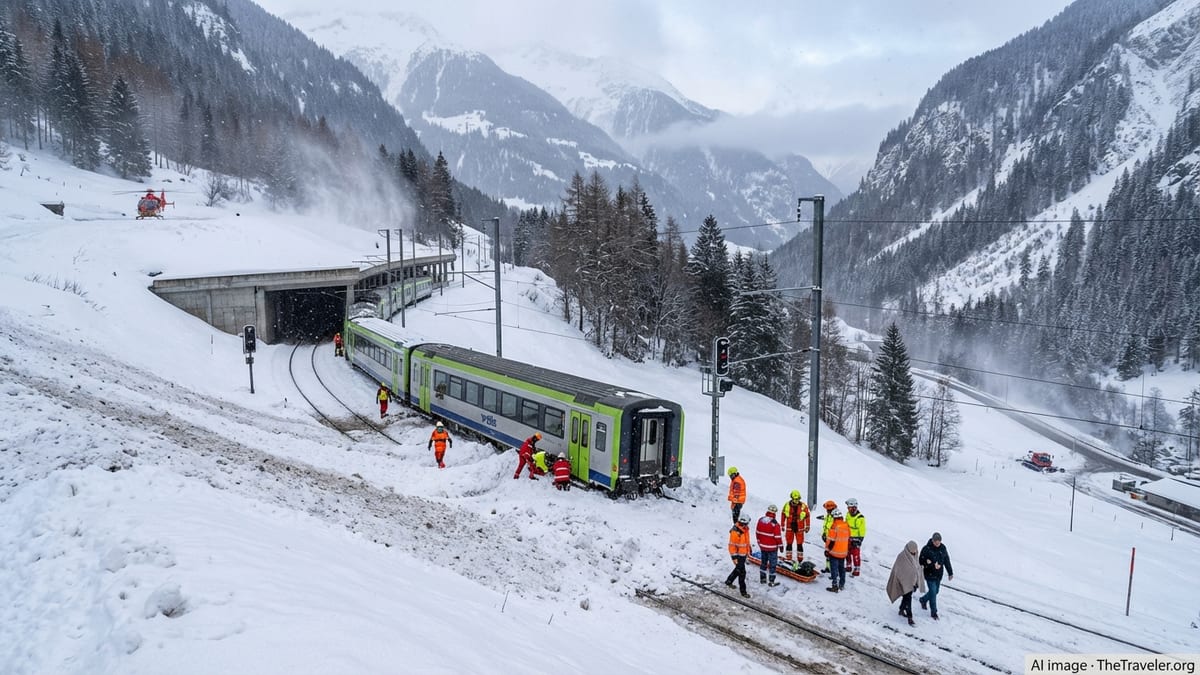
Collision at Elbeweg level crossing in Europoort
Reports from Dutch regional outlets indicate that the collision occurred at a level crossing on Elbeweg, a key industrial road serving terminals and storage facilities in the Europoort section of the Port of Rotterdam. A freight train travelling along the port rail corridor struck a lorry that was on the tracks, leading to the derailment of several wagons and significant damage to the crossing equipment and adjacent rail infrastructure.
Images and video published by local news coverage show a portion of the wagon consist off the rails and skewed alongside the track, with the lorry heavily damaged at the crossing. Railway manager information states that emergency responders and specialist rail recovery teams were deployed to secure the site, assess the condition of the rolling stock and track, and begin clearance planning.
Initial public information points to substantial damage but no preliminary indication of life threatening injuries. Local reporting notes that the lorry driver was able to leave the vehicle, while rail staff and other road users in the vicinity were examined as a precaution. A full accounting of any minor injuries and material losses is still being compiled.
Rail and road disruption around the port
The incident forced an immediate halt to train services on the affected port rail spur, temporarily blocking an important link used to move containers, bulk commodities and chemical products between quay terminals and inland Europe. Rail traffic through this part of Europoort was suspended while investigators documented the scene and recovery crews prepared to re rail wagons and repair the track and signalling equipment.
Road access around Elbeweg has also been constrained, as local reports describe cordoned off sections to allow heavy recovery vehicles, cranes and safety personnel to work. Diversions have been put in place for port traffic, with trucks being routed via alternative internal roads to maintain access to nearby terminals and tank farms.
For the broader passenger rail network, publicly available information suggests that the disruption is largely confined to freight movements within the port’s industrial zone rather than the main intercity or regional passenger corridors. However, logistics operators using the port’s rail terminals are being advised to expect knock on delays as train paths are rescheduled and damaged infrastructure is repaired.
Impact on cargo flows and logistics operations
The Port of Rotterdam is a major hub for rail borne freight connecting deep sea shipping services with inland destinations across the Netherlands, Germany, Belgium and beyond. Even a localised derailment in Europoort can temporarily affect scheduled train rotations, wagon availability and terminal handling plans, particularly for time sensitive cargoes such as chemicals, fuels and automotive parts.
Information from port focused news sources suggests that terminal operators and rail freight companies are working to re route some cargo via alternative sidings and loading tracks within the wider port complex. Where feasible, containers and bulk loads may be shifted to truck transport for short distances to inland depots until regular rail service is restored on the affected line.
Shippers that rely on block trains or intermodal services from Europoort are being encouraged to monitor updates from their logistics providers and infrastructure manager notices. While the physical damage is concentrated at one crossing, the need to reposition rolling stock and adjust timetables could cause residual delays even after the main track is cleared.
Early focus on level crossing safety
Although the precise sequence of events remains under examination, the collision highlights ongoing safety concerns at level crossings where heavy road vehicles intersect with busy rail freight routes. According to previous Dutch and European investigation reports into similar incidents, factors such as driver misjudgment, visibility constraints, signal compliance and traffic congestion can all play a role when large trucks approach railway crossings in industrial areas.
Publicly available background material from safety investigations in the Netherlands and neighboring countries underlines that collisions between trains and heavy vehicles have the potential to cause extensive infrastructure damage and environmental risk, especially when freight consists include hazardous materials. In this case, early reporting does not point to a dangerous goods release, but detailed checks of wagon loads and tank integrity form a standard part of the post accident review.
Experts note that ports combine dense flows of road, rail and maritime traffic in relatively confined spaces, increasing the need for robust crossing protection, clear signage and traffic management. The Europoort derailment is likely to prompt renewed discussion about whether additional measures such as upgraded barriers, improved approach layouts or further separation of road and rail alignments are warranted on key port access routes.
Next steps for investigation and recovery
Infrastructure manager communications indicate that the immediate priority is to stabilise the site, remove the derailed wagons and damaged lorry, and undertake emergency repairs so that at least limited rail movements can resume safely. This work typically includes detailed inspections of rails, sleepers, ballast, overhead power lines where present, and signalling systems affected by the impact.
Once the wreckage is cleared and the line is made technically safe, a more comprehensive investigation into the circumstances of the collision is expected to draw on data from signalling records, train control systems and any available camera footage from the area. Findings from this process may feed into recommendations on operating procedures, crossing design or driver awareness measures for both rail and road users in the port.
For travellers and industry stakeholders following developments, the Europoort derailment serves as a reminder of the close interdependence between rail safety and the reliability of supply chains moving through major European gateways. Further official summaries and technical assessments in the coming days will clarify both the direct causes of the collision and the steps being taken to reduce the chance of similar incidents in the future.