


More news on this day
Qatar Airways has disclosed new figures on how it coped with recent regional airspace closures, reporting that more than 16,000 stranded passengers were accommodated and ultimately rerouted after a sudden halt to operations through Doha.
Get the latest news straight to your inbox!
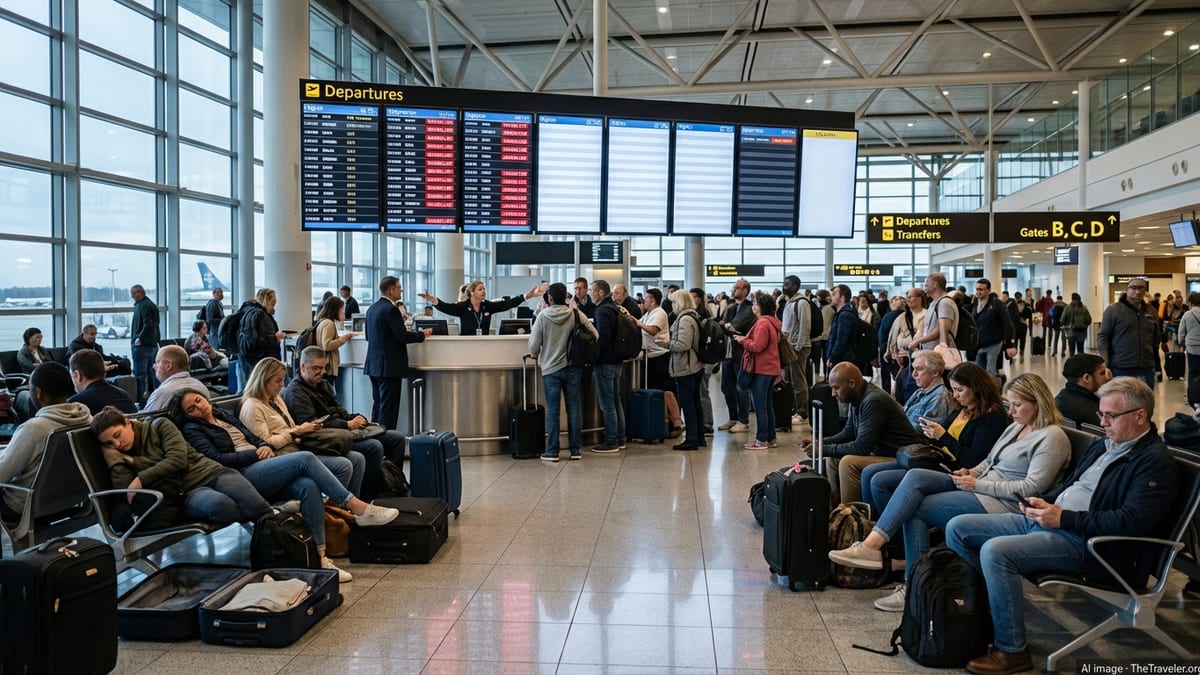
COO outlines scale of disruption and passenger impact
According to publicly available information from Qatar’s state news agency and regional media outlets, Qatar Airways Chief Operating Officer Abdullah Ali stated that the carrier accommodated and rescheduled travel for about 16,000 to 16,400 passengers who were stranded when Qatari airspace was abruptly closed on February 28. The closures affected the airline’s hub at Hamad International Airport as well as its wider network, disrupting journeys across several continents.
Reports indicate that roughly half of the affected travelers were in Doha at the time of the shutdown, while the remainder were scattered across outstations worldwide on Qatar Airways’ network. The airline’s normal wave of connecting traffic through Doha was interrupted, leaving thousands in limbo while contingency plans were activated and revised flight paths were negotiated.
Coverage in regional business media describes the event as one of the most complex operational challenges the carrier has faced since earlier crises in the Gulf, combining a sudden loss of national airspace with a large volume of long-haul passengers mid-journey. The COO’s comments position the handling of more than 16,000 passengers as a demonstration of the group’s crisis planning and its ability to reconfigure operations at short notice.
Hotels, meals and welfare support in Doha
Details compiled from Qatar-based outlets show that Qatar Airways arranged approximately 15,600 hotel room nights across 61 properties in and around Doha to accommodate stranded travelers. These bookings were used to house passengers who could not continue their journeys after the airspace closure, particularly those in transit through Hamad International Airport.
During the peak of the disruption, the airline and its partners provided more than 15,000 meals inside the airport to passengers awaiting onward transport or hotel transfers. Publicly available figures suggest that at one point around 8,000 people were stranded in Doha alone, placing significant pressure on airport facilities, catering capacity and ground transportation.
Airline statements cited in local media emphasize that passenger safety and basic welfare, including access to food, rest areas and medical support, were treated as the core priorities while longer-term rebooking and evacuation plans were finalized. The scale of hotel contracting and meal provision is being highlighted as evidence of pre-arranged crisis logistics that can be activated when regular schedules collapse.
Repatriation flights and phased network recovery
After several days of full suspension, Qatar Airways began operating limited relief services under special authorization from the Qatar Civil Aviation Authority. According to airline notices and subsequent media summaries, a controlled corridor allowed repatriation flights from Doha starting March 7, one week after the initial closure.
These flights were directed to major European hubs including London Heathrow, Paris Charles de Gaulle, Madrid, Rome Fiumicino and Frankfurt. Priority was reportedly given to families, elderly passengers and travelers with urgent medical or compassionate travel needs, reflecting a phased approach in which the most vulnerable cases were moved first while broader schedule recovery continued in the background.
Industry monitoring services note that the repatriation program formed part of a wider, multi-phase recovery strategy that included cargo operations to maintain essential supply chains. The experience is being cited in aviation analysis as a reference point for how hub carriers may structure evacuation corridors and prioritization frameworks in the event of future large-scale airspace shutdowns.
Crisis management, contingency planning and future lessons
Commentary from aviation-focused outlets suggests that Qatar Airways’ handling of the crisis drew heavily on existing business continuity plans, which define how aircraft, crew and passengers should be managed when normal airspace access is lost. These plans encompass everything from rapid coordination with civil aviation regulators to securing hotel capacity, mobilizing additional ground staff and designing improvised routings.
Observers point out that this is not the first time the carrier has had to navigate severe regional restrictions, recalling earlier diplomatic tensions in the Gulf that forced network-wide adjustments. The most recent airspace closures, however, combined geopolitical risk with an unprecedented volume of long-haul connecting traffic, testing both the resilience of the airline and the capacity of Hamad International Airport.
Aviation analysts quoted in open-source reports argue that the episode is likely to influence future crisis planning across the industry, particularly for hub-and-spoke carriers whose operations depend heavily on a single airspace and airport. Suggested areas of focus include pre-negotiated alternative routings, rapid-response hotel contracting, and robust communication channels to keep passengers informed during prolonged disruption.
Regional and global implications for air travel resilience
Beyond the direct experience of stranded passengers, the Qatar airspace shutdown has raised broader questions about resilience in global air travel. Industry reports note that the closure of a single state’s airspace can have cascading effects on flight paths, airport congestion and airline schedules far beyond the immediate region, especially when the affected hub sits at the crossroads of Europe, Asia and Africa.
For travelers, the incident has reinforced the importance of flexible itineraries and clear information about disruption policies, including accommodation, meal support and rebooking options. For airlines and regulators, it has underscored the need for coordinated contingency frameworks that can be activated quickly when geopolitical or security events force sudden changes to airspace availability.
As normal operations gradually resume, data from monitoring services and airline disclosures on the handling of more than 16,000 stranded passengers are likely to inform future best practices. The Qatar Airways case is already being examined alongside previous large-scale disruptions as carriers, airports and aviation authorities seek to reduce the human and operational impact of any similar crisis in the years ahead.
Qatar News Agency coverage of Qatar Airways COO remarks
Qatar Tribune report on stranded passenger accommodation
IndexBox analysis of Qatar Airways airspace closure response