


More news on this day
Airspace across much of the Middle East has reopened after months of conflict-driven restrictions, but passengers continue to face cancellations, diversions and reduced schedules as airlines tread cautiously and regional hubs struggle with knock-on disruption.
Get the latest news straight to your inbox!
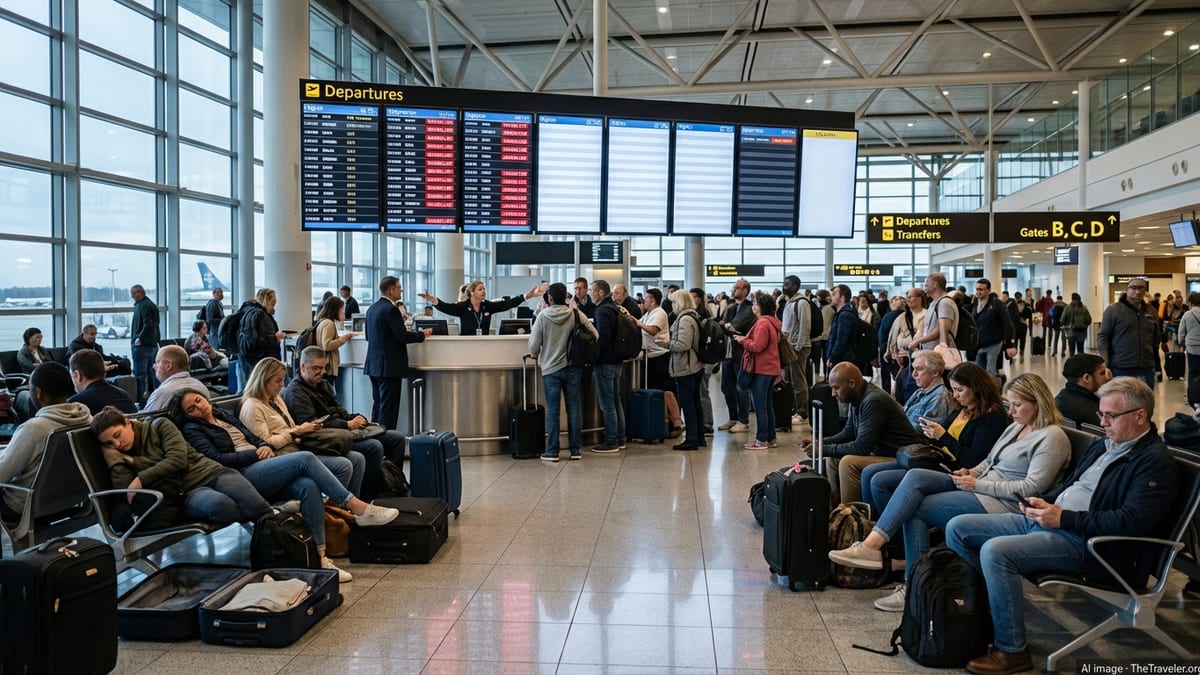
Reopened routes, but airlines hold back capacity
Publicly available operational notices show that most Gulf airspace is technically open, with Bahrain, Kuwait, Qatar and the United Arab Emirates allowing routine overflights and commercial services after waves of conflict-related closures earlier in 2026. Specialist aviation briefings indicate that Europe–Asia traffic has largely been funneled along southern corridors over Egypt, Saudi Arabia and Oman, or further north via the Caucasus and Afghanistan, as carriers adapt to evolving security guidance and risk assessments.
Despite the wider reopening, many international airlines are in no rush to restore full capacity. A recent analysis of airline schedules compiled by Reuters and industry outlets shows that global carriers have extended suspensions or sharp frequency cuts on multiple Middle East routes into late October and beyond, particularly to major hubs such as Dubai, Doha, Tel Aviv and Beirut. While national and regional airlines have moved faster to rebuild networks, foreign operators often continue to avoid certain airspaces or airports altogether.
Guidance summarized by flight-operations groups notes that the Damascus flight information region reopened in early 2025 and is again being used by some regional carriers as an alternative to heavily constrained Iran and Iraq corridors. However, several Western airlines still avoid Syrian airspace, preferring longer routings that add time and cost. The result is a patchwork recovery, with some routes returning close to pre-crisis patterns and others remaining largely absent from timetables.
Safety advisories from European regulators have also shifted in recent weeks, encouraging operators to resume flights to and from Gulf hubs under specific conditions while maintaining heightened caution in areas closer to active hostilities. Industry commentators point out that although the legal and technical framework for flying is back in place across many parts of the region, individual airlines continue to apply their own, often stricter, thresholds when deciding where to send aircraft and crews.
Major carriers extend suspensions into late 2026 and 2027
Recent factboxes published by financial and travel news services show that large European, North American and Asian carriers have pushed back their return to several Middle East destinations even as local airspace has reopened. Data collated this week indicates that Lufthansa Group, British Airways, Singapore Airlines, Cathay Pacific, Wizz Air and Air Canada are among the airlines maintaining significant suspensions on routes to Dubai, Abu Dhabi, Tel Aviv, Riyadh, Jeddah, Amman and Beirut.
According to those schedules, Lufthansa and British Airways have extended suspensions on multiple routes, including services to Dubai and Beirut, through at least late October. Singapore Airlines is keeping its daily Singapore–Dubai flight off the schedule until at least October 24, while Cathay Pacific is not planning to resume passenger flights to Dubai and Riyadh before the end of November. Low cost carrier Wizz Air is maintaining its suspension of Dubai and Abu Dhabi services until late October, alongside earlier cuts to Amman.
Some of the longest delays involve North American airlines. Air Canada has removed flights to Tel Aviv and Dubai from its schedule until January 2027, according to airline updates cited in financial news reports. In parallel, Delta Air Lines has only recently restarted a New York–Tel Aviv service, while plans by U.S. and European carriers for new routes to Israel have been postponed indefinitely pending a clearer security outlook.
By contrast, several Middle Eastern airlines have moved faster to rebuild networks. Industry coverage indicates that Qatar Airways is operating close to a normal global timetable, offering high-frequency services to major European and North American cities from Doha. Royal Jordanian and various Gulf carriers have also restored many connections from Amman, Riyadh and other regional hubs, although some southern Saudi airports remain closed following earlier attacks and remain off-limits to commercial traffic.
Operational bottlenecks at regional hubs
Even where airspace is open and flights are scheduled, operational bottlenecks at key hubs continue to frustrate travelers. A recent analysis of traffic data by a passenger-rights platform found that on a single day at the start of September, more than 1,600 flights were delayed and 71 were canceled across the wider Middle East, with disruption centered on Istanbul Airport and Cairo International Airport. Both airports remained open, but delays to inbound aircraft and congested gates produced a cascade of missed connections and onward delays.
The same analysis noted that the disruption was not linked to a single outage or weather event. Instead, airlines were already threading services through narrower air corridors to avoid Iranian and Iraqi airspace and parts of the eastern Mediterranean, pushing more flights through Turkey, Egypt, the Red Sea and the Caucasus. When schedules are tightly packed into these alternative routes, relatively minor timetable changes or station-level issues can ripple quickly through the system.
Travel advisories from regional agencies in the Gulf emphasize that airports in the United Arab Emirates, Saudi Arabia, Qatar and Oman are fully operational, but they also warn that airlines may still be flying reduced or selective schedules. Kuwait and Bahrain have reopened their airspace and report a gradual normalization of traffic, although several international carriers are operating at limited capacity or continue to avoid overflights even when local regulations allow them.
At the passenger level, this means that the status of a particular flight can change with little notice. Consumer websites tracking delays report that knock-on effects from one day of severe disruption at major hubs can continue for several days, as aircraft and crews are repositioned and airlines work through backlogs of displaced travelers. Travelers connecting between Europe, Africa and Asia via Middle Eastern or nearby hubs are therefore advised by multiple public resources to recheck their bookings repeatedly in the days and hours before travel.
Deepening impact on global connectivity and travel plans
Industry data compiled by airline trade bodies underscores the broader significance of these disruptions. Prior to the latest conflict, Middle Eastern carriers accounted for close to 10 percent of global passenger traffic, with hubs such as Dubai, Doha, Abu Dhabi and Istanbul acting as vital bridges between Europe, Asia, Africa and the Americas. Reports from aviation analysts highlight that when flights into and over the region are constrained, the consequences are felt well beyond the immediate neighbors.
A recent feature in a business travel publication notes that Emirates has rebuilt its route network to cover more than 130 destinations worldwide, representing more than 90 percent of its pre-disruption coverage. However, the same report points out that overall capacity remains several percentage points below pre-crisis levels, and that the absence of some major foreign carriers at Gulf airports has reduced the range of onward connections for many passengers.
International airspace closures and risk zones have also affected global route planning. Analysts at the International Air Transport Association describe how geopolitical tensions in Eastern Europe, the Middle East and parts of Asia have significantly reduced the available airspace for civil aviation, squeezing long-haul traffic into a smaller number of corridors. For some airlines, operating via Middle Eastern hubs under these conditions entails longer routings, higher fuel burn and complex contingency planning in case new restrictions are imposed at short notice.
Business-travel advisors say this environment is reshaping corporate travel policies and individual itineraries. Companies with staff traveling regularly between Europe, South Asia and the Far East are increasingly routing trips through multiple alternative hubs, or favoring airlines that have been quicker to restore Middle East operations. Leisure travelers, meanwhile, are being encouraged by travel agencies and online booking platforms to build in longer connection times, remain flexible about routings and stay alert to schedule changes that may appear only days before departure.
What travelers should watch in the coming weeks
While regulators and aviation authorities have loosened many of the most restrictive airspace bans, the coming weeks remain delicate for carriers and passengers alike. Aviation operations groups report that fighting between U.S. and Iranian forces has flared again in early September, rekindling concerns that new missile or drone incidents could trigger further short-notice airspace closures or diversions. At the same time, ongoing GPS jamming and spoofing incidents across parts of the region continue to complicate navigation planning for airlines and air traffic controllers.
Airlines are also clustering many schedule adjustments around the last weekend of October, the traditional switchover to the northern winter timetable. Travel-industry coverage suggests that some carriers intend to use that date as a target for gradually resuming suspended Middle East routes, while others have already signaled that certain destinations, including Dubai and Tel Aviv, will remain absent from their networks well into 2027. Passengers with travel booked around that period are being urged by multiple public sources to monitor their reservations closely as airlines finalize winter capacity decisions.
Regional travel advisories from Gulf-based agencies stress that most major hubs are open and functioning with full airport services, but they also highlight the importance of checking directly with airlines for the latest information. Even where an airport has restored normal operating hours and local airspace has reopened, individual carriers may still choose to reroute or cancel flights for commercial or safety reasons, sometimes with limited advance warning.
For travelers, the picture that emerges is one of open skies in regulatory terms, but a fragmented and often unpredictable reality on the ground. Published schedules and real-time tracking tools show a gradual but uneven return of flights across the Middle East, with resilient regional carriers carrying much of the traffic while many foreign airlines continue to wait for clearer signs of lasting stability before committing fully to the region again.
Business Traveller: Middle East airline suspensions and Dubai disruption
The National: Which Middle East flights are operating and which remain suspended
OPSGROUP: Current Middle East airspace operational picture
Voyages d'Affaires: Airline-by-airline Middle East flight status
AirHelp: How Middle East flight delays affected Istanbul and Cairo