


More news on this day
After years of packed planes, rolling meltdowns and shifting schedules, a growing majority of Americans no longer see smooth air travel as the norm. A new survey indicating that 89% of U.S. travelers are braced for flight delays or cancellations in the coming year underscores how deeply distrustful many passengers have become of the nation’s airline system.
Get the latest news straight to your inbox!
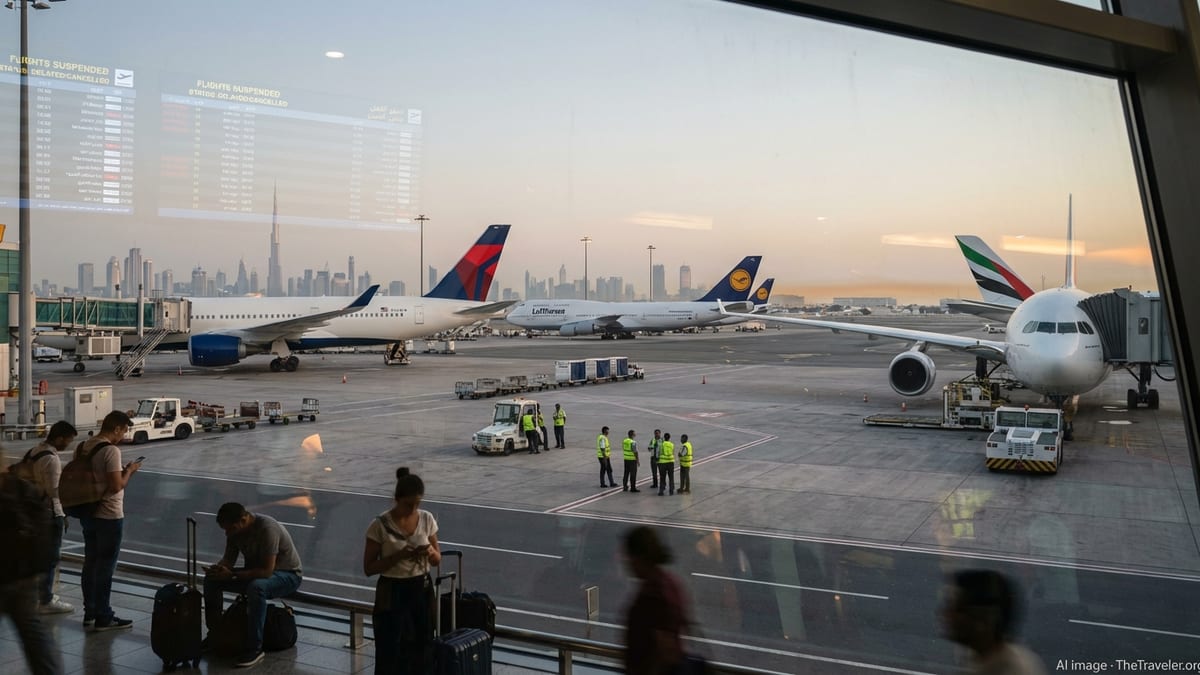
Survey Finds Anxiety Is Now Baked Into Trip Planning
The figure comes from a nationwide survey of more than 1,000 U.S. travelers conducted by Hopper Technology Solutions and highlighted this week by business outlet coverage. The research found that nearly nine in ten people who plan to fly in the next 12 months are worried about disruptions affecting their trips, reflecting a sharp gap between the promise of a ticketed itinerary and what many travelers now expect to experience at the airport.
The same survey indicates that worries about disruption are not abstract. A significant share of respondents reported having already faced major delays or outright cancellations in the past year, often learning about schedule changes only at the gate or via last minute notifications. For many, that history appears to be reshaping how they think about every future booking, turning concern about reliability into a default setting rather than a rare exception.
Broader polling supports the sense that flying feels more stressful. An April poll by Ipsos found that about half of Americans who had flown in the previous two months reported experiencing airline-related delays, and a majority said they were at least somewhat familiar with widespread disruptions at U.S. airports. Together, these data sets point to a national travel culture in which disruption is no longer surprising but widely anticipated.
Hard Numbers Show Disruptions Are Widespread
Perception is being reinforced by hard operational data. A recent report from an air passenger rights analysis firm on 2025 U.S. flight disruption patterns estimated that roughly 247 million passengers were affected by delays or cancellations last year, up from about 222 million just three years earlier. In percentage terms, more than 24% of all passengers departing from U.S. airports in 2025 encountered some form of disruption, while nearly 1.5% saw their flights canceled entirely.
Consumer advocates point to similar findings from public interest research groups, which report that cancellations and serious delays reached their worst levels in more than a decade in 2025. One study from a California-based advocacy organization found that airlines recorded hundreds of long tarmac delays and that several large carriers, including ultra-low-cost operators and one of the nation’s biggest network airlines, ranked among the poorest performers for on time operations.
Government and industry statistics echo those trends. Analyses drawing on Bureau of Transportation Statistics data show that although some individual carriers maintain on time arrival rates above 80%, others fall significantly below that benchmark, especially on crowded routes and peak travel days. For travelers who are choosing flights primarily by departure time or price, that variability can translate directly into uncertainty about whether they will actually arrive when planned.
Passengers Pay Financial and Emotional Costs
The knock on effects of that unreliability are substantial. A recent disruption report focused on the United States estimated that the average traveler who experiences a major delay or cancellation loses nearly 500 dollars in extra expenses and missed value, including last minute hotel stays, rebooked ground transportation, missed events and lost work time. Many passengers reported spending additional money simply to cope with the disruption, even when airlines provided some form of assistance.
Beyond the financial hit, disrupted journeys carry a heavy psychological toll. Surveys and consumer research describe rising levels of anxiety before and during trips, with travelers increasingly building contingency plans into their itineraries. Some report booking earlier flights than necessary, adding overnight buffers ahead of important events or shifting to alternative modes of transportation such as driving or rail when possible, even for trips they once would have flown.
That mindset is especially pronounced among frequent flyers. The Hopper-backed survey found that travelers who take more than a dozen trips per year are among the most likely to purchase additional protection against disruption, with around 90% of that group saying they would consider adding a “cancel for any reason” option to their bookings. Travel insurers and online agencies, in turn, are designing new products that explicitly target delay-related costs, reflecting an assumption that disruption is not just possible but probable.
Protection Products and Regulation Expand as Trust Erodes
As confidence in airline reliability erodes, a growing ecosystem of protections is taking shape. Online travel agencies and ticketing platforms report increased interest in add ons that reimburse expenses when flights are delayed or canceled. According to published coverage of the Hopper survey, about 60% of travelers overall now say they are likely to pay for such options, even when they add noticeable cost to a fare.
Regulators have also moved to tighten consumer rights in response to years of complaints. New U.S. Department of Transportation rules that took effect in late 2024 require airlines to provide automatic cash refunds when flights are canceled or when long delays meet specific criteria. Publicly available information about these rules shows that they aim to reduce the burden on passengers, who previously often had to navigate complex claims processes or settle for credits and vouchers.
Despite these steps, complaint data remain elevated. Analyses of federal consumer reports indicate that grievances about cancellations, delays, refunds and customer service have climbed sharply compared with pre pandemic baselines. Travel rights organizations argue that as long as disruption levels remain high, better refund rules and add-on insurance will be seen less as extras and more as essential armor for anyone boarding a plane.
Reliability Varies Sharply by Airline and Route
Not all carriers are performing equally poorly, and that unevenness is shaping traveler behavior. Independent reliability rankings compiled from federal performance data show that a handful of U.S. airlines, including certain network and regional operators, consistently achieve on time rates in the mid 80% range and maintain relatively low cancellation rates. Others, particularly some ultra-low-cost and leisure-focused carriers, record much higher shares of delayed and canceled flights.
Advocacy group reports and private analytics platforms alike describe a pattern in which a small number of chronically underperforming airlines and hubs account for a disproportionate share of disruption. Some of the worst delays are linked to operational challenges and scheduling practices that leave carriers with little margin when weather or air traffic control constraints arise. In a few high profile cases, technology outages have triggered multi day meltdowns that stranded hundreds of thousands of passengers.
For consumers, however, these distinctions can be difficult to navigate at the moment of purchase. Fare displays frequently emphasize price over reliability, and schedule listings do not always highlight historic performance. As a result, many travelers book based on convenience, only to discover after a disruption that their chosen flight or carrier has a below average track record.
Industry and consumer analysts say that growing use of data driven tools may gradually change that dynamic, as more travelers consult historical on time statistics, airline rankings and disruption forecasts before committing to an itinerary. Until then, though, the latest surveys suggest that most Americans will continue to plan for the worst whenever they step into an airport, treating delay and cancellation not as outliers but as a built in feature of U.S. air travel.