


More news on this day
A residential cruise ship that forced hundreds of long-term passengers to disembark in Cambodia after its operator ran out of funds has now been seized in Singapore, according to publicly available court and maritime records, leaving former residents facing prolonged uncertainty over refunds and future travel plans.
Get the latest news straight to your inbox!
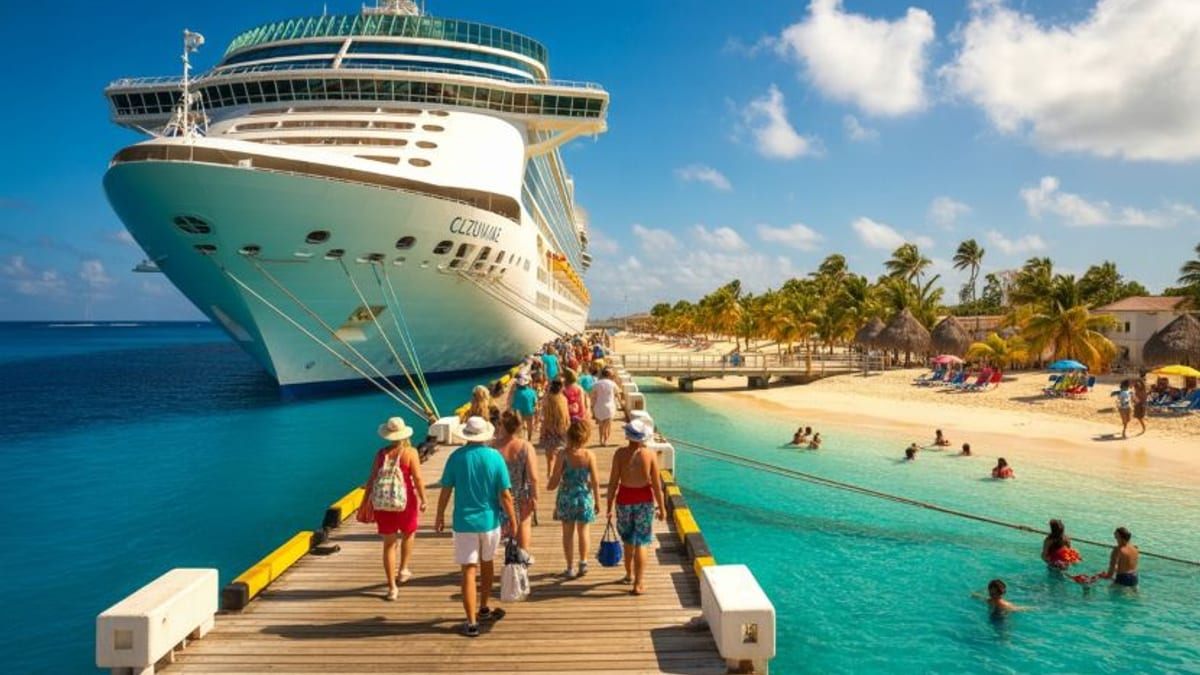
Residential “forever cruise” unravels in Southeast Asia
The vessel at the center of the dispute, marketed as the Villa Vie Odyssey, had been sold as a long-term or even “forever” cruising option, allowing residents to live at sea while circling the globe. Publicly available company information and media coverage indicate the ship began its ambitious program in October 2024, with cabins sold on multi-year or lifetime arrangements.
Reports from multiple outlets describe how the business model depended on sustained financing and steady operating cash to cover fuel, port charges and crew. In recent weeks, however, documents cited in international coverage show a scramble for funds, growing arrears to suppliers and lenders, and mounting pressure on the operator, Villa Vie Residences, to stabilize the voyage.
The breaking point came in Cambodia in late October 2026, when more than 200 residents were instructed to pack their belongings and leave the ship in the port city of Sihanoukville. Accounts compiled by regional broadcasters and international newspapers indicate that passengers were given only hours to clear cabins that, in many cases, they had expected to occupy for years.
Following the disembarkation, tracking data cited in maritime industry reports showed the Odyssey remaining at Sihanoukville’s port while new arrangements were negotiated. Within days, the ship departed Cambodia without any passengers on board, headed for Singapore with a reduced crew and under the shadow of outstanding financial claims.
Seizure in Singapore and what a ship “arrest” means
According to coverage drawing on Singapore court filings and statements by the Maritime and Port Authority, the Odyssey arrived in the city-state in early November 2026 and was placed under “arrest,” a legal mechanism that allows a court to detain a vessel as security for alleged debts or other maritime claims.
Publicly accessible explanations from maritime law specialists describe a ship arrest as a civil procedure, not a criminal seizure. The vessel remains under the jurisdiction of the court while claimants, often including lenders and suppliers, seek repayment. During this period, the ship is typically barred from leaving port, and ongoing operational control may be limited or transferred, depending on the terms set by the court.
Reports indicate that at least one creditor linked to ship financing has taken steps to secure its interests in the Odyssey, which has a capacity of about 650 passengers. Earlier industry coverage suggested that creditors had already moved to exert control while the ship was still in Cambodia, including decisions regarding its onward voyage to Singapore.
Media outlets focused on maritime affairs note that an arrest can end with claims being settled, with the vessel sold at auction, or with the case dismissed if parties reach agreement. For travelers who invested large sums in long-term residential cruises, the ship’s legal limbo in Singapore now forms only one part of a broader financial and personal uncertainty.
Stranded passengers in Cambodia face costs and uncertainty
While the Odyssey sits detained in Singapore, many of the passengers who were living on board remain scattered across Cambodia and beyond. Local and international news reports describe around 200 people initially left in Sihanoukville, though the precise number has varied as more residents departed by air to their home countries or onward destinations.
Coverage from global broadcasters and financial publications indicates that many passengers had committed six-figure sums for multi-year stays or lifetime rights to cabins. Some individuals cited in news stories reported paying several hundred thousand dollars for their units, only to see the voyage end after a matter of weeks. With the company’s operations suspended and no comprehensive refund plan publicly in place, travelers have in many cases had to fund their own flights, hotels and emergency arrangements.
Accounts collected by major news organizations and travel-focused outlets describe residents hastily seeking hotel rooms in Sihanoukville and Phnom Penh, competing for limited availability as dozens of fellow passengers did the same. Others reportedly turned to online travel platforms to rebook long-haul flights at short notice, often at higher prices than when purchased in advance.
In some cases, publicly available reporting notes that passengers organized mutual support groups, sharing accommodation tips in Cambodia and coordinating information on potential legal avenues. However, there is no indication from official records that a comprehensive compensation scheme has yet been finalized, leaving many still unsure whether they will recover any of their investment.
Implications for would-be “liveaboard” cruise residents
The troubles of the Villa Vie Odyssey have drawn attention across the travel industry because the ship was among the most prominent examples of a growing niche: residential cruising, in which travelers effectively move their home onto a vessel for an extended period. Travel analysts quoted in business and lifestyle media have noted rising interest in this model in recent years, particularly among retirees and remote workers.
Public commentary from cruise specialists suggests that the Odyssey’s experience may prompt closer scrutiny of how such projects are financed. Prospective residents are now being encouraged, in travel columns and consumer advice pieces, to examine ship ownership structures, lending arrangements and escrow protections before committing large sums. Some writers point to the importance of understanding what happens if fuel prices spike, occupancy targets are missed or lenders withdraw support.
The events in Cambodia and Singapore also highlight practical considerations for travelers who make their home at sea. When a ship’s operator halts service, residents may suddenly need to find temporary accommodation, arrange storage for belongings and secure last-minute travel from relatively remote ports. As seen in Cambodia, those ports may not have the same flight frequency or hotel capacity as major hubs, adding stress and cost at already difficult moments.
Despite these concerns, industry reporting suggests that interest in long-term cruising is unlikely to disappear. However, the arrest of the Odyssey in Singapore, coupled with the images of former residents wheeling suitcases down the pier in Sihanoukville, has become a vivid case study in the risks involved when a “forever” cruise depends on fragile financing.
Singapore and Cambodia’s roles in a regional travel saga
The Odyssey’s arc through Cambodia and Singapore underscores the role of Southeast Asian ports in global cruising and maritime finance. Sihanoukville has, in recent years, positioned itself as an emerging cruise call in the Gulf of Thailand, receiving ships that link regional itineraries to larger world voyages. In this case, the Cambodian port became the unexpected endpoint for hundreds of passengers, rather than a temporary stop on a multi-year journey.
Singapore, by contrast, is widely recognized in maritime industry analysis as a key legal and logistical hub for ship finance, repair and dispute resolution. The city-state’s courts and maritime regulators regularly handle vessel arrests, auctions and restructurings. For the Odyssey, arrival in Singapore shifted the story from a passenger emergency to a complex legal and financial process, visible mainly through case listings and shipping data rather than social media posts from travelers.
Regional tourism observers note that the episode comes at a time when Southeast Asian destinations are actively promoting cruise tourism, investing in terminals and marketing campaigns to attract both conventional itineraries and more experimental concepts such as residential voyages. The high-profile difficulties of a ship that promised a seamless “live at sea” lifestyle may prompt further discussion among regulators, port authorities and operators about safeguards for travelers.
For now, publicly available information indicates that the Villa Vie Odyssey remains under arrest in Singapore, while many of its former residents continue to piece together new plans on land. As legal proceedings advance, the case is likely to remain a reference point in debates over how far the cruise industry can stretch the idea of a voyage before it collides with the hard realities of maritime law and financial risk.