


More news on this day
The United States has revoked more than six hundred visas and established a new birth tourism task force, marking a significant escalation in efforts to curb what policymakers describe as organized schemes to obtain U.S. citizenship through short-term travel.
Get the latest news straight to your inbox!
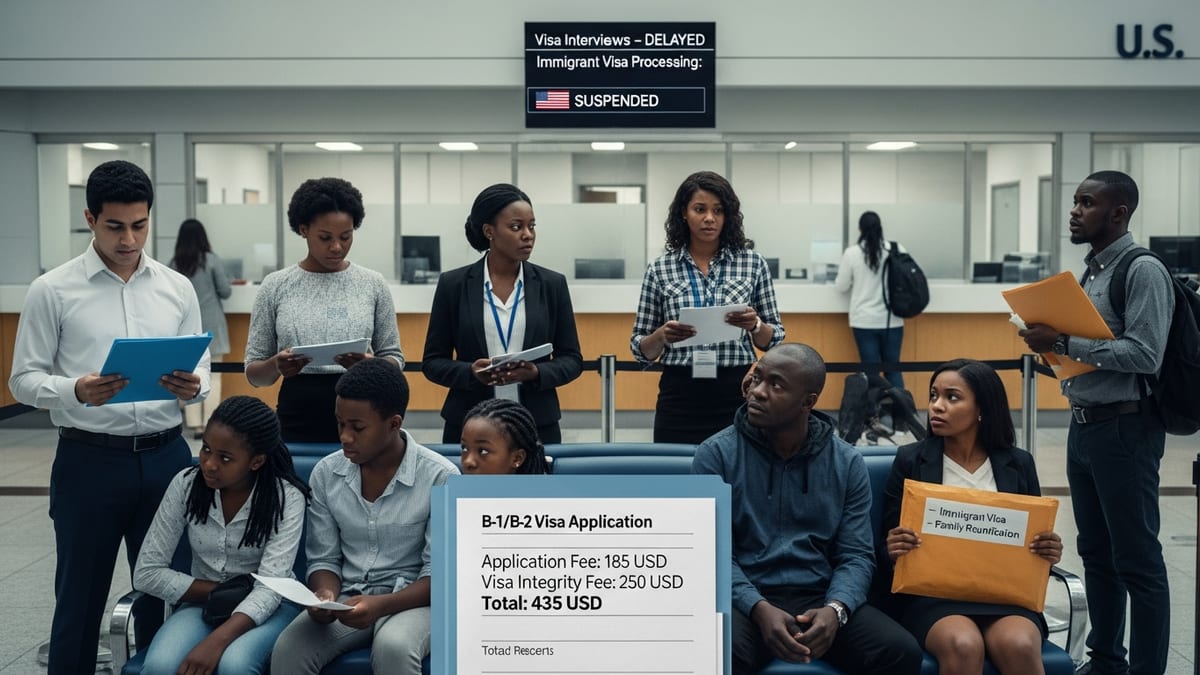
A Coordinated Crackdown on Birth Tourism Networks
Recent public reporting indicates that U.S. consular posts have canceled hundreds of visas across multiple regions as part of an intensified campaign against organized birth tourism operations. These cancellations reportedly include large blocks of visitor visas tied to parents who traveled primarily to give birth in the United States, as well as individuals linked to commercial brokers who arrange travel, housing and hospital access for late‑term pregnancies.
Accounts compiled from official notices, congressional documents and news coverage describe birth tourism as a structured industry in parts of Africa, Europe and Asia, involving visa fixers, fraudulent documentation and coaching on how to answer consular and border questions. In one widely cited case, a U.S. embassy in North Africa revoked more than one hundred visas connected to birth tourism packages, a pattern that officials now appear to be replicating in other posts as the new task force ramps up operations.
While the headline figure of over six hundred revoked visas is relatively small compared with the tens of millions of valid U.S. visas worldwide, analysts note that such targeted actions are designed less to change overall migration flows and more to send a deterrent signal to commercial operators who advertise guaranteed citizenship as part of all‑inclusive maternity travel packages.
New Task Force Links Consular Screening and Domestic Enforcement
The newly created birth tourism task force is described in public materials as a multi‑agency coordination body that brings together the State Department, the Department of Homeland Security and other investigative arms to focus specifically on visa fraud and organized birth tourism networks. Congressional records from hearings on visa enforcement show that lawmakers have pushed for a dedicated structure to track patterns across embassies, share intelligence and move more quickly to dismantle schemes that span multiple countries and jurisdictions.
According to available documentation, the task force’s mandate includes analyzing data from visa applications, airline manifests and prior immigration encounters to flag unusual patterns of late‑term travel on short‑stay visitor visas. It is also expected to coordinate civil and criminal investigations into facilitators, including travel agencies, fixer networks and property managers who market short‑term rentals to heavily pregnant visitors in designated U.S. cities.
Policy specialists note that the task force formalizes practices that have evolved piecemeal over the past decade, from early prosecutions of birth tourism rings in California and New York to more recent visa policy changes that allow consular officers to deny a visitor visa if the primary purpose of travel is to give birth in the United States. The new structure, they argue, signals an intent to move from isolated cases toward systematic enforcement.
Legal Basis: Visa Fraud, Not Birthright Citizenship
Legal analysts emphasize that the current enforcement push targets visa misuse and fraud rather than attempting to directly alter the constitutional principle of birthright citizenship. Court decisions and legal commentary referenced in recent coverage highlight that the Fourteenth Amendment continues to guarantee citizenship to most children born on U.S. soil, with narrow historical exceptions.
Instead, the government is focusing on the front end of travel by scrutinizing whether applicants misrepresent the purpose or duration of their stay when applying for visitor visas or seeking admission at ports of entry. Immigration law already treats material misrepresentation to obtain a visa as a ground for inadmissibility and future visa ineligibility, and the new task force is expected to apply those provisions more aggressively in the context of birth tourism.
Past regulatory changes have laid the groundwork for this approach. Before the latest initiative, rules governing B‑1 and B‑2 visitor visas were updated to state that applicants whose primary purpose is to give birth in the United States to secure citizenship for a child can be refused. The current wave of revocations and investigations is being framed as an extension of that framework, backed by enhanced data sharing and continuous vetting of existing visa holders.
Travel Industry and Global Mobility Implications
The crackdown arrives at a delicate moment for the U.S. travel sector, which has already weathered several years of volatility driven by shifting visa rules, travel bans and broader debates over immigration. Tourism groups have previously warned that broad or unpredictable changes in entry policy can dampen demand, particularly among visitors who are sensitive to the risk of being turned away after investing in flights and accommodation.
Industry observers suggest that the birth tourism task force, by design, targets a narrow subset of travelers. However, they also note that heightened scrutiny of pregnant visitors and expanded use of medical documentation could have ripple effects for legitimate medical tourism and family travel. Some advocates for international visitors have raised concerns that travelers with high‑risk pregnancies or those seeking specialized care might face added questioning or delays in visa processing.
On the other hand, supporters of the initiative point to long‑standing complaints from U.S. hospitals and local communities about unpaid medical bills and the strain of uncompensated maternity care tied to organized birth tourism groups. Publicly available case files from earlier prosecutions describe packages priced from several thousand dollars to well into six‑figure sums, with marketing aimed at affluent clients who can afford private services and extended stays.
What Prospective Visitors Should Know
Immigration attorneys and travel advisers quoted in recent media coverage encourage foreign nationals who are pregnant or planning to become pregnant during a trip to the United States to exercise particular care in documenting the purpose and funding of their travel. They recommend keeping detailed evidence of tourism plans, medical insurance and return arrangements, and being prepared to explain how pregnancy or childbirth fits into a broader itinerary rather than serving as the sole purpose of the visit.
Experts also stress that revocation of a visa for suspected birth tourism or misrepresentation can carry long‑term consequences well beyond a single trip. A fraud finding typically triggers lengthy or permanent ineligibilities that make future business, study or leisure travel to the United States far more difficult. For that reason, many advisers urge would‑be travelers to avoid any coaching that encourages them to conceal pregnancy or provide scripted answers during interviews.
As the new birth tourism task force begins to coordinate cases and generate data, observers expect further waves of targeted visa revocations and, potentially, additional regulatory proposals. For now, the message emerging from official documents and public reporting is that using visitor visas primarily as a pathway to secure citizenship for a future child is being treated as a priority enforcement area, with tangible consequences for both organized operators and individual travelers.