


More news on this day
New and updated travel warnings for the United Arab Emirates and Qatar are reshaping travel planning across the Gulf, as governments highlight heightened regional risks and the potential for sudden airspace disruption that can strand passengers or reroute long-haul trips.
Get the latest news straight to your inbox!
What the latest warnings say for UAE and Qatar
Publicly available travel-advice updates from multiple governments now place both the UAE and Qatar under elevated caution levels tied to regional security volatility and aviation disruption risk. The U.S. State Department lists Qatar at Level 3 “Reconsider Travel” as of August 28, 2026, citing the risk of armed conflict and the ongoing threat of drone and missile attacks, as well as disruptions to commercial flights. The UAE is also listed at Level 3 “Reconsider Travel” as of August 29, 2026, citing terrorism and armed conflict, along with warnings that travel in certain areas may require special authorization for U.S. government employees.
Canada’s travel advice is more restrictive for both destinations. As of September 15, 2026, Canada advises avoiding non-essential travel to the UAE due to the volatile security situation in the region. Canada also advises avoiding non-essential travel to Qatar, with a page last updated September 14, 2026, and notes that missile and drone attacks have resumed and have struck targets in Qatar, while military activity may cause flight cancellations and broader travel disruption.
The UK’s Foreign, Commonwealth and Development Office travel advice for Qatar, shown as current at September 20, 2026, highlights regional tension and an unpredictable security environment. It notes that strikes and retaliatory attacks have occurred in the region since July and flags the possibility of flight cancellations, periodic airspace closures, and other disruptions that can change quickly.
Why travelers are paying attention now
In practical terms, these warnings matter because the UAE and Qatar are not only destinations but also two of the world’s most important long-haul transit hubs. Even travelers bound for Asia, Africa, or Europe may find their itineraries affected if connections through Dubai, Abu Dhabi, or Doha become unavailable on short notice.
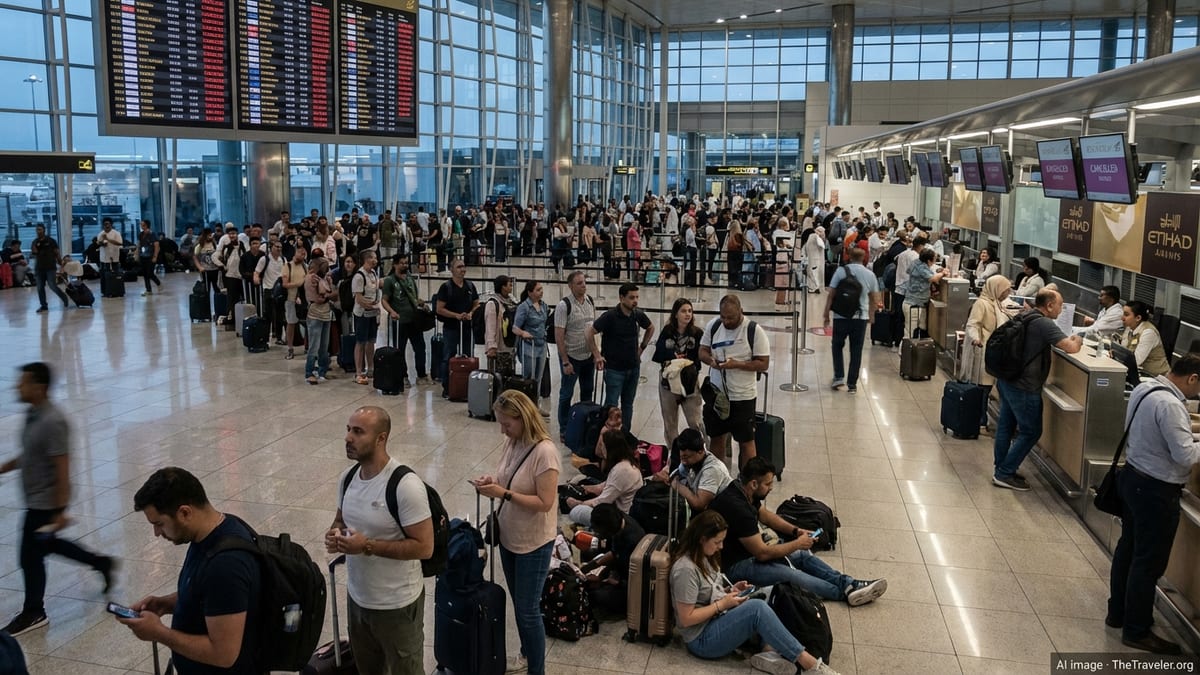
Recent regional conflict has already illustrated how quickly aviation networks can seize up. Published coverage of the initial February 28, 2026 escalation described widespread airspace closures and severe flight disruptions across the Middle East and beyond, affecting major hub operations and creating significant passenger backlogs. While conditions vary day to day, the key takeaway for travelers is that disruption risk is not limited to a single country’s borders.
Canada’s broader guidance on the Middle East conflict’s impact on travel, updated August 28, 2026, warns that deterioration could trigger airspace closures and flight disruptions with little notice and may also contribute to longer routes and higher travel costs. That advisory also emphasizes contingency planning, including access to extra funds and medication in case travelers face delays or get stranded.
Air travel and operational risks: what can change quickly
Travel advisories frequently point to aviation safety concerns without detailing every operational constraint, but the theme is consistent: elevated regional tension can create shifting risk to civil aviation. The U.S. State Department advisory for Qatar specifically references Federal Aviation Administration notices for the region and urges operators to review current threat information and report incidents, reflecting the ongoing attention to airspace risk management.
For travelers, the most immediate effects tend to be schedule volatility, reroutes, and cancellations. Even when airports remain open, airlines may adjust routings to avoid certain corridors, which can lengthen flight times and complicate tight connections. Travelers with multi-leg itineraries, especially those involving separate tickets, may face higher exposure to missed connections and rebooking costs.
Government advisories also frequently note that local restrictions can tighten quickly around sensitive sites. Canada’s UAE guidance includes reminders that drone attacks may be intercepted over the country and that debris can fall, and it recommends sheltering away from windows during alerts. The UK’s UAE safety guidance similarly emphasizes terrorism risk and the possibility of indiscriminate attacks in places visited by foreign nationals.
Insurance, refunds, and what to check before you go
One of the biggest practical impacts of a heightened advisory level is insurance. Canada’s guidance explaining travel advisory levels notes that if an “Avoid non-essential travel” or “Avoid all travel” advisory is already in place when a trip is booked, coverage may be limited or denied depending on policy terms. That can affect trip cancellation, interruption, medical coverage, and evacuation clauses, particularly where exclusions apply to conflict-related events.
Travelers should also expect stricter interpretation of change and refund rules during volatile periods. Airline policies vary by fare class and by the reason for a schedule change. When disruption is driven by operational needs rather than a government-ordered closure, travelers may find that rebooking flexibility depends on the carrier’s own waivers and the timing of changes.
Beyond airline and insurance terms, official destination pages underscore legal and behavioral risks that can become more consequential during a security incident. Canada’s UAE and Qatar advisories warn that photographing, filming, or sharing images of military installations, activity, or damage can lead to severe penalties under local enforcement across the region, adding another layer of caution for travelers who document events on social media.
What travelers can do now: realistic trip planning for the Gulf
With advisories elevated, planning becomes less about generic travel tips and more about resilience. Canada’s travel disruption guidance recommends checking both the destination and any transit points, verifying insurance coverage for cancellation and interruption, building a contingency plan for delays, and registering travel to receive location-specific updates. These steps are especially relevant for travelers connecting through the Gulf even if their final destination is elsewhere.
For travelers already in the UAE or Qatar, advisories emphasize preparedness: keeping travel documents current and accessible, monitoring local and international news, and being ready to shelter in place if instructed. For those considering non-essential trips, the current advisory levels from the U.S., Canada, and the UK signal that postponement may be worth weighing against the potential for sudden operational disruption.
For the broader travel industry, the message is that the Gulf’s role as a global connector magnifies the effects of any instability. When advisories tighten for the UAE and Qatar, the ripple can extend to flight availability, prices, and routings far beyond the region, making it essential for travelers to recheck conditions close to departure and again before their return.