


More news on this day
As international traffic stays elevated at Seoul’s Incheon International Airport in 2026, travelers flying Korean Air are being advised to plan for occasional knock-on delays and to use Incheon’s digital congestion tools to time check-in, security, and onward ground transport more smoothly.
Get the latest news straight to your inbox!
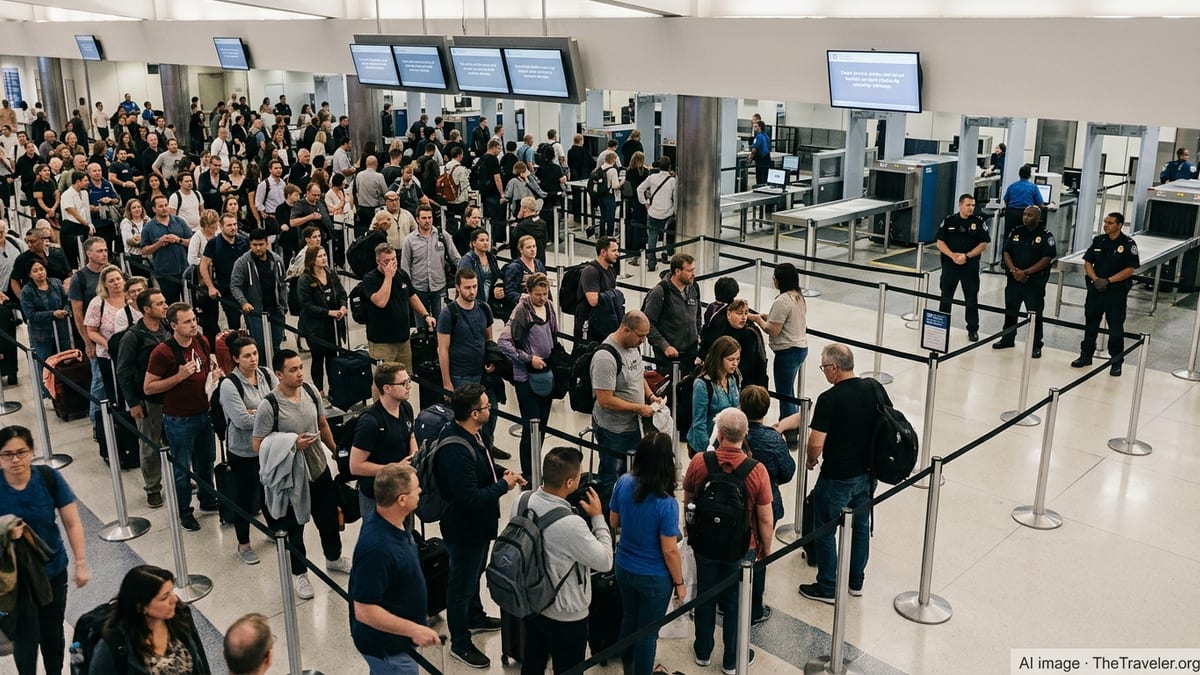
What’s driving the 2026 pinch points at Incheon
Published coverage from South Korean outlets this summer described Incheon’s peak-season environment as a high-volume operation, with millions of passengers moving through the airport in concentrated windows and with specific days and morning blocks seeing the heaviest demand. Those peak patterns matter because congestion is rarely “all day”; it tends to spike when long-haul departures cluster and when large arrival banks feed immigration and baggage halls.
Incheon International Airport Corporation has also highlighted operational “special measures” used during peak stretches, including earlier opening of departure halls, additional staffing for passenger guidance, and expanded use of fast-processing lanes tied to the airport’s Smart Pass program. These steps can help stabilize average waits, but the practical takeaway for travelers is that conditions can still change quickly by terminal, checkpoint, and hour.
For trip timing in late 2026, travelers should also keep an eye on airline network changes around the Korean Air and Asiana Airlines integration timeline. Asiana has posted a detailed notice outlining that flights departing on or after December 17, 2026, are slated to operate under Korean Air flight numbers with Korean Air as the operator, with reservation and ticket-information transfers happening gradually in November and early December 2026. Even when operations run normally, system and schedule changes can add friction for passengers who do last-minute changes, airport check-in, or lounge access during transition periods.
Korean Air delays: what travelers can verify before leaving home
Not every disruption is a headline event, and many “delay days” come from routine factors such as late inbound aircraft, air traffic flow programs, or weather along the route. Public flight-status trackers for individual Korean Air flights show that delays of around an hour can occur on some long-haul sectors on certain days, which can be enough to cascade into tight connections or late-night arrivals at Incheon.
For travelers, the most useful pre-airport check is to confirm the current day’s departure time and the most recent operational history for the specific flight number rather than relying on the timetable alone. If your flight time shifts earlier or later, it can also change which hour-block you hit at Incheon for check-in and security, which is when congestion can feel most intense.
Separately, schedule adjustments can be seasonal and route-specific. Industry schedule reporting has noted limited-time aircraft upgauges on select regional routes in September 2026, including a short window of Airbus A380 service on Korean Air’s Seoul Incheon to Taipei Taoyuan flights in mid-September. Aircraft swaps like these are not inherently “bad news,” but they are a reminder that gate areas, boarding flows, and lounge crowding can change when capacity or equipment changes.
Incheon’s real-time tools: where to check congestion before you arrive
Incheon provides official online tools designed to make the airport’s crowding more predictable. One is the airport’s congestion prediction service, which publishes passenger-volume forecasts by time range and notes that the dataset is refreshed daily, with the service designed to help customers check time-based congestion in advance. The service also notes that when flight departure or arrival times and similar operational details change, the predicted passenger counts shown can be updated accordingly.
For travelers already at the airport, Incheon also publishes real-time wait-time displays for Terminal 1 departure-hall processing, with a notice that waits can vary depending on security screening and immigration procedures. These official wait-time pages are most helpful as a directional check: if one departure area is crowded, Incheon’s own guidance indicates passengers may use a nearby departure hall, which can reduce time spent standing in a single long queue.
In practical terms, that means travelers should separate “terminal choice” from “checkpoint choice.” Even within the same terminal, the shortest path is not always the fastest path, and using the airport’s wait-time indicators can help you choose a less congested screening entrance.
Smart Pass in 2026: what it does, and what it doesn’t
Incheon’s Smart Pass is positioned as a facial-recognition based option that can shorten document-handling time at parts of the departure process. The airport’s published how-to materials describe a registration flow that includes scanning a passport via phone NFC and capturing facial images, followed by boarding-pass registration through QR or barcode scanning. The airport’s instructions also emphasize a key point: even after registering Smart Pass, travelers should still carry a passport and boarding pass.
In 2026, Smart Pass can also be accessed through selected South Korean finance or wallet apps that integrate ID registration, and published business coverage has described expanded participation by major airlines, including Korean Air and Asiana Airlines, for the dedicated Smart Pass line at the departure hall and at certain boarding gates. The most important nuance for travelers is that availability can depend on terminal location and “certain gates,” so it is best treated as a speed booster rather than a guaranteed fast track from curb to seat.
Smart Pass is not the same thing as arrival-side automated immigration eligibility, and it does not remove the need to plan for variability at inbound immigration during peak arrival banks. If your itinerary includes a tight same-day connection at Incheon, build extra buffer even if you intend to use Smart Pass on the outbound segment later in the trip.
Ground transport after a delay: timing buffers and Seoul rail options
When delays or long queues push your arrival later into the evening, the next bottleneck can be the transfer into Seoul. The Seoul Metropolitan Government’s visitor guidance notes that the Airport Railroad Express (AREX) links Incheon Airport to Seoul Station, with published travel times of about 59 minutes from Terminal 1 and about 66 minutes from Terminal 2, plus a small additional margin for some trains.
The key planning move is to buffer not just for “flight landing time,” but also for the time between touchdown and the train platform: taxi-in, deplaning, immigration, baggage, and the walk to transport centers. On days when immigration is slow, an arrival that looks “on time” can still lead to a missed train window if you planned too tightly.
For late-2026 travel, another practical consideration is the administrative side of irregular operations. Korean Air’s published policies reference rebooking support for denied boarding and outline that where the Montreal Convention applies, a liability limit for baggage issues is stated in Special Drawing Rights, while also noting that certain country-specific rules can apply on routes such as Canada. Travelers dealing with a disruption should keep receipts and document timelines, then use the airline’s formal channels after travel rather than trying to resolve everything at the curb during a crowded peak-hour rush.