


More news on this day
UAE residents planning trips in the coming days are navigating a fast-moving regional travel picture, with a new US security alert warning of possible rapid escalation, shifting talk around Iran ceasefire terms, and renewed missile and drone interceptions linked to the Yemen conflict. While Dubai and Abu Dhabi airports have continued operating normally overall, published coverage shows some regional services remain vulnerable to last-minute schedule changes.
Get the latest news straight to your inbox!
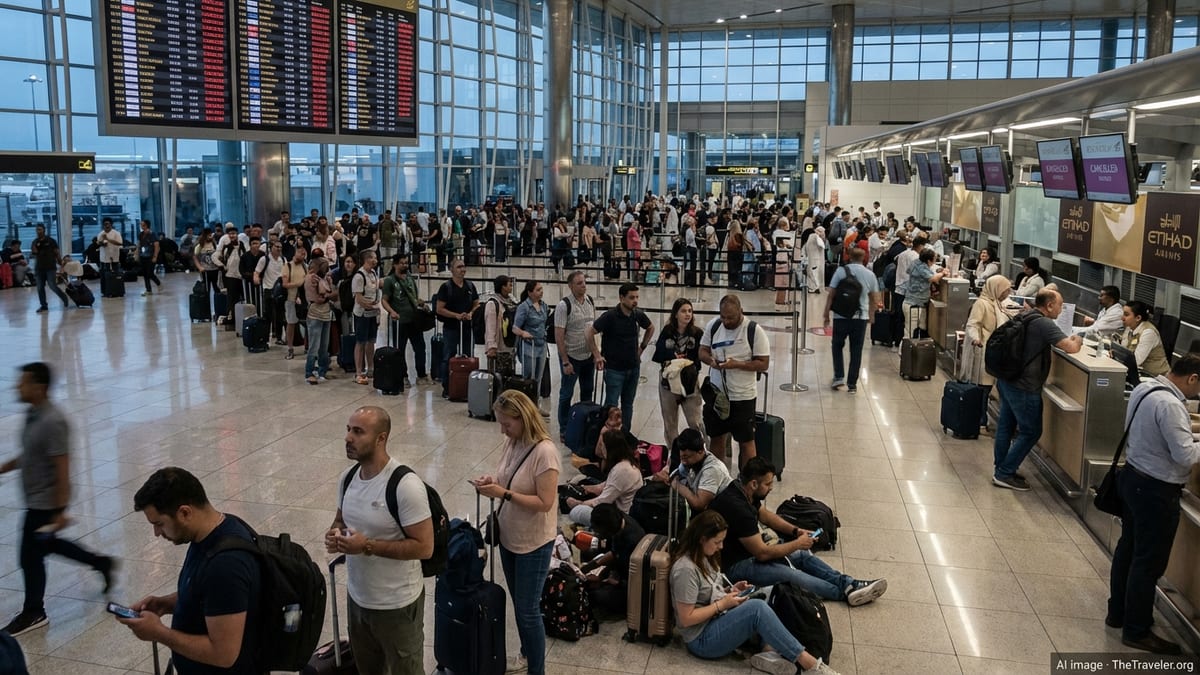
US travel alert: what it signals for passengers transiting the Gulf
Published coverage indicates the US Mission to the UAE issued a security alert on September 20, 2026, advising heightened vigilance for Americans in the Middle East and urging those outside the region to reconsider travel to and through the area. The alert language centers on the possibility of rapid escalation and the knock-on effect for civil aviation, including flight cancellations and airspace closures.
For UAE-based travelers, the practical takeaway is less about nationality and more about the operating environment: when a major government issues broad travel warnings, airlines and airports often see a surge in rebooking activity, longer call-center queues, and last-minute reroutes on routes that typically cross or skirt conflict-affected flight information regions.
Travelers with near-term connections through busy hubs in the UAE are best served by confirming flight status the day before travel and again on the day of departure, and by ensuring airline contact details are current so disruption notifications actually arrive. Publicly available airline travel-update pages continue to emphasize checking status before heading to the airport.
Iran ceasefire terms and Hormuz-related risk: why it matters for travel
In the background of aviation disruptions is continued uncertainty around the durability and scope of any ceasefire framework. Publicly available material from June 18, 2026 described a US-Iran memorandum of understanding that referenced an “immediate and permanent ceasefire,” a 60-day window to negotiate a final agreement, and provisions tied to freedom of navigation, economic restrictions, and nuclear-related talks under international supervision.
More recent regional reporting has highlighted that Iran’s public posture has included warning language around retaliation in the event of renewed attacks and discussion of conditions for ending hostilities. For travelers, the immediate relevance is the Strait of Hormuz and nearby air and sea corridors: even without direct strikes on civilian aviation, elevated military activity can trigger airspace management measures that ripple into longer routings, extended flight times, and unexpected technical stops.
What has not been consistently available in public reporting is a single, definitive, currently operative set of “ceasefire terms” that all parties treat as final and stable as of September 20, 2026. That limitation matters for trip planning: it is difficult to treat any near-term calm as a durable indicator for the next week’s flight paths or airport operations.
Saudi missile and drone interceptions: implications for nearby routes
Published coverage in recent days described Saudi air defenses intercepting threats linked to Yemen’s Houthi movement, including an attempted ballistic missile attack toward Riyadh reported on September 19, 2026. Reporting also described visible smoke near King Khalid International Airport after residents heard an explosion, while noting no casualties or damage were reported in that incident.
Separate recent coverage described falling debris from an intercepted Houthi drone causing a fatality in Saudi Arabia’s Taif province, underscoring that even successful interceptions can carry risks on the ground. Aviation-wise, such events can coincide with temporary operational measures, including localized air-traffic restrictions, amended arrival routings, or short-notice schedule adjustments depending on the airport and time of day.
For UAE residents traveling to Saudi Arabia for business, family visits, or onward connections, the most useful indicator is not generalized social media chatter but the live status of the specific flight number and any same-day airport operational advisories. When disruptions occur, they may be highly localized and time-bound, but they can still cascade through rotations and aircraft positioning across the region.
Flight updates for UAE residents: what to check before you leave home
As of September 20, 2026, published coverage indicated Dubai and Abu Dhabi airports were operating normally overall, while some individual regional flights remained affected and schedules could change at short notice. The same coverage advised travelers bound for nearby Gulf destinations such as Saudi Arabia, Bahrain, or Kuwait to verify flight status directly with their airline before leaving for the airport.
For passengers trying to gauge wider airspace risk, the European Union Aviation Safety Agency’s conflict-zone bulletins remain a key reference point for the industry. EASA’s publicly accessible conflict-zone advisory listings show active bulletins with validity through September 30, 2026 for the airspace of the Persian Gulf and Gulf of Oman, as well as separate active bulletins for Iran, Iraq, Lebanon, and Jordan, reflecting the broader risk assessment environment airlines may factor into routing decisions.
Operationally, that can translate into longer routings around certain airspaces, later arrival times, and tighter connection windows, particularly on services linking the UAE with Europe or the Eastern Mediterranean that may need to detour. Travelers should also plan for the practicalities of disruption: keep booking references and passport details handy, confirm transit visa requirements if a reroute could add an unplanned stop, and avoid overly tight same-ticket or separate-ticket connections when regional tensions are elevated.