


More news on this day
Travellers across the Middle East are facing fresh disruption as delays mount in Kuwait and major global carriers such as Singapore Airlines and Air France extend suspensions on routes affected by the region’s deteriorating security situation.
Get the latest news straight to your inbox!
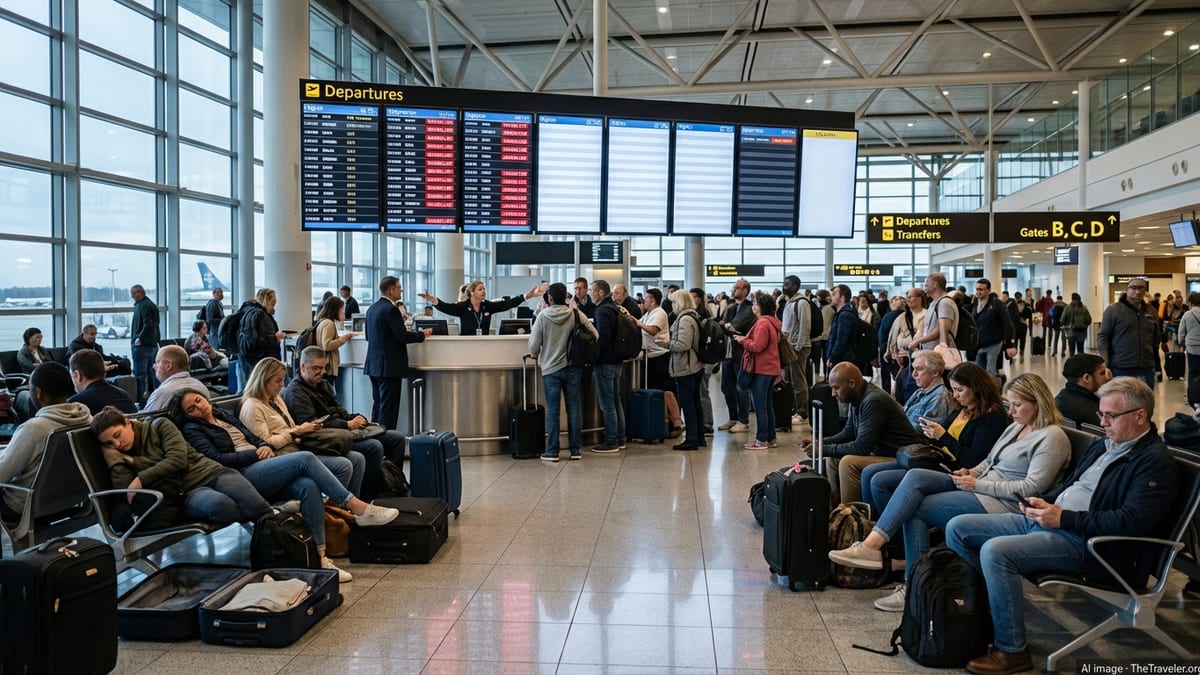
Kuwait delays deepen amid fragile airport operations
Flight schedules in and out of Kuwait remain highly volatile as the country’s aviation system continues to recover from earlier drone and missile attacks on Kuwait International Airport. Publicly available situation reports describe operations as disrupted, with partial airspace reopenings closely tied to shifting security assessments and the pace of repairs at damaged facilities.
Information from logistics and supply chain bulletins indicates that Kuwait’s airspace has been subject to repeated short closures and restrictions since late February, when strikes on airport infrastructure forced a shutdown of regular passenger traffic. Subsequent updates suggest that while commercial flights have resumed on a limited basis, departures and arrivals are frequently delayed or rerouted, and schedules can change with little notice.
Travel advisories aimed at freight and passenger operators note that Kuwait is experiencing capacity constraints and knock-on delays as carriers juggle altered routings around sensitive airspace. For passengers, this has translated into longer journey times, last-minute gate changes and, in some cases, diversions to neighboring hubs in Saudi Arabia and the wider Gulf region.
Regional observers point out that Kuwait’s difficulties highlight how even relatively short interruptions to airport operations can produce a longer tail of disruption in a region where air corridors are already congested and where many long-haul services depend on precise timing for onward connections.
Singapore Airlines extends suspensions and cuts Middle East links
Singapore Airlines has prolonged a series of cancellations and suspensions affecting flights that transit or serve parts of the Middle East. According to the airline’s most recent travel advisories, a number of services affected by the geopolitical situation are now cancelled into early August, with passengers offered refunds or rebooking options on alternative routings.
Company statements on its network plans for the northern summer season show that Singapore Airlines and low-cost subsidiary Scoot have halted services to key Gulf destinations including Dubai and Jeddah. The carrier has also extended the suspension of a Singapore to Dubai link, instead channeling capacity into other long-haul markets such as London and Australia to absorb displaced demand.
Industry schedules published by route-tracking specialists indicate that the airline has focused on maintaining connectivity without overflying the most sensitive airspace. Some long-haul services that would normally track across the Gulf region have been adjusted to follow more southerly or northerly paths, increasing flight times and fuel burn but keeping to areas deemed lower risk.
For travelers in Southeast Asia and Australia who rely on Singapore as a transit gateway to the Middle East and Europe, the extended suspensions mean fewer non-stop options and a greater likelihood of multi-stop routings via alternative hubs. Travel agents report that itineraries which once used Singapore as a bridge to Gulf destinations are being rebooked through carriers based in the United Arab Emirates and Qatar where operations remain more stable.
Air France maintains selective suspensions despite wider resumptions
European carriers have taken differing approaches to the renewed turbulence in Middle Eastern airspace. Air France has already restored some services that were halted after the latest round of conflict, including flights to Dubai, Riyadh and Tel Aviv. However, publicly released operational updates and safety advisories show that the airline is keeping suspensions in place on other routes and remains cautious about rapid expansion in certain markets.
Network summaries associated with Air France’s summer 2026 schedule highlight that flights to Beirut in particular face an extended pause, while capacity to Asia and North America is being strengthened. The airline has announced additional services to major Asian cities such as Singapore, Tokyo and Bangkok, alongside a denser transatlantic program, effectively redirecting aircraft away from vulnerable corridors.
Logistics industry tracking notes that Air France continues to adjust routings to avoid Iranian, Iraqi and other high-risk airspace in line with European safety guidance. Even where direct services to Gulf hubs are operating again, some flights are taking longer paths that skirt restricted zones, adding minutes or even an hour to block times.
For passengers departing Europe, the result is a patchwork of availability. Some Middle Eastern cities can be reached with only modest changes to flight timings, while others, including parts of Lebanon, remain absent from airline booking systems, pushing travelers toward regional or low-cost operators prepared to accept different risk profiles.
New safety advisories reshape Middle East air corridors
Regulatory developments have further complicated the picture for airlines and travelers. The European Union Aviation Safety Agency recently tightened its guidance for flights in the Middle East, advising carriers to avoid the airspace of several Gulf states and over the Gulf of Oman while maintaining a separate advisory against operations in the skies above Iran, Iraq and Lebanon.
According to published coverage of the updated notice, the move reflects concern over renewed hostilities and the possibility that long-range weapons or air defense activity could intersect with civilian flight paths. While the advisory is not a formal ban, European airlines generally treat such guidance as a strong constraint on their routing and scheduling decisions.
Global freight and logistics providers report that these layered advisories, combined with national restrictions, have compressed the available corridors through which aircraft can safely operate. This has increased congestion along certain alternate routes and limited flexibility for airlines trying to replan flights at short notice when security conditions change.
The interplay between regulatory caution and commercial pressures is now a defining feature of aviation in the region. Carriers must balance the cost of longer routings and reduced frequencies against the reputational and safety risks of operating near active conflict zones, a calculation that often results in suspended routes such as those now extended by Singapore Airlines and Air France.
Knock-on effects for travelers and regional hubs
The combination of disrupted operations in Kuwait, extended suspensions by major long-haul carriers and tighter safety guidance is reverberating across the wider network of Middle Eastern hubs. Airports that remain fully operational are experiencing fluctuating loads as passengers are rebooked and airlines funnel traffic through a narrower set of corridors and stopover points.
Travel management companies and cargo specialists note that journeys involving Kuwait, Lebanon, parts of Iraq and some secondary Gulf destinations are particularly exposed to delays or last-minute changes. With airlines holding back capacity or avoiding certain airports altogether, seats and cargo space on alternative services can sell out quickly, pushing up prices and lengthening connection times.
For leisure travelers from Europe, Asia and Australasia, the impact is often most visible in extended layovers and the loss of once-convenient nonstop options. For business and expatriate communities that depend on frequent trips between Gulf states, the disruption can mean cancelled meetings, delayed project timelines and greater reliance on virtual alternatives.
Aviation analysts expect that route maps will continue to shift over the coming weeks, with further adjustments possible if security conditions worsen or improve. Until there is a sustained easing of tensions and a relaxation of flight advisories, travelers heading through Kuwait or seeking to fly with Singapore Airlines and Air France to affected Middle Eastern destinations are likely to face an environment defined by caution, limited capacity and unpredictable schedules.