


More news on this day
The United Kingdom is keeping its cautionary travel advice for Italy in place as Milan continues to see heightened security and sporadic unrest linked to recent cost-of-living protests, leaving autumn and early winter visitors facing a more heavily policed city centre and the risk of short-notice disruption.
Get the latest news straight to your inbox!
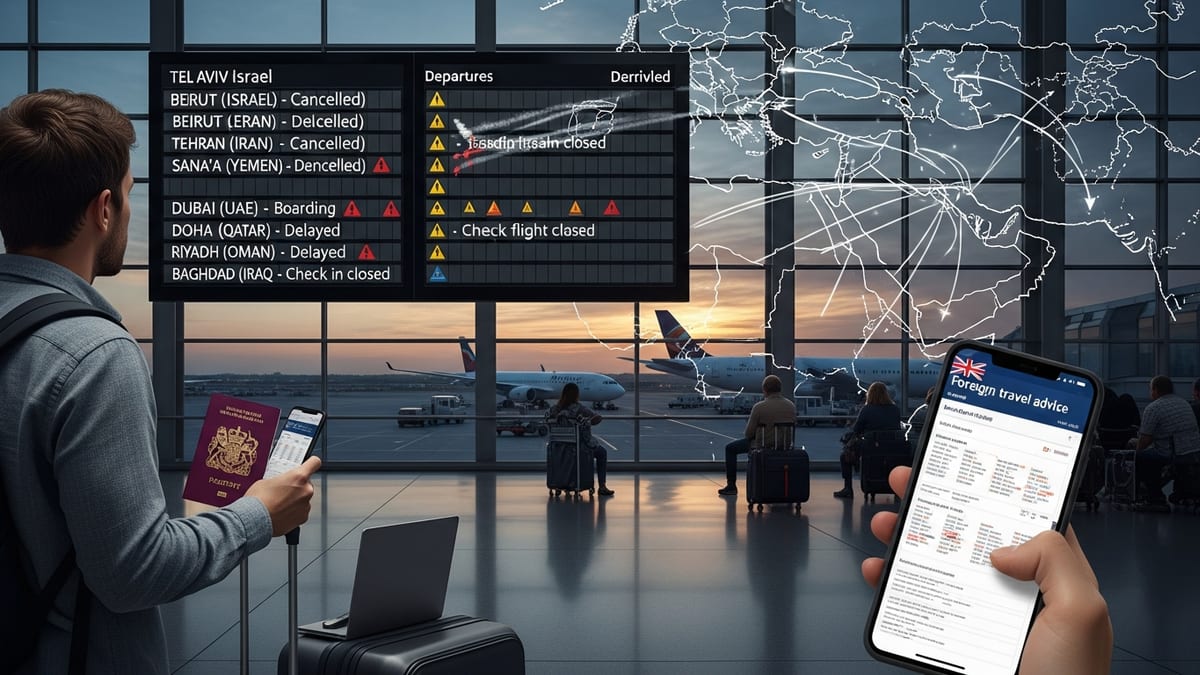
UK travel advice highlights protests and heavier security
Updated Foreign, Commonwealth & Development Office (FCDO) guidance for Italy in early November notes an increased presence of police and military personnel in Milan following mid-October disturbances and ongoing demonstrations in several Italian cities. Publicly available information from the advisory underlines that protests can occur with little warning and that travellers may experience localised disruption in central districts.
The UK advice stops short of warning against travel to Milan or Italy more broadly. Instead, it urges British nationals to remain vigilant in busy urban areas, to stay away from demonstrations and to follow local instructions if caught near a gathering. The wording places Italy in a category where travel is permitted but where additional caution is recommended in specific locations and situations.
The decision to maintain this level of advice comes after several nights of unrest around 17 to 19 October, when protests over living costs and wider social grievances in Milan, Turin and Bologna turned confrontational. Subsequent weekends have seen further large marches which, according to published coverage, have been mostly peaceful but continue to draw a strong security response in Milan’s central streets and squares.
Travel guidance from other governments, including the United States, Australia, Canada and Ireland, similarly emphasises the possibility of protests, strikes and heavier security in major Italian cities while classifying Italy overall as a destination where visitors should exercise increased caution rather than avoid travel.
Recent unrest centred on Milan’s historic core
Reports from late October describe protests and sporadic rioting focused on central Milan, including the streets around Piazza Duomo, the fashion district and key shopping avenues. International media and local observers documented instances of looting, smashed shopfronts and clashes between police and predominantly young demonstrators during the weekend of 17 October.
In response, security forces deployed riot units, water cannon and armoured vehicles around the historic centre. Subsequent marches drew thousands of participants but were more tightly controlled, with police lines and barriers used to keep protesters on agreed routes. A visible military presence has remained in some parts of the city centre into early November as authorities seek to deter renewed vandalism and reassure residents and visitors.
The Italian government has responded at national level with tougher legislation aimed at protest-related offences. According to widely reported coverage, a decree approved in late October introduces a specific offence of violent participation in a demonstration, carrying potential prison terms and significant fines. For travellers, this change primarily means that any involvement in confrontational gatherings could now carry higher legal risk than before.
So far, the unrest has not spread into Milan’s main tourist attractions in a sustained way, and most visitors have continued to access landmarks such as the Duomo, Galleria Vittorio Emanuele II and Leonardo da Vinci’s "Last Supper." However, the concentration of demonstrations in central squares means that last-minute closures of streets, shops or metro entrances around those areas remain possible.
Impact on transport, accommodation and day-to-day travel
While flights into Milan’s Malpensa, Linate and Bergamo airports have largely operated as scheduled, travel disruption has occurred around days of major protests and during separate transport strikes that overlapped with the unrest. Publicly available strike calendars for October show rail and local transport walkouts in Lombardy on several dates, affecting regional trains and city services for limited windows.
Travellers arriving or departing on protest or strike days have reported heavier-than-usual traffic on roads into Milan and longer queues for airport transfers. In some cases, metro or tram lines in the city centre were temporarily suspended or re-routed during large marches, particularly around Piazza Duomo, Cadorna and Porta Venezia, as authorities sought to keep crowds and transport apart.
Hotel operations have generally continued, but accommodation close to protest routes has occasionally been affected by noise, police cordons or short-notice access restrictions. Some travellers posting public accounts online have described choosing hotels in quieter neighbourhoods or in nearby towns such as Monza or smaller lakeside communities to avoid the possibility of late-night disturbances while still visiting Milan during the day.
Across Italy, cost-of-living demonstrations and sector strikes have also affected Rome, Turin, Bologna and other cities, though published information suggests that the most intense clashes and property damage in October occurred in Milan. Visitors moving between cities by train are advised in multiple national travel advisories to check operators’ websites and local news outlets on the day of travel, as cancellations are usually announced only shortly in advance.
What UK travellers should expect in Milan now
For British visitors heading to Milan in November and December, the current situation points to a city that remains open for tourism but with a more visible security posture and the possibility of sudden changes to plans. The UK advisory continues to recommend that travellers register for email alerts for Italy, which provide notifications if the assessment of risk is raised or if specific incidents prompt a change in guidance.
On the ground, travellers can expect bag checks and metal detectors at major rail stations, high-end shopping streets and prominent public buildings. Security forces are also more apparent around key squares in central Milan, especially on weekends and early evenings when demonstrations are more likely to be scheduled. Publicly accessible protest calendars and media coverage indicate that student and cost-of-living marches can be called at relatively short notice, sometimes via social media channels.
Visitors are advised by official and semi-official guidance to avoid joining protests or remaining as onlookers if a march passes nearby, to move away at the first sign of crowd tension, and to follow any temporary diversions or station closures. In practice, this may simply mean routing walks around cordoned-off streets, allowing extra time for cross-city journeys or adjusting restaurant bookings if a demonstration is planned in the immediate vicinity.
Those travelling on tight schedules, particularly for business meetings or onward connections, may wish to build in additional buffer time between appointments or consider staying in districts with good transport links that are not central protest focal points. Areas north and west of the inner ring road, as well as some residential neighbourhoods along metro lines M2 and M5, have seen fewer reported disturbances than the streets around the Duomo and central shopping zone.
Balancing safety awareness with realistic risk
Despite the images of broken glass and riot police that circulated internationally after the October unrest, data from multiple national travel advisories continues to rate Italy as a relatively low-risk destination for most visitors, with the main concerns focused on petty crime, traffic safety and localised protest activity rather than widespread violence.
Publicly available commentary from security analysts notes that most demonstrations have remained peaceful, and that clashes tend to be limited in time and space, often involving specific streets and small groups rather than entire districts. The probability that a short-term visitor will encounter serious disorder remains low, provided they stay informed and avoid intentionally seeking out protest hotspots.
For UK travellers, the continued FCDO warning serves as a prompt to check official advice immediately before departure, to monitor Italian and international news while in the country, and to maintain flexible plans where possible. Booking refundable or changeable transport tickets and accommodation can provide additional reassurance for those visiting Milan during what several observers have described as a volatile political and social season.
As the city moves toward the busy winter events calendar and looks ahead to the Milan-Cortina 2026 Winter Olympics, the situation on the streets may evolve quickly. Until the UK and other governments adjust their assessments, travellers can expect Italy’s travel advisories to remain in a cautious but permissive stance, combining encouragement to visit with clear reminders to stay alert in Milan’s most contested public spaces.