


More news on this day
A fresh overnight curfew across five coastal provinces of Ecuador, including Guayas and its capital Guayaquil, is putting renewed attention on a deepening security crisis that is reshaping how foreign travelers move through one of the country’s key gateways.
Get the latest news straight to your inbox!
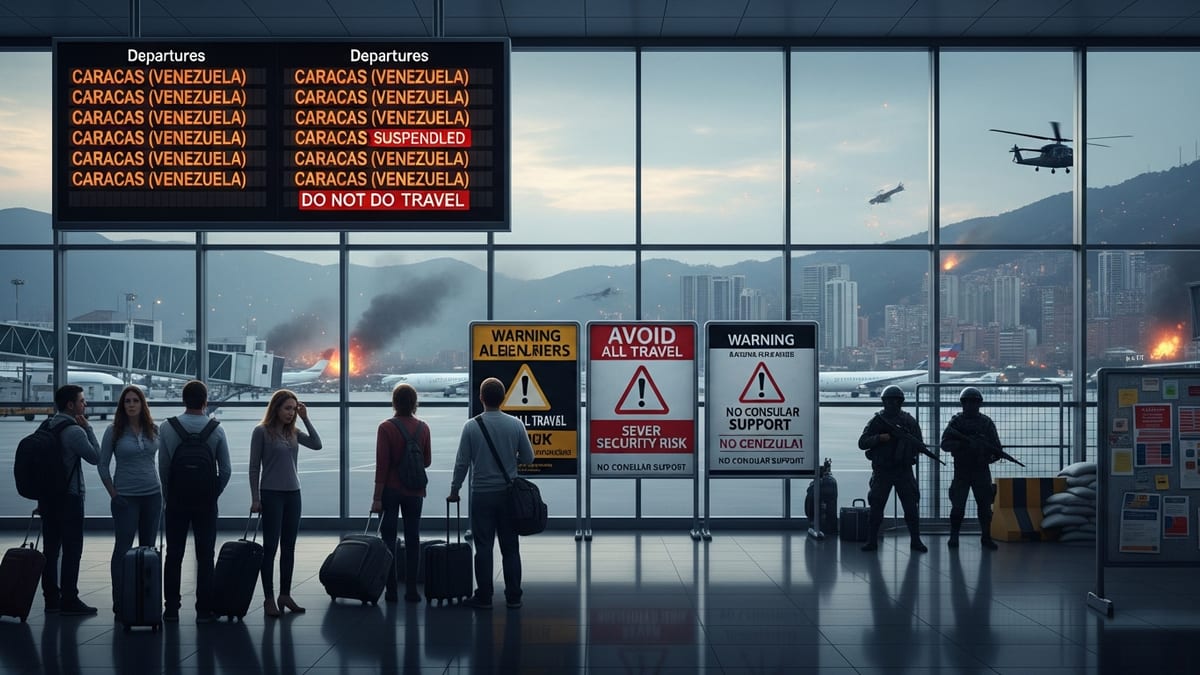
New curfew tightens movement in Guayas and the coast
The Ecuadorian government has introduced a nightly curfew from 12:00 a.m. to 5:00 a.m. between November 1 and November 10, 2026, under Executive Decree 519, covering the coastal provinces of Guayas, Manabí, Los Ríos, El Oro and Esmeraldas. Publicly available information shows that the measure is framed as part of wider security operations targeting powerful criminal gangs that have expanded their influence in port cities and along key trafficking routes.
According to a recent security alert shared by the United States for its citizens, travelers are advised to avoid nonessential movement during curfew hours and to carry passports and flight documentation at all times if they must be on the road. The alert notes that taxi and rideshare availability is likely to be limited overnight, and encourages passengers with late or early flights to confirm in advance how they will travel between the airport and their accommodation.
The curfew overlaps with a 60 day state of emergency declared in mid September 2026 for several provinces, including Guayas, in response to ongoing gang related violence. Other governments, including the United Kingdom, Canada, Ireland and Australia, have also updated their travel advisories in recent weeks, highlighting an elevated risk of violent crime and sporadic explosive attacks in and around Guayaquil.
For visitors, the new restrictions mainly affect early morning departures, late night arrivals and intercity road journeys. Airports and some essential services may continue operating overnight, but ground transport options can change quickly as police and military operations shift across the city.
Guayaquil under sustained security pressure
Guayaquil, Ecuador’s largest city and commercial hub, has been at the centre of the country’s security challenges for several years. Travel advisories from the United States and other governments describe a sharp rise in gang related crime, including targeted killings, kidnappings and attacks linked to drug trafficking networks active along the Pacific coast.
The U.S. Travel Advisory for Ecuador, updated in August 2026, places much of Guayaquil in the highest risk categories. Publicly available guidance advises against travel to districts such as Nueva Prosperina and Pascuales and to all areas south of Portete de Tarqui Avenue, citing crime and terrorism concerns. Large parts of the city north of that avenue are also listed under a “reconsider travel” classification, reflecting the scale of the challenge faced by local security forces.
Other governments echo this assessment. Recent updates from the United Kingdom, Canada and Australia point to an increase in murders, explosive incidents and clashes between gangs and security forces in Guayas province since 2023. Coverage of specific incidents notes car bombs near major shopping centres, attacks on security personnel and operations targeting prison based criminal groups with influence that extends into surrounding neighbourhoods.
These developments have reinforced Guayaquil’s image as the focal point of Ecuador’s wider security crisis. Analysts and risk specialists cited in open reports describe how long standing issues of prison overcrowding, port related smuggling and competition between local and foreign criminal organisations have converged in the city, complicating efforts to restore calm even as security deployments intensify.
What the US warning means for travelers
The latest U.S. alert about the November curfew is aimed at citizens already in Ecuador or planning imminent travel. It advises travelers to limit movement during restricted hours, monitor local news and official channels, and be prepared for sudden roadblocks or extended journey times around security checkpoints in Guayaquil and other coastal cities.
At the same time, the broader country level advisory for Ecuador remains at Level 2, “exercise increased caution,” but with a series of “do not travel” and “reconsider travel” designations for specific high risk areas. In Guayaquil, this means that while flights continue and hotels in better protected districts remain open, movement into many residential zones is discouraged and some areas are effectively off limits for official U.S. personnel.
Other national advisories use similar language. Canada warns of an increased presence of security forces to contain gang violence across Ecuador, particularly in Guayas and other coastal provinces, and highlights a pattern of bomb threats and attacks since 2022. Ireland’s guidance currently recommends avoiding non essential travel to most of the country, with Guayas singled out as an area of concern due to civil unrest, violent crime and kidnapping.
For individual travelers, this patchwork of warnings does not amount to a blanket ban on visiting Guayaquil but does indicate a significantly higher bar for risk awareness and planning. Travel insurers and corporate security advisories reviewed by TheTraveler.org point to a need for route specific assessments, especially for journeys between the airport, hotels and bus terminals after dark.
Impact on tourism and airport access
Despite the security strain, Guayaquil remains a key entry and transit point for Ecuador. It serves as a major hub for domestic flights to the Galápagos Islands and other coastal cities, as well as international connections to North America and Europe. Official and commercial advisories examined by TheTraveler.org note that airport operations are continuing, but that access during curfew hours comes under tighter scrutiny.
Earlier curfew orders in Ecuador have included exemptions for travelers moving to and from airports when carrying valid identification and boarding passes, and current alerts again recommend that passengers keep printed or digital copies of their tickets ready at checkpoints. However, public guidance also stresses that exemptions can vary by province and over time, so travelers are encouraged to verify specific curfew rules for Guayas and to consult their airline or accommodation providers before late night travel.
Accommodation providers in more heavily policed zones of Guayaquil, such as parts of the riverfront and business districts, continue to host both business and leisure visitors, but advisory notices suggest avoiding last minute changes and ensuring that airport transfers are prearranged with reputable operators. Publicly available risk assessments recommend avoiding overnight intercity buses through Guayas and neighbouring provinces due to reports of highway robberies and armed attacks.
Tourism boards and local businesses are promoting alternative gateways such as Quito and Cuenca for travelers seeking lower risk bases inside Ecuador, with connecting flights used to transit through Guayaquil’s airport when necessary. Several foreign travel advisories explicitly state that airside transit at Guayaquil’s airport is treated differently from travel into the city, noting that the highest security concerns relate to specific neighbourhoods and road corridors rather than the terminal itself.
Practical safety guidance for visitors
For travelers who decide to include Guayaquil in their plans during the curfew period, open source security guidance emphasises a few consistent measures. Visitors are urged to keep movements during hours of darkness to a minimum, rely on prebooked or app based taxis where available, and avoid carrying visible valuables or large amounts of cash. Walking alone at night away from well lit central areas is widely discouraged.
Several governments recommend that travelers register with consular services when staying in Ecuador for extended periods, so they can receive security alerts and updates as conditions change. They also advise monitoring local media and official announcements closely, as curfew rules, road closures and states of emergency can be extended, shortened or expanded to new provinces at short notice.
Travel advisories further suggest that visitors maintain flexible itineraries, allowing for flight schedule changes or last minute route adjustments, particularly on the coastal corridor where security operations are most intense. Booking refundable accommodation and transport, and keeping copies of important documents in secure digital form, are presented as simple steps that can reduce the impact of sudden disruptions.
While Guayaquil’s role as a commercial and transport hub remains intact, the latest U.S. curfew alert underlines how deeply the security crisis is now shaping even routine travel across coastal Ecuador. For visitors, the message emerging from multiple official sources is that trips are still possible, but require careful attention to timing, geography and evolving restrictions.