


More news on this day
British travelers planning winter and early 2027 trips are being urged to recheck their itineraries after the UK Foreign, Commonwealth and Development Office consolidated a series of late October updates into strengthened travel warnings covering 13 countries.
Get the latest news straight to your inbox!
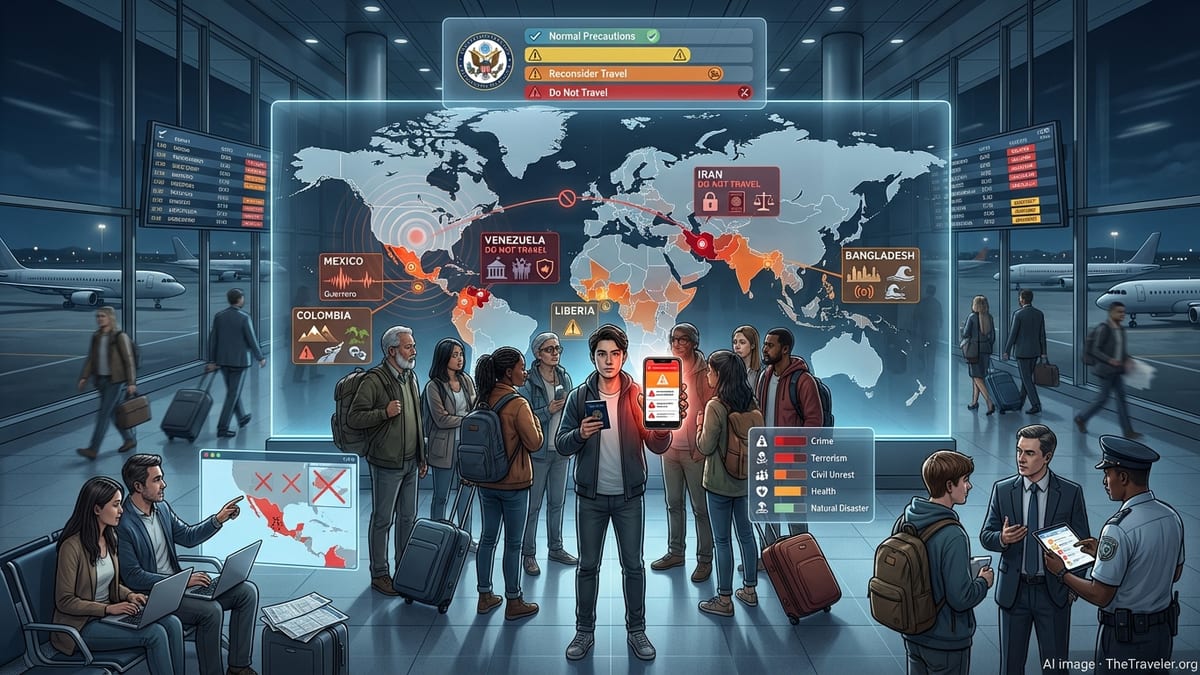
Whole-country warnings now cover 13 destinations
Publicly available tracking of UK government travel pages indicates that there are currently 13 countries where the Foreign Office advises against either all travel or all but essential travel to the entire country, rather than to selected regions only. These whole-country warnings are reserved for locations where the assessed risk to British nationals is considered unacceptably high, and typically relate to armed conflict, widespread instability, or a persistent threat from terrorism and violent crime.
The list, compiled by independent monitors using live data from the official Foreign Office website, shows that the number of countries under such blanket advisories has risen in 2026 compared with the period immediately after the pandemic, reflecting a deterioration in security conditions across parts of the Middle East, North and West Africa, and Eastern Europe. While the exact mix of countries changes as conflicts and political situations evolve, the overall count of 13 means a larger share of the world is effectively off limits for routine leisure travel from the UK.
The Foreign Office explains in its guidance that it only moves to an “against all travel” or “against all but essential travel” position when the underlying threat level or operational constraints make it difficult for the UK to provide effective consular support. These decisions are reviewed frequently, and the department notes that advice can change at short notice if new incidents occur or if security improves.
For travelers, the presence of a whole-country warning has immediate implications. Most mainstream UK travel insurers state in their policy conditions that cover is invalid if a trip goes ahead against official Foreign Office advice, unless a specific, specialist policy has been arranged. Airlines may still operate flights to some of the affected destinations, but individuals choosing to travel do so with limited protection if things go wrong.
Recent changes focus on conflict and terrorism risks
The tightening of advice for the 13 countries is linked largely to conflict-related developments over the course of 2026. Monitoring of Foreign Office updates shows repeated amendments to safety and security sections, particularly for states affected by cross-border tensions, internal armed groups, or attacks targeting civilian infrastructure. In several cases, localised warnings have expanded over time to cover entire national territories as violence has spread beyond previous front lines.
Regions highlighted in recent advisories include areas with active hostilities around key transport hubs, as well as cities where missiles, drones or improvised explosive devices have been used in or near airports. One widely noted October update added explicit caution around international airports in a Gulf state following an incident earlier in the month, with the Foreign Office subsequently advising against all but essential travel across much of the country.
Terrorism remains a core driver of stricter guidance. Public information from allied governments and risk consultancies points to an elevated threat environment in parts of the Sahel, Levant and Horn of Africa, where both international and locally rooted groups are assessed to have the capability and intent to target foreigners or crowded public venues. The Foreign Office’s own overview of its travel-advice policy stresses that such warnings are designed to help travelers make informed decisions, but that judgments ultimately rest with individuals who must weigh their appetite for risk.
Even in countries without formal whole-country bans, the late-2026 updates underline that threat levels can fluctuate. Safety notices for some popular tourist destinations have been amended to flag specific dates, religious holidays or political anniversaries when the risk of unrest is deemed higher. Travelers are being encouraged in public-facing guidance to read entire country pages rather than relying on headline summaries alone.
Impact on winter getaways and early 2027 travel plans
The shift in Foreign Office advice comes just as many UK residents are finalising winter sun escapes, adventure trips and cultural tours for late 2026 and early 2027. Some of the 13 countries affected had been marketed in recent years as emerging destinations, offering relatively good value compared with more established hotspots. Tour operators now face the complex task of rerouting itineraries, securing alternative accommodation in lower-risk neighbours, or offering rebooking options where original routes pass through territories under blanket warnings.
Consumer-facing travel guidance notes that package holidaymakers generally have stronger protections when advice changes after a booking has been made. Where Foreign Office guidance moves to advise against all but essential travel, many UK tour operators will cancel departures and provide refunds or alternative arrangements, rather than asking customers to continue. Independent travellers who have assembled flights, hotels and excursions separately may find it harder to secure full reimbursement, especially where airlines continue to operate.
Destinations bordering countries under the strictest advisories have also seen updates. For example, regional notes for neighbouring states often include references to potential spillover risks near land borders, including refugee flows, road closures or airspace restrictions. Travelers heading for city breaks or resort stays in such countries are being advised in public information to monitor local media, allow extra time for overland crossings, and stay flexible in case internal flights or rail services are disrupted by changing security assessments.
Industry data gathered by travel insurers and risk-analysis firms suggests that the combination of higher geopolitical tension and more frequent, granular updates is encouraging some UK travelers to favour destinations perceived as politically stable with strong infrastructure. However, specialists also point out that popular destinations can see advice tighten quickly if protests escalate or isolated incidents occur, reinforcing the need to keep checking official pages right up to the day of departure.
Insurance, airlines and tour operators adjust to evolving risk
The extension of whole-country warnings to 13 states has underlined the central role Foreign Office advice plays in the UK’s travel insurance market. Policy wording from major providers typically cross-references this government guidance, specifying that trips starting or continuing while “against all travel” or “against all but essential travel” advice is in place will not be covered for most claims. Some specialist brokers publish live trackers linking the level of warning for each country to whether standard leisure policies remain valid.
In practice, that means a change in wording on an official country page can immediately alter travelers’ financial exposure. If advice tightens after a booking is made but before departure, some insurers may consider claims for cancellation, provided the policy was in force at the time the new warning was issued and the trip is no longer deemed safe. If a traveler chooses to continue regardless, they may find that medical, evacuation and property cover is significantly restricted or excluded altogether.
Airlines are not automatically required to cancel flights when the UK government advises against travel, and schedules for some countries under the strictest advisories currently remain in operation. Carriers may offer waivers, rebooking options or route changes on a commercial basis, particularly if demand drops or if overflight permissions are affected by conflict. Tour operators, bound by package travel regulations, are often more proactive, removing destinations from brochures or switching to alternative locations once Foreign Office wording crosses key thresholds.
Travel industry associations and large tour brands frequently use dedicated monitoring teams or external security partners to interpret changing advice and develop contingency plans. Public information from these organisations indicates that rerouting, moving customers to different airports in the same region, and shortening or lengthening stays to avoid high-risk dates have all been used in recent months to keep trips within acceptable risk parameters while still operating viable holidays.
What UK travellers should do before booking
The latest tightening of advice for 13 countries is prompting renewed emphasis on pre-departure checks. The Foreign Office recommends in its general guidance that travellers read full country advice pages, sign up for email alerts on destinations of interest, and pay close attention to sections on entry requirements, safety and security, health and local laws. Updates can range from broad warnings about conflict to very specific notes on curfews, internal checkpoints or restrictions on photography near sensitive sites.
Travel risk specialists suggest that anyone planning trips for late 2026 or 2027 should verify the current advisory level for both their main destination and any transit points, particularly if flights connect through hubs in regions affected by recent unrest. This includes checking whether airports listed in whole-country warnings are still recommended for transit only, or whether the advice now covers all forms of travel involving that country, including short stopovers.
Prospective travellers are also encouraged by insurers and consumer groups to review policies carefully before purchase. Key points include whether cancellation is covered if Foreign Office advice changes after booking, what limits apply to emergency medical and evacuation costs, and whether dangerous or political risk scenarios are excluded. For those whose work requires travel to higher-risk destinations, specialist policies and employer-led security arrangements may be necessary.
Finally, observers note that travel advisories are not static. The count of 13 countries with whole-country warnings reflects the picture in late October 2026, but could increase or decrease as situations evolve. Regularly checking official advice in the days leading up to departure, staying in touch with airlines and tour operators, and maintaining realistic expectations about last-minute changes are now an essential part of international trip planning for UK residents.