


More news on this day
A three-year residential round-the-world voyage marketed as an “endless” life at sea has been cut short in Cambodia, after soaring fuel costs forced the Villa Vie Odyssey to suspend operations and disembark hundreds of passengers who had treated the ship as their full-time home.
Get the latest news straight to your inbox!
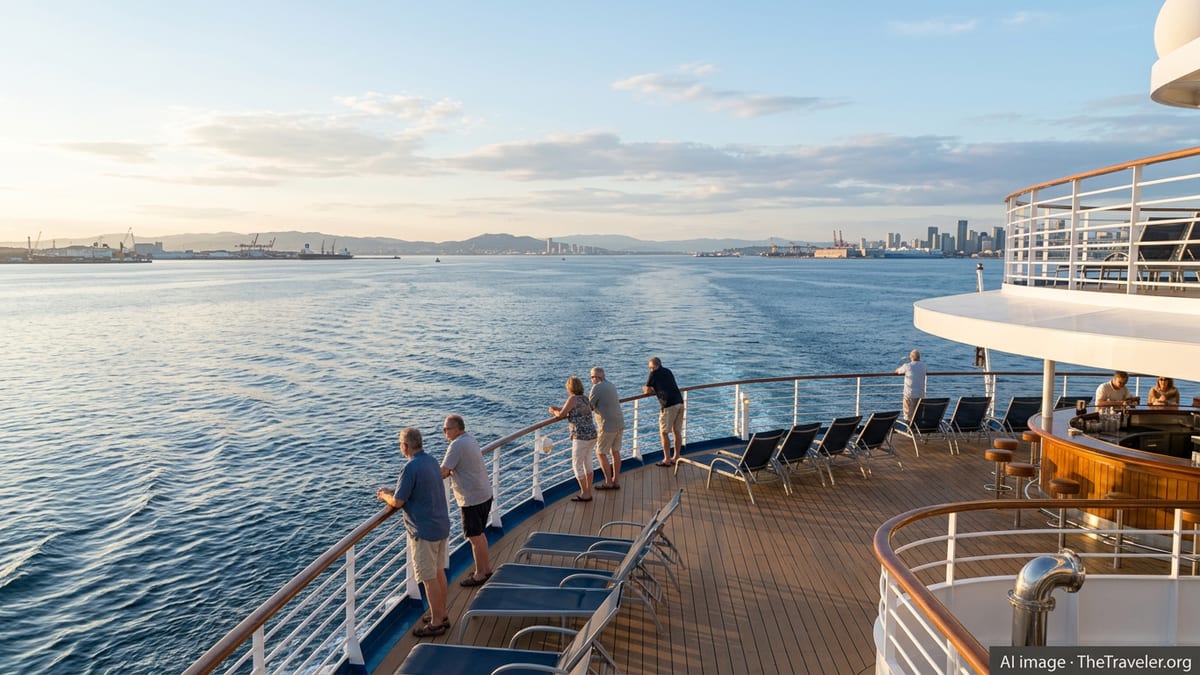
Three-year voyage ends abruptly in Sihanoukville
The U.S.-operated Villa Vie Odyssey arrived in the Cambodian port of Sihanoukville in late October after more than two years on a planned three-and-a-half-year itinerary that set out from Belfast, Northern Ireland, in October 2024. The voyage was sold as a long-term residential cruise calling at ports on all seven continents, with passengers purchasing or leasing cabins as floating homes.
According to published coverage, passengers were informed this week that the ship would not be taking them any farther. The company behind the project, U.S.-based Villa Vie Residences, announced that it was suspending operations in Cambodia, citing what it described as extraordinary increases in marine fuel prices on its Asian routing.
Reports indicate that about 200 to just over 200 residents were on board at the time of the announcement, far below the vessel’s nominal 650-passenger capacity but representing a community that had largely reorganized their lives around living at sea. Many had sold homes, ended leases or retired early in order to finance multi-year stays on the ship.
Local media and international outlets describe the Odyssey now sitting idle off Sihanoukville, effectively in lay-up, while its operator works through what it has publicly framed as a restructuring of the business model rather than a straightforward route adjustment.
Soaring fuel costs upend a niche cruise model
Residential cruising is a small but highly visible corner of the travel industry, promising a blend of condominium living and world cruising. In the case of the Villa Vie Odyssey, that model collided with a global spike in fuel prices linked to the ongoing conflict triggered by the U.S.-Israeli war with Iran, which has disrupted oil markets and raised the cost of diesel and marine fuels throughout Asia.
According to figures cited in multiple news reports, Villa Vie Residences told passengers that its monthly fuel bill per cabin on certain Asian segments had risen from around 1,800 dollars to between 6,000 and 8,000 dollars. The company has said publicly that this increase, combined with other operational challenges, left its original pricing structure unsustainable.
Reports indicate that management had already added new fuel surcharges in recent months and had approached residents with requests for additional payments to help cover bunker costs. Some passengers accepted higher monthly expenses, but others reportedly balked at the scale and pace of the increases, raising questions about how much more they would be asked to contribute if prices rose again.
Industry analysts quoted in published coverage note that more established residential ships, such as ultra-luxury vessels backed by wealthier clientele, have historically been better able to absorb cost swings. The Odyssey, by contrast, was marketed to a broader middle and upper-middle income segment, making it more sensitive to large, sudden increases in operating costs.
Passengers face uncertainty over onward travel
For those living on board, the end of the cruise in Cambodia has created an immediate and complex logistical challenge. Many residents had structured their finances and housing around the assumption that the ship would function as their primary home at least until mid-2028, and in some cases indefinitely.
According to detailed accounts in international media, Villa Vie Residences has arranged temporary hotel accommodation in Sihanoukville and is covering local transportation while the situation unfolds. However, publicly available information indicates that the company has not committed to paying for international flights or long-haul travel, leaving passengers to organize and fund their own journeys away from Cambodia.
Some travelers have reported difficulties securing last-minute flights from Sihanoukville, a secondary coastal hub with limited long-haul connections, and are considering transfers to Phnom Penh or other regional airports to reach major gateways in Bangkok, Singapore or Kuala Lumpur. Travel advisories point out that many long-stay passengers may also need to navigate visa rules and entry requirements on short notice as they transit through the region.
Beyond immediate transport, residents are now confronting questions about longer-term housing and finances. With cabins purchased or leased as semi-permanent residences, some had tied up a significant portion of their savings in the project. Public statements from the company indicate that it is reviewing options for refunds or credits, but there is no clear timetable for resolutions, and consumer-protection frameworks for such niche travel products are limited across jurisdictions.
A troubled ship with a long history
The vessel at the center of the disruption is an older cruise ship with a long service record under several names and operators. Built in 1993, it sailed for multiple mainstream cruise brands before being laid up during the pandemic in 2020. Villa Vie Residences acquired the ship in 2023 and refitted it in Belfast to support its new residential concept, adding long-stay amenities and reconfiguring cabins for full-time living.
The Odyssey’s path to its eventual launch was already marked by delays and setbacks. Earlier stages of the project, under a related brand offering a three-year “Life at Sea” world cruise, were postponed and ultimately canceled amid financing and ship-acquisition issues, leaving some would-be residents scrambling for refunds and interim housing. The eventual departure from Belfast in October 2024 was viewed by many in the cruising community as a fresh start for the concept.
Once at sea, tracking data and independent maritime observers noted that the Odyssey’s operating profile gradually shifted, with slower average speeds and more frequent layovers in recent months as fuel costs climbed. Travel-focused forums and social media communities documented concerns about port changes, added surcharges and the financial resilience of the operator long before the current halt in Cambodia.
The ship’s current lay-up in Sihanoukville now raises technical and regulatory questions of its own, including crew contracts, maintenance standards and insurance coverage. While such issues are typically invisible to vacation cruisers, they are critical in a residential context, where passengers have invested in the vessel as both home and transport.
Broader implications for long-term cruising
The abrupt end of the Villa Vie Odyssey’s voyage has reverberated through the wider cruise and travel sectors, prompting debate about the viability of multi-year, residential-style itineraries for anything other than the very highest-end market. Published analyses suggest that the combination of volatile energy prices, complex international routing and the expectation of relatively predictable monthly fees creates a fragile equation for operators.
Consumer advocates note that travelers considering similar products face a distinct set of risks compared with traditional cruises paid for a few months in advance. In addition to standard considerations such as itinerary changes or mechanical issues, residents on long-duration voyages may be exposed to business-model failures, corporate restructurings and geopolitical shocks that can unfold over several years rather than weeks.
For destinations such as Sihanoukville, the incident has highlighted both the opportunities and the vulnerabilities that come with hosting large cruise vessels. The influx of cruise residents seeking short-term accommodation and travel services provides a brief boost to local hotels, restaurants and tour operators, but it also underscores how dependent such business can be on the plans and solvency of distant companies.
As of late October 2026, there is no confirmed timeline for any potential resumption of service by Villa Vie Residences. Public information from the company frames the pause as a response to an unprecedented fuel shock and an opportunity to redesign the offering. For now, hundreds of former residents are focused less on abstract questions about the future of residential cruising and more on the immediate task of piecing together new lives on land after their planned years at sea ended in a Cambodian port.