


More news on this day
British travellers are being urged to review upcoming trips after the UK Foreign, Commonwealth and Development Office introduced an updated travel warning framework for 13 countries, sharpening risk assessments in response to shifting security conditions and regional tensions.
Get the latest news straight to your inbox!
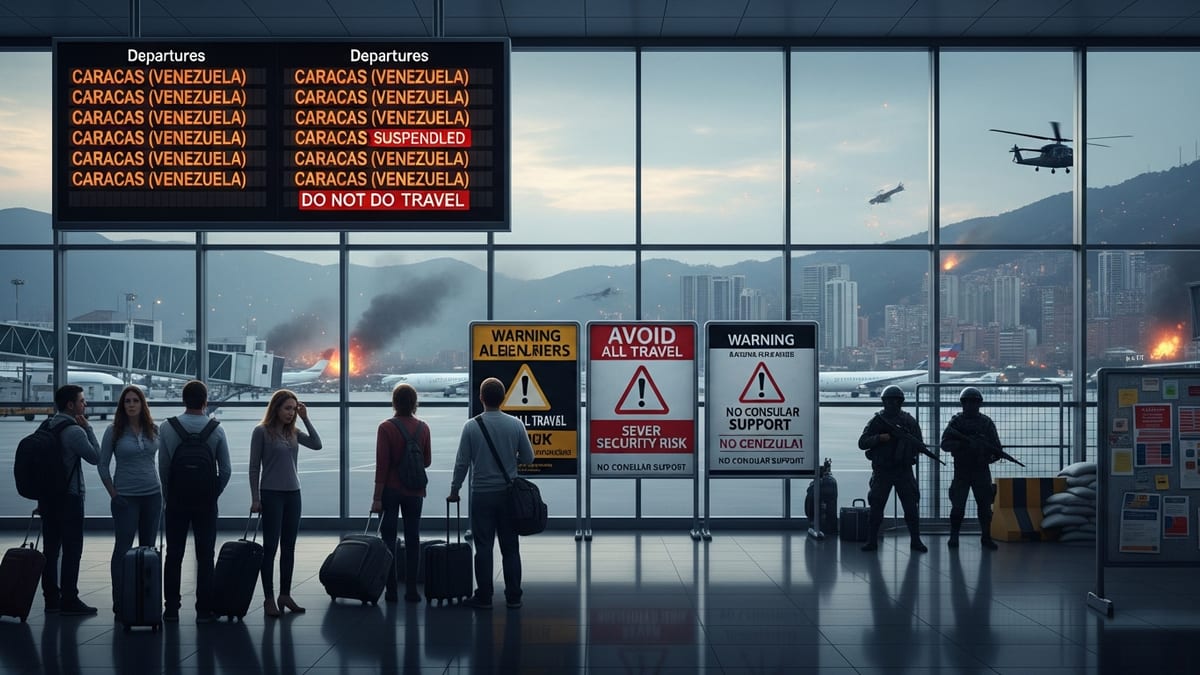
Latest FCDO update and when it was issued
According to publicly available information, the latest round of changes was consolidated in government travel advice updated on 27 October 2026, and reflects a series of revisions applied across the year. The announcement brings together several earlier notices into a clearer warning framework covering 13 nations now considered to carry elevated security or operational risks for British visitors.
Recent media coverage of the changes indicates that the revised wording highlights the potential for sudden deterioration in local conditions, disruption to airspace and cross-border tensions. The guidance points to an unpredictable backdrop in parts of the Middle East and surrounding regions, where missile strikes, drone activity and responses by state and non-state actors have affected both civilian infrastructure and key transport routes.
The updated advice does not introduce a single, uniform ban on travel, but instead outlines different tiers of risk, ranging from broad cautions to explicit recommendations against visiting particular countries or defined regions. Travellers are advised to check the specific entry for each destination, as the status can vary significantly between neighbouring states and even between provinces within the same country.
Government guidance notes that travel advisories are dynamic rather than permanent. The FCDO states in its explainer material that assessments are kept under constant review and can change at short notice if new intelligence or incidents suggest a material shift in risk levels for British nationals abroad.
Which 13 countries are affected and how
Coverage summarising the latest action by the Foreign Office reports that 13 countries are now grouped within the tightened warning framework. These include destinations in and around the Middle East, North and East Africa and parts of wider Asia, many of which function as major holiday, business or transit hubs for travellers from the United Kingdom.
Publicly accessible tools that track FCDO data show that some of the 13 nations are subject to whole-country warnings, where the UK advises against all travel or against all but essential travel. In other cases, the caution is more targeted, with higher alert levels applied to particular border regions, conflict-affected provinces or areas where the security forces have a limited presence.
In several of the affected states, the FCDO makes a clear distinction between popular resort or capital-city areas and more sensitive regions inland or near frontiers. For example, advice for Egypt differentiates between Red Sea tourist resorts and parts of North Sinai, while Turkey’s entry separates major cities and coastal destinations from zones close to the Syrian border. Comparable internal divides appear in guidance for Jordan, Pakistan and Saudi Arabia, where some regions carry stronger warnings than others.
Alongside conflict-related concerns, recent updates for some of the 13 countries refer to risks from terrorism, civil unrest, sporadic missile or drone attacks and the possibility of airspace restrictions or temporary airport closures. In a minority of cases, health considerations and limits on consular access also contribute to an overall recommendation against visiting.
What the new warning means for flights and holiday plans
Industry bulletins and travel risk trackers note that changes in FCDO wording can have immediate implications for airlines, cruise lines and package operators serving affected countries. When the UK formally advises against all travel or against all but essential travel to a destination, carriers often reconsider their schedules and may reduce or suspend services if they assess that operating conditions have become more challenging.
For travellers who already hold bookings to one of the 13 nations or to a specific region now classed as higher risk, any alteration in government advice can influence whether a change or cancellation is possible without financial penalty. Public guidance from consumer bodies highlights that, in many cases, package holidays covered by UK regulations are more likely to qualify for refunds or rebooking options if the official stance has shifted decisively against travel.
The impact on flight-only tickets is more varied. Reports on recent disruption show that whether a passenger can change plans cost free often depends on the type of fare purchased and on any waiver policies introduced by individual airlines in response to the FCDO update. Flexible tickets generally offer more scope to move dates or routes, while the cheapest non-refundable fares may leave travellers more exposed if a trip no longer feels viable but flights are still operating.
Experts writing in the travel trade press recommend that anyone with imminent departures should monitor both the FCDO pages and communications from airlines or tour operators in the days before travel. Even where services continue to run, airport opening hours, transit options and local onward connections can be affected by curfews, security checkpoints or new restrictions on movement introduced at short notice.
Insurance cover, cancellations and financial protection
The intersection between the new FCDO warning and travel insurance is a key concern highlighted in recent analyses. Many mainstream UK travel insurance policies contain clauses that restrict cover if a traveller heads to a destination when the government is explicitly advising against all travel or against all but essential travel. In those circumstances, insurers may decline to pay out for claims that arise from events linked to the warned-about risks.
Publicly available policy documents from several large insurers show that exclusions typically apply once the relevant FCDO advice changes, rather than being backdated. This means that a policy purchased before the latest revision may still provide cover for a future trip if the government was not advising against travel at the time of booking and departure, although travellers are urged in consumer guidance to check their own wording carefully.
Where the FCDO now advises against travel to a particular area and a package holiday is due to take place there, published consumer advice suggests that customers should first approach their tour operator or travel agent about refunds, postponements or alternative destinations. Package regulations may provide a stronger route to redress than relying solely on insurance, especially if the trip is still several weeks away.
Those who arranged their own flights and accommodation separately may face more complexity. Commentators note that credit card protections and chargeback schemes can provide a fallback in cases where services are cancelled outright, but are less straightforward when the holiday remains technically possible yet feels inadvisable in light of the new warning. In all scenarios, keeping written records of communications with airlines, hotels and insurers is widely recommended.
How travellers can respond to changing advice
Travel commentators and risk analysts emphasise that the FCDO system is designed as guidance rather than a direct prohibition, but that ignoring it can have real-world consequences for safety, support and financial cover. The starting point for anyone considering a trip to one of the 13 nations is to consult the latest government advice on the exact areas they plan to visit and to cross-check this against booking details.
Published checklists recommend working through three elements in sequence: the official FCDO entry for the destination, the specific wording of any travel insurance policy and the terms and conditions of transport and accommodation providers. This approach can help clarify whether the trip remains viable, what options exist for voluntary changes and how exposed a traveller might be if conditions deteriorate after arrival.
For travellers who decide to proceed, recent guidance from travel medicine and security specialists highlights the value of contingency planning. This can include registering contact details with airlines or tour operators for rapid notifications, allowing extra time for airport formalities, carrying printed copies of key documents and identifying alternative routes out of the country in case primary flight options are disrupted.
Observers also point out that not all parts of the 13 countries are affected equally. In some cases, major resort belts and capital cities continue to attract visitors, while specific border regions remain subject to strict warnings. Staying updated in the days leading up to departure, and being prepared to adjust itineraries within a country if local conditions change, are presented in current coverage as essential steps for anyone travelling against a more complex risk backdrop.