


More news on this day
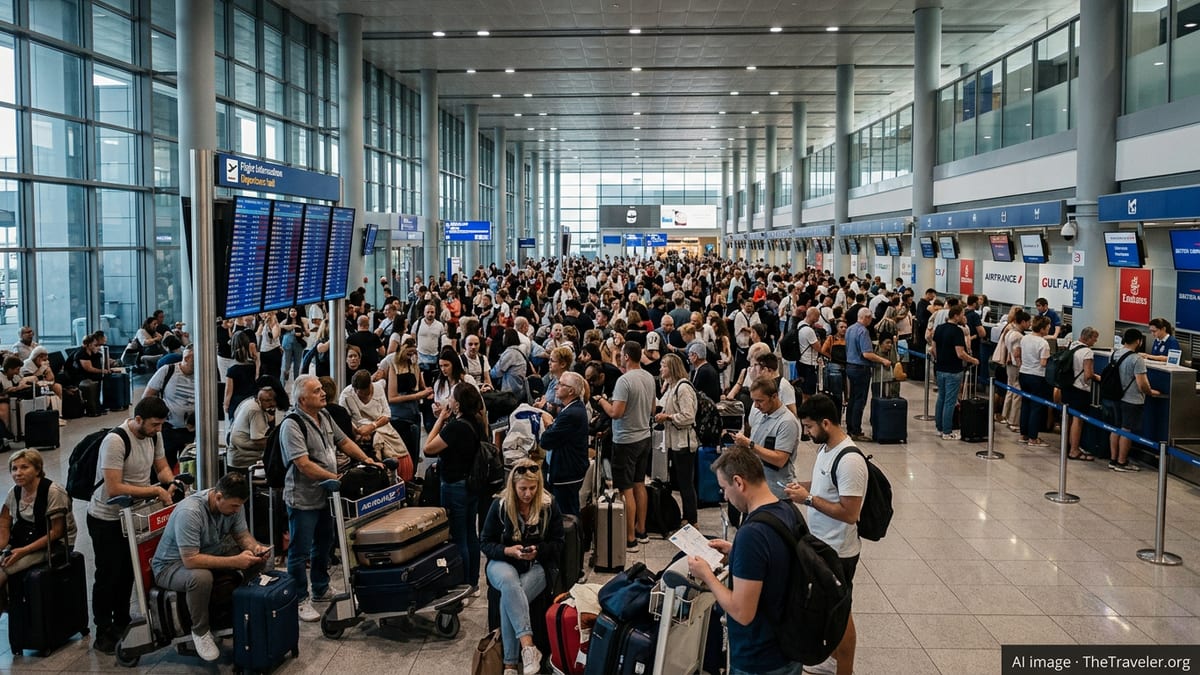
UK holidaymakers heading to Greece this summer are encountering mounting disruption at Athens International Airport, as new biometric border checks, stretched security lanes and airline procedures converge into a growing aviation bottleneck.
Get the latest news straight to your inbox!
Greece Drawn Into Schengen-Wide Border Control Strain
Greece has become the latest high-profile flashpoint in a wider European border control crunch affecting major tourism markets including Portugal, Spain, Italy, Germany, Belgium and France. All are part of the Schengen travel area and are adjusting to the European Union’s new Entry Exit System, which replaces manual passport stamping for non-EU visitors with biometric registration.
The system, fully activated at external Schengen borders in April 2026, has been linked to sharply longer waiting times for non-EU passport holders, particularly UK travellers who lost EU free-movement rights after Brexit. Reports from consumer travel platforms and aviation industry briefings describe queues of up to several hours at some airports during peak periods as border officers capture fingerprints and facial images at dedicated kiosks before stamping passports.
Airport trade bodies and airline groups have warned in public statements that many terminals were never designed to handle biometric screening for the current volumes of passengers. Across Southern Europe, where tourism makes up a significant share of GDP, the strain is now spilling into flight departure punctuality and passenger satisfaction scores as the summer season ramps up.
Greece, which relies heavily on summer arrivals from the UK, is now facing similar pressures to those seen earlier at busy hubs in Portugal, Spain and Italy, where the first phases of the system revealed gaps between the regulatory timetable and on-the-ground capacity at border control.
Passport Verification and Security Screening Collide in Athens
Athens International Airport, the country’s main gateway and a major arrival point for UK visitors, has emerged as a focal point of the current disruption. Airport guidance updated in spring 2026 advises passengers to arrive at least two and a half hours before departure, citing the new Entry Exit System and the potential for significantly longer processing times at passport control.
UK travellers transiting through Athens describe a sequence of bottlenecks. First, security checkpoints experience intermittent overloads during banked departure waves, stretching queues far back into the terminal. Then, non-EU passengers funnel into passport control, where biometric registration and verification add time to each interaction. When both stages are saturated simultaneously, the result can be long dwell times before passengers even reach their gate area.
Travel forums and social media posts from June 2026 highlight accounts of families and solo travellers queueing for extended periods on the airside of the terminal and facing high levels of uncertainty about whether they will board on time. In some cases, passengers who say they arrived well ahead of the commonly advised three-hour window report still being caught in congestion at security or passport checks as their flights moved into final boarding.
Local tourism commentators note that Athens is confronting this strain just as UK visitor numbers are recovering strongly, with pent-up demand from previous years converging with relatively affordable fares on low-cost carriers. The timing has amplified the visibility of any operational weaknesses in the airport’s ability to process large volumes of non-EU passengers quickly.
Ryanair Departures Under Scrutiny Amid Missed-Flight Complaints
Low-cost carrier Ryanair, a major player in short-haul routes between the UK and Southern Europe, is facing particular scrutiny in the Athens bottleneck narrative. Passenger accounts collated in recent days refer to Ryanair flights from Athens to UK airports where significant numbers of checked-in passengers did not reach the gate in time after being held up at security or passport control.
Travelers have shared details of cases where boarding closed with groups of passengers still in the passport queue, despite claims that they had arrived at the airport far in advance of departure. Such anecdotes mirror earlier reports from other Schengen hubs, where some flights reportedly pushed back from the stand with dozens of absent passengers after lengthy Entry Exit System checks.
Ryanair’s public guidance already instructs customers to allow extra time for new EU border procedures and stresses the need to comply with airport cut-off times for check-in, bag drop and boarding. However, a growing number of complaints circulating online argue that real-world queue times at Athens and other Schengen airports can exceed the planning assumptions underpinning these cut-offs, leaving passengers feeling they are being penalised for infrastructure constraints beyond their control.
The airline is not alone in dealing with the fallout. Industry analyses of Schengen-wide performance since the rollout of biometric checks point to structural challenges in matching border-control staffing, desk capacity and automated kiosk numbers with the compressed departure peaks favoured by low-cost carriers. For carriers operating tight turnaround schedules, the margin for accommodating late-arriving passengers is especially slim.
UK Travellers Face Patchwork Experiences Across EU Gateways
The difficulties in Athens form part of a broader pattern of inconsistent experiences for UK travellers across the Schengen border network. While some airports report relatively smooth operations after initial teething issues with the Entry Exit System, others continue to struggle with long queues and technical glitches that slow biometric enrolment.
Airline associations and airport groups have released analyses describing a patchwork picture. High-volume Mediterranean holiday hubs in Portugal, Spain, Italy and Greece appear to face the steepest challenges, particularly during morning and evening peaks when multiple UK-bound departures cluster within short time windows. Northern European airports in Germany, Belgium and France have reported their own spikes in waiting times, though in some cases large investments in e-gates and additional staff have helped to stabilise flows.
For UK passengers, the result is growing uncertainty about how much time is truly needed to clear outbound formalities when travelling to or from Schengen countries. Travel advisers now routinely recommend allowing more time than airlines and some airports list as minimum, especially during school holidays or weekends, and suggest building in extra buffers for connections that involve re-clearing border control.
The uneven implementation of digital border checks has also prompted debate about fair treatment and transparency. Passenger advocacy groups argue that clear, harmonised messaging on expected processing times, combined with data on the proportion of checked-in customers who fail to reach their flights, would help travellers make better-informed choices about routes and departure times.
Tourism Sector Pressed to Respond Before Peak Summer
With the busiest summer weeks still ahead, the aviation and tourism sectors in Greece and across the Schengen area face mounting pressure to adapt. Industry bodies have urged governments and airport operators to boost staffing at border control, accelerate deployment of additional biometric kiosks and adjust passenger flow management inside terminals to minimise choke points.
Some airports are already revising wayfinding signage, adding real-time queue information and experimenting with triage systems that prioritise passengers with imminent departures. Airlines, for their part, are reassessing check-in and bag-drop closing times and stepping up pre-travel communication that urges passengers to arrive early and complete any carrier-specific passport verification steps before reaching the airport.
In Greece, tourism stakeholders are keenly aware that any perception of chaos at Athens or popular island gateways could undermine hard-won gains in visitor numbers from the UK and other key markets. Local commentators stress that the country’s broader tourism offering remains highly competitive, but warn that sustained reports of missed flights or extreme queues could prompt some travellers to switch to rival Mediterranean destinations where border processes are perceived to be smoother.
As the Entry Exit System continues to settle in and operational responses evolve, UK visitors to Greece and other Schengen states are being advised to monitor airline alerts closely, allow generous time for both security and passport checks, and be prepared for longer-than-usual waits at peak travel times.