


More news on this day
British travellers heading to Spain in mid November are being urged to brace for disruption as updated United Kingdom travel advice highlights a nationwide strike, ongoing rail problems and the potential for knock-on delays across air, rail and urban transport networks.
Get the latest news straight to your inbox!
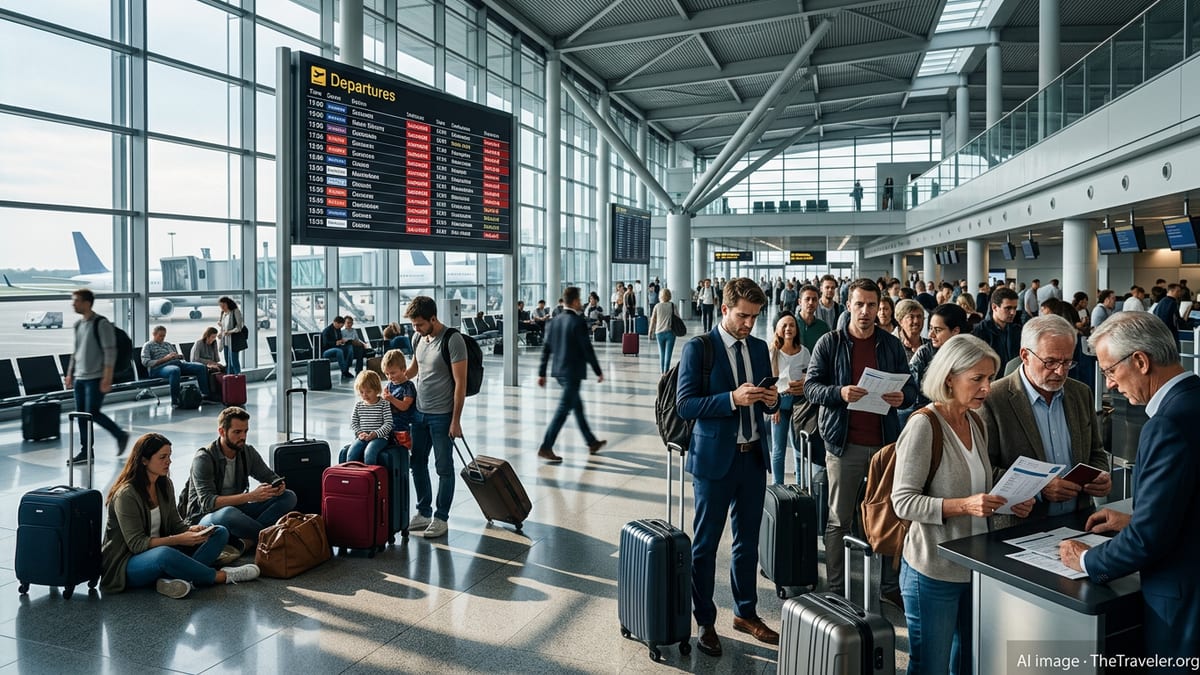
Foreign Office updates highlight 11 November strike
Publicly available information on the UK government’s Spain travel advice, updated on 10 November 2026, draws attention to a 24 hour national strike planned for Wednesday 11 November. The notice states that the action is expected to affect transport systems across Spain and advises people to check with their travel provider for the latest information before setting out.
The strike has been called by Spain’s largest trade union confederations and is linked to protests over the cost of living and housing. Reports indicate that participation is expected across public services, including transport workers in major cities and on intercity routes, although the level of disruption can vary by region.
The UK alert does not advise against travel to Spain, but it reframes journeys on and around 11 November as higher risk for delays and cancellations. Travellers are being encouraged to allow additional time at airports, railway stations and ferry terminals and to stay in close contact with airlines, train operators and package providers.
The updated guidance comes against a backdrop of heightened attention on infrastructure reliability across Europe, where industrial action, severe weather systems and separate security incidents have all contributed to a more fragile travel environment in early November.
Rail services under pressure after Toledo collision
The renewed UK focus on Spain follows an already strained rail network. On 28 October, two high speed trains collided between the towns of Mora and Orgaz in the province of Toledo, on the busy corridor linking Madrid and Andalucía. Spanish operator Renfe has reported significant disruption to services in the area while investigations and repair work continue.
Information published by several national travel advisories notes that services between Madrid, Ciudad Real and Andalucía, as well as some through routes from Barcelona and Valencia to the south, remain reduced or suspended while infrastructure is restored. Timetables have been repeatedly adjusted, and some trains are being rerouted or replaced by buses.
The combination of the ongoing rail disruption and the 11 November national strike means that travellers relying on long distance trains may face particular uncertainty. Passengers with advance tickets are being advised, through operator announcements and official advisories, to verify whether their specific train is running and to consider alternative connections if they have time sensitive onward travel such as flights or cruise departures.
Concerns around rail reliability have also encouraged many visitors to consider domestic flights or car hire for longer journeys within Spain, although these options may themselves be exposed to strike related disruption and, in the case of flights, to broader European traffic management challenges.
Impact expected across airports, metros and ferries
General strike days in Spain typically see varying levels of participation, but publicly available union timetables and operator statements ahead of 11 November point to disruption at airports, on city metro systems and on regional bus networks. Minimum service levels may be imposed in essential sectors, but reduced staffing can still slow operations.
Industry reports suggest that ground handling, security screening and check in desks are areas where passengers could experience longer queues at major airports such as Madrid Barajas and Barcelona El Prat. Some airlines have adjusted schedules in advance, consolidating frequencies or moving departure times to off peak windows agreed with unions.
Urban transport providers in cities including Madrid, Barcelona, Valencia and Seville have published special timetables for strike day, with reduced frequencies during core protest hours and warnings that services may be crowded when they are running. In some cases, operators have signalled that limited metro and bus services will be prioritised for early morning and late evening commuting periods.
Ports and ferry routes, particularly those connecting mainland Spain with the Balearic and Canary Islands or with North Africa, may also see delays if dock workers or support staff join stoppages. Travellers with early morning sailings have been encouraged by ferry companies, through customer advisories, to arrive well in advance and to monitor text or app updates closely.
What UK travellers should do now
For British visitors already in Spain or due to arrive in the coming days, publicly available guidance emphasises preparation rather than cancellation. Travel companies are generally allowing fee free changes only where a flight or train has been cancelled, meaning most holidaymakers will need to weigh the inconvenience of potential delays against the cost of altering plans.
Passengers are being advised to reconfirm all legs of their journey, including airport transfers and rail connections, and to build extra margin into itineraries on 11 November and the following morning in case disruption carries over while services are restored. Those making same day connections, such as flying into Madrid and continuing by train to Andalucía, may wish to explore options for overnight stays or alternative routes if their original plan relies on tight timings.
Travel insurance policies vary in their treatment of industrial action. Some products include cover for additional accommodation and transport costs if a trip is disrupted by strikes, while others exclude strike related claims. Travellers are therefore encouraged by consumer groups to review their policy wording and keep receipts for any additional expenses incurred.
For package holidays, publicly available consumer regulations in the UK mean that tour operators remain responsible for delivering the trip or offering suitable alternatives if key components cannot be provided. Independent travellers booking separate flights, accommodation and rail tickets generally have to negotiate changes with each supplier individually.
Spain remains open but tensions highlight need for flexibility
Despite the alert, the overall security and health advice for Spain from the UK and other governments remains broadly unchanged. Spain continues to be presented as a major European destination where millions of visitors travel each year without serious incident, albeit with a need to stay aware of industrial action, crowded conditions and the general risk of protests in urban centres.
Travel trend data and recent reporting indicate that visitor numbers to Spain have remained robust through autumn, even as the country grapples with domestic debates over housing, wages and public investment that underpin the current strike movement. Popular city break destinations such as Barcelona, Madrid, Valencia and Málaga, along with coastal resorts and island destinations, continue to welcome large numbers of international arrivals.
However, the convergence of the 11 November general strike, ongoing rail disruption around Toledo and unsettled early winter weather patterns across parts of the Iberian Peninsula has brought renewed attention to the importance of flexible travel planning. Travellers who can adjust timings, hold refundable bookings or route via alternative hubs may be better placed to manage sudden changes.
Public information from European aviation and rail bodies suggests that infrastructure capacity remains under pressure across several countries, with even localised strikes or weather events having the potential to cascade through wider networks. For holidaymakers and business travellers bound for Spain, the latest UK alert serves as a reminder to watch advisories closely, plan conservatively and keep options open while the situation evolves.