


More news on this day
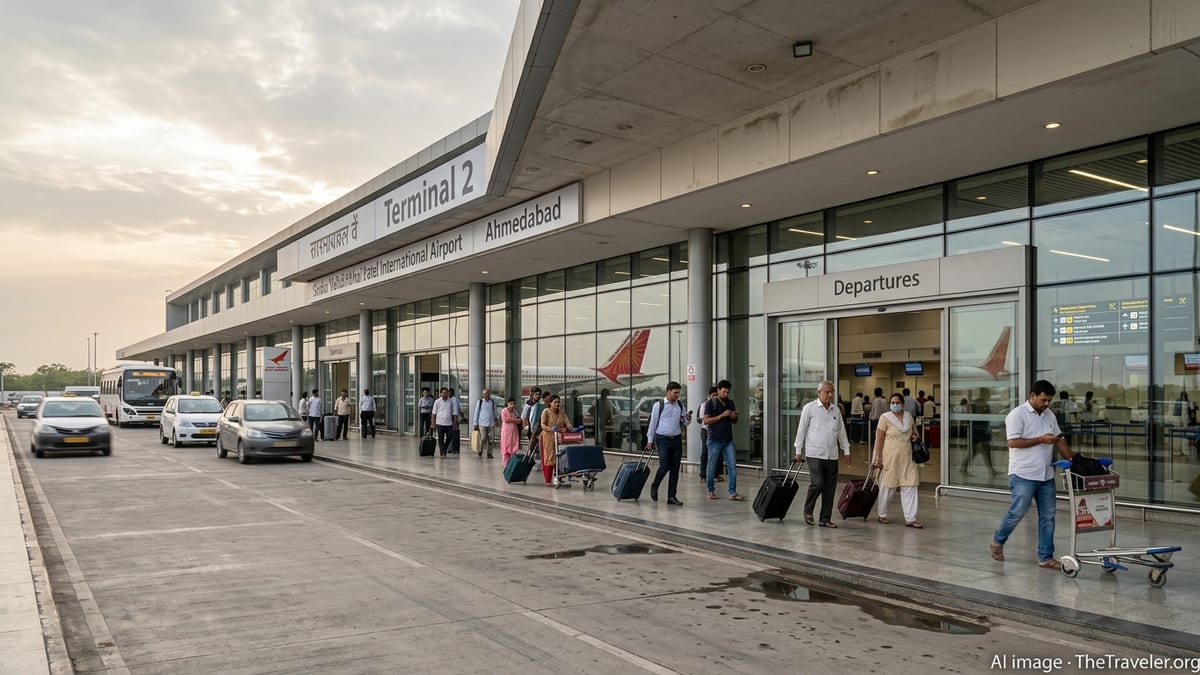
A series of last minute flight cancellations at Ahmedabad’s Sardar Vallabhbhai Patel International Airport over the Diwali travel period has left scores of domestic and international passengers stranded, highlighting mounting operational strains at one of western India’s busiest aviation hubs.
Get the latest news straight to your inbox!
Festive rush collides with mounting cancellations
Publicly available data and local media coverage indicate that disruption at Ahmedabad airport has intensified in the second week of November 2026, just as outbound Diwali travel from Gujarat has peaked. Airport statistics compiled for 1 to 10 November show more than 1,200 scheduled departures, with cancellations running at about 2 percent alongside average departure delays of nearly 25 minutes, underscoring a system already operating under pressure before the latest wave of scrapped flights.
Reports from city newspapers describe daily passenger footfall at Sardar Vallabhbhai Patel International Airport rising from a typical 36,000 travellers to as many as 44,000 during the festive week, driven by demand on routes to Delhi, Mumbai, Bengaluru, Chennai, Bagdogra and popular leisure destinations. At the same time, at least 18 domestic and international services were delayed or cancelled on 7 and 8 November, including services operated by SpiceJet, compounding congestion in terminals and at airline service counters.
Against this backdrop, cancellations concentrated on a handful of carriers have had an outsized impact on travellers whose holiday plans depend on a single outbound flight. Accounts carried in regional outlets describe families arriving at the airport hours before departure, completing check in and baggage drop, only to learn of cancellations at short notice with limited on the ground assistance.
SpiceJet’s Dubai link scrapped amid wider network stress
The most high profile disruption in recent days has been the cancellation of SpiceJet’s Ahmedabad Dubai service, which aviation news sites and regional media report was called off on 13 November. Coverage indicates that the decision affected both residents of Gujarat heading out for Diwali vacations and workers returning to jobs in the United Arab Emirates after spending the festival in India, leaving a mix of outbound and inbound passengers stranded at the international terminal.
Separate reporting suggests that this Dubai service has faced repeated disruption, with passengers noting a second consecutive day of cancellation and limited clarity at airport counters about rebooking options or compensation. Consumer rights organisations tracking flight reliability have also pointed to earlier operational problems on SpiceJet routes from Ahmedabad since 7 November, including cancellations on key domestic sectors and multi hour delays over the Diwali weekend.
Industry analysis available online links these problems to broader pressures on the airline’s network, including aircraft availability, maintenance backlogs and reduced spare capacity. Informal trackers used by frequent flyers show series wide schedule changes on SpiceJet routes for November, while social media posts from passengers refer to receiving cancellation notices only after reaching the airport. Ahmedabad has emerged as one of the focal points of these network adjustments because of its heavy holiday demand and multiple leisure and Gulf connections.
IndiGo domestic cuts leave regional travellers in limbo
The disruption at Ahmedabad has not been limited to international services. On 12 November, local English language outlets reported that IndiGo cancelled two regional flights from the city, to Nashik and Bhopal, with particularly sharp criticism focused on the handling of the Nashik service. Passengers recounted that boarding and baggage formalities were completed before being informed of the cancellation roughly an hour before scheduled departure, leaving many separated from checked luggage and uncertain about when they would be able to travel.
Coverage indicates that the Ahmedabad Nashik passengers remained in the sterile zone of the airport for extended periods while seeking clarity about refunds, rebooking and accommodation. In a separate instance earlier in the day, IndiGo’s Ahmedabad Bhopal service was also cancelled, reducing connectivity for business and visiting family and friends traffic along that central India corridor on a busy pre holiday weekday.
These back to back cancellations have drawn attention to the vulnerability of regional routes that often offer only a single daily frequency. For travellers bound for smaller cities such as Nashik, a same day alternative from Ahmedabad may not exist, converting a single cancelled leg into missed onward trains, hotel bookings or connecting flights from other Indian hubs.
Stranded passengers face gaps in on the ground support
Accounts compiled from local news coverage and passenger advocacy platforms converge on reports of long waits, limited information and sparse amenities for stranded travellers inside Ahmedabad airport. In several of the recent cases, passengers described difficulty obtaining timely updates about the reasons for cancellation, likely timeframes for rebooking, or the status of their checked baggage, particularly when announcements were made only at or after the scheduled departure time.
Some reports refer to travellers spending much of the day within the terminal as they sought alternative routes via Mumbai or Delhi, often discovering sharply higher walk up fares as remaining seats filled. Others have highlighted challenges for elderly passengers and families with young children who had little access to food vouchers, hotel rooms or ground transportation despite extended delays and overnight wait times.
These experiences echo broader concerns regularly raised across India about the implementation of passenger rights rules on the airport floor. While civil aviation regulations set out obligations for airlines to provide refunds, alternative transport and amenities when cancellations are not caused by extraordinary circumstances, several Ahmedabad travellers reporting their experiences online described needing to pursue refunds and claims after the fact rather than receiving clear options immediately at the airport.
Operational constraints and traveller options in the days ahead
Operational notices for Ahmedabad airport show several active advisories related to airside works, including partial taxiway closures that can affect how many aircraft movements are possible in short windows and how flexibly airlines can recover from delays. Although these infrastructure constraints do not directly cause a specific commercial flight cancellation, they contribute to a tighter operating environment in which late turning aircraft or technical snags can more easily cascade into scrubbed departures.
The airport handled more than 13 million passengers in the 2024 to 2025 financial year, ranking it among India’s busiest aviation gateways. With the Diwali surge adding thousands of additional daily travellers, the margin for schedule recovery narrows further, particularly for carriers with limited spare aircraft based in Ahmedabad. Analysts following the sector note that when multiple flights on a single airline are affected in such conditions, queues for customer service rapidly lengthen and available seats on competing airlines disappear.
For passengers with bookings through Ahmedabad in the coming days, online tools that display historical on time performance and short term schedule changes can offer early warning of potential disruption. Consumer advocates also point travellers toward India’s published civil aviation passenger rights charter, which details entitlements to rebooking, refunds and care when cancellations occur close to departure. As operations stabilise after the holiday peak, attention is likely to remain focused on how both airlines and airport stakeholders improve communication and contingency planning so that sudden cancellations do not leave large numbers of passengers stranded in terminal halls.