


More news on this day
United Airlines is preparing to pivot a portion of its transatlantic network from aging Boeing 757s to new Airbus A321XLR aircraft, signaling a major strategic shift in how the carrier serves long, thin routes between North America and Europe.
Get the latest news straight to your inbox!
From Boeing 757 Workhorse to Airbus A321XLR
Publicly available fleet information shows that United has 50 Airbus A321XLRs on order, with deliveries scheduled to begin in 2026. The aircraft are earmarked primarily as replacements for the airline’s Boeing 757-200s, which for years have been the backbone of United’s thinner transatlantic routes from hubs such as Newark and Washington Dulles.
Industry coverage indicates that United executives have framed the A321XLR as a one-for-one successor on many of these missions, with comparable or greater range and significantly lower fuel burn per seat. The shift aligns United with a wider industry trend in which long-range single aisle aircraft are taking over routes that were once the domain of older midsize widebodies and classic narrowbodies.
Analysts note that the dual strategy of adding A321neo aircraft for domestic and medium haul services, alongside A321XLRs for longer sectors, effectively creates a new narrowbody subfleet for United. This approach allows the airline to standardize much of its pilot training and maintenance while tailoring cabin layouts and fuel capacity to specific missions.
While United has not publicly detailed every route that will transition, commentary across fleet briefings and investor presentations consistently highlights transatlantic flying as a primary use case for the A321XLR, especially on markets that are strong in summer but more challenging to sustain with widebodies in shoulder seasons.
Redrawing the Transatlantic Network Map
The A321XLR’s advertised range of roughly 4,700 nautical miles gives United the flexibility to serve a mix of existing and prospective destinations from its East Coast gateways. Coverage of United’s long term network plans points to continued growth in secondary European markets, including cities in Scotland, Spain, Croatia and Italy, which have featured prominently in recent seasonal schedules.
On many of these routes, United currently deploys Boeing 757s or smaller widebodies with lie flat business cabins. Moving to the A321XLR allows the airline to keep a similar premium footprint while adding seats in economy and premium economy, enabling more consistent year round operations on routes that may not always justify a widebody.
Consultancy forecasts suggest that hundreds of A321XLRs will enter service globally over the next five years, with a particularly strong impact on transatlantic networks. For United, the type is expected to complement its Boeing 787 and 767 fleets rather than replace them outright, filling gaps between trunk widebody routes and shorter intra-European connections operated by partners.
Observers also expect United to experiment with new city pairs that would previously have been considered too niche for widebodies. Smaller European capitals and regional centers, along with underserved U.S. gateways, are seen as likely candidates once the A321XLR fleet is established and training, maintenance and scheduling patterns are fully in place.
Cabin Product and Passenger Experience
United has not released full cabin mockups for its A321XLRs, but fleet documentation and design leaks referenced in aviation forums suggest a three class layout featuring lie flat business class, a dedicated premium economy section and a densified economy cabin. This configuration would mirror the product evolution seen at other carriers introducing the type on long haul routes.
For passengers, the most immediate difference will be the experience of flying a single aisle aircraft on journeys that can stretch to eight or nine hours. Industry commentary notes that travelers have already had a preview of this with existing A321neo and Boeing 737 transatlantic services, where modern cabins, larger overhead bins and updated in flight entertainment help offset the narrower fuselage.
Reports circulating among frequent flyer communities indicate that United is prioritizing a consistent premium experience across its long haul fleet. That includes updated Polaris style seating in business class, improved privacy at each seat, and expanded power and connectivity options throughout the cabin, all of which the airline is keen to bring to its new narrowbody flagships.
At the same time, some travelers have raised concerns about comfort in standard economy on long narrowbody flights, particularly around seat width and perceived crowding during boarding and meal services. United’s final seating choices on the A321XLR, including pitch, cushioning and lavatory layout, will likely play a significant role in shaping customer perceptions once the aircraft begins crossing the Atlantic.
Operational and Environmental Implications
From an operational perspective, the A321XLR offers United the prospect of lower trip costs and higher fuel efficiency compared with the 757s it is due to replace. Industry analyses highlight the aircraft’s modern engines, refined aerodynamics and additional fuel tanks designed to support long range missions without the structural weight associated with widebody jets.
These efficiencies are particularly important on so called long, thin routes, where margins can be sensitive to seasonal swings in demand and fuel prices. Being able to operate a smaller aircraft with a premium heavy configuration allows United to capture high yield traffic while keeping overall capacity in check, reducing the risk of flying half empty widebodies during off peak periods.
The shift also has environmental implications. Studies on new generation narrowbodies suggest meaningful reductions in carbon emissions per seat compared with older aircraft types. United has publicly committed to ambitious decarbonization targets, and the introduction of the A321XLR is positioned within that broader strategy of fleet renewal, alongside investments in sustainable aviation fuel and more efficient operational practices.
Airport infrastructure considerations are relatively modest, since the A321XLR fits within existing narrowbody gate footprints. However, longer stage lengths may require adjustments in ground handling, catering and crew scheduling, especially at smaller European airports that will see single aisle aircraft arriving after flights of eight hours or more.
Competitive Context Across the Atlantic
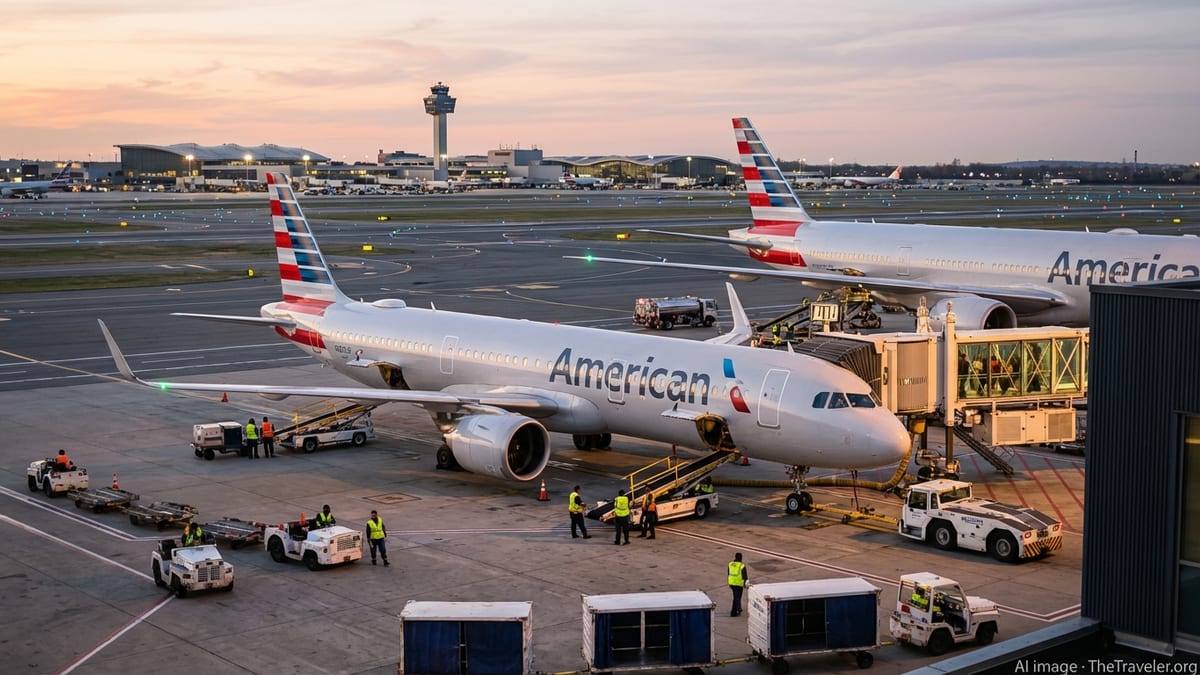
United’s embrace of the A321XLR places it in the middle of a competitive race among transatlantic carriers to deploy new generation long range narrowbodies. American Airlines has already publicized its own A321XLR plans, using the type to launch and extend seasonal routes from the United States to destinations such as Edinburgh, Barcelona and other secondary European cities.
Major European groups are also bringing the A321XLR and related variants into their fleets, leveraging the aircraft from hubs in Madrid, Dublin and other cities to open thinner North American routes. For United, this means that on some city pairs it may find itself competing directly against similar aircraft, with differentiation resting more on schedule, partnerships and onboard product than on equipment alone.
Industry observers point out that United’s strong alliance ties in Europe give it a degree of flexibility in choosing which routes to operate with its own metal and which to serve via partners. The A321XLR adds another tool to that toolkit, enabling more nuanced scheduling decisions that can respond quickly to shifting demand patterns, especially in the summer peak and shoulder seasons.
As deliveries approach, attention will focus on which specific transatlantic routes are first to see the Airbus narrowbody and how United’s overall network design evolves once the Boeing 757 begins to exit stage by stage. For travelers, the coming years are likely to bring a broader mix of aircraft types across the Atlantic, with the A321XLR emerging as a central part of United’s strategy to balance efficiency, reach and onboard experience.