


More news on this day
In a twist worthy of peak travel season drama, United Airlines chief executive Scott Kirby has been spotted flying on rival carrier American Airlines, a seemingly routine booking that has landed at the center of an intense debate over loyalty, optics and the future shape of the U.S. airline industry.
Get the latest news straight to your inbox!
A Familiar Face on a Rival Carrier
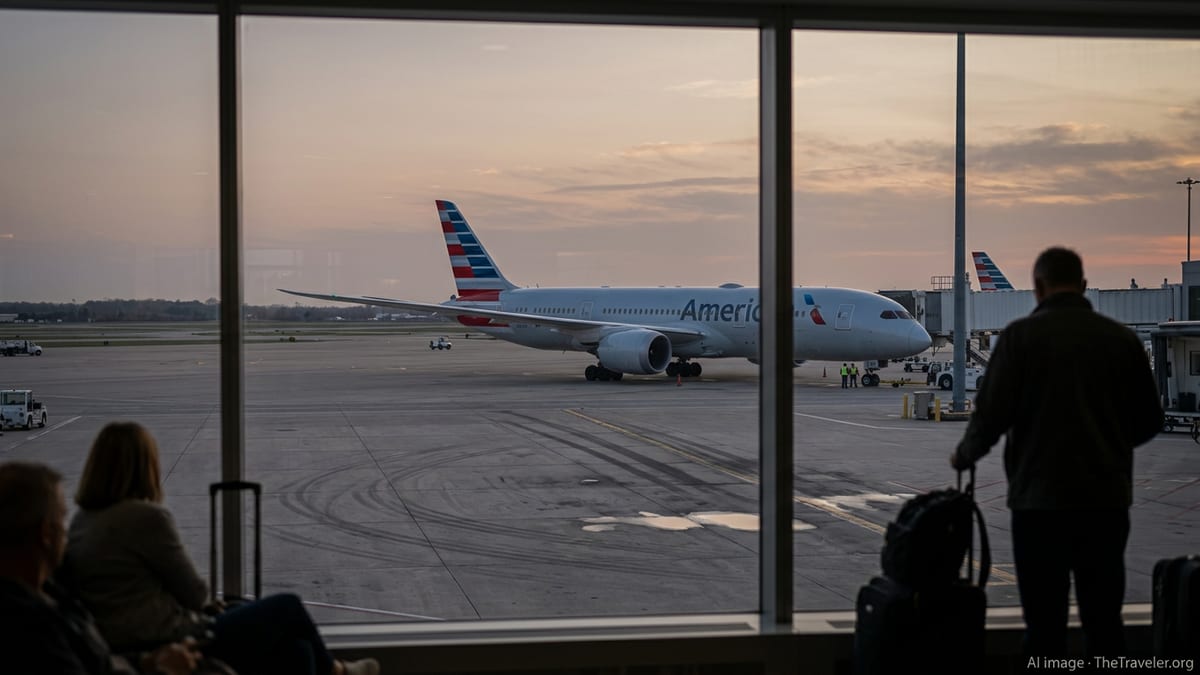
Reports circulating across aviation forums, social channels and industry commentary indicate that Kirby recently chose to travel on an American Airlines flight instead of his own Chicago based carrier. The sighting resonated because Kirby not only leads United but also built a substantial part of his career at American, where he once served as president before moving to United.
For most business travelers, picking whichever airline offers the best schedule or fare is standard behavior. For an airline chief executive, the calculus is more complicated. Passengers and employees often assume that the person at the top will fly the home brand whenever practical, treating it as a visible expression of confidence in the product and of solidarity with frontline staff.
Publicly available information about corporate travel expectations suggests that many airline boards prefer their senior leaders to fly on company aircraft whenever schedules permit, not as a hard rule but as a cultural signal. Against that backdrop, a United branded chief taking a seat on American metal becomes a potent visual, especially at a time when rivalry among the big three U.S. carriers is fierce.
The timing compounds the scrutiny. Kirby has been under an especially bright spotlight since mid decade operational disruptions at United, including high profile weather related meltdowns around its Newark hub that triggered political questions, congressional letters and passenger frustration. In that environment, even an ordinary ticket on a competitor can quickly turn into a symbolic flashpoint.
History of Optics Trouble for United’s Chief
This is not the first time Kirby’s personal travel decisions have intersected awkwardly with United’s public image. In 2023, published coverage showed that he used a private jet to leave the New York area during a period when United was canceling and delaying thousands of flights around the July 4 holiday due to storms and operational strain. He later issued a public apology, acknowledging that the choice looked insensitive to stranded customers and employees.
That episode entrenched a perception among some travelers and staff that the carrier’s top executive did not always share the same travel hardships as regular passengers. At the time, critical commentary from pilots and frequent flyers spread widely online, arguing that airline leaders should be required to experience their own network and service first hand, especially during periods of disruption.
The new attention around Kirby’s presence on an American Airlines flight taps directly into that unresolved tension. To some observers, it is simply another reminder that senior executives operate in a different travel reality than the average coach customer. To others, it underscores a broader question of how visible leaders should be when their own airlines face intense competitive and regulatory pressure.
Although there is no suggestion that Kirby breached any formal policy by flying American, the pattern of headlines about his personal travel has made him an outsized symbol of how executive behavior can color perceptions of an entire brand.
Rivalry Meets Merger Talk
The optics of a United CEO sitting on an American Airlines flight arrive just as speculation over a potential tie up between the two carriers has moved into public view. Recent reporting indicates that Kirby personally approached American and later pitched the idea to the federal administration, arguing that a combination could create a more globally competitive airline and potentially stabilize capacity in a volatile market.
American is reported to have rebuffed the advance, while policymakers and consumer advocates have raised alarms over what such a mega merger would mean for fares, service and competition across key hubs. Industry analysts point out that previous consolidation waves among U.S. airlines delivered mixed results for travelers, with some markets seeing reduced service and higher average prices.
In that sensitive context, the image of United’s chief flying American is being read in multiple and sometimes conflicting ways. Some see it as a mundane example of an executive using whichever airline best fits his schedule, underlining the interoperability of the modern route network. Others regard it as a telling symbol of how closely intertwined the two companies already are, informally previewing a future in which a single management team could oversee an enormous combined carrier.
Either way, the incident highlights how a single boarding pass can echo through broader debates about concentration in the U.S. airline market, particularly when it belongs to the architect of a proposed transcontinental mega deal.
Passenger Reactions and Brand Loyalty Tensions
Traveler reactions, as reflected in social media posts and frequent flyer forums, have ranged from amused resignation to pointed criticism. Many passengers say the episode reinforces a long held view that airlines expect brand loyalty from customers while their own leaders feel free to shop the marketplace like any other traveler.
Some United loyalists have expressed disappointment that the chief executive did not appear on his own carrier, especially given the company’s efforts to position itself as a de facto flag carrier for U.S. long haul travel. Their argument is that if United is championing the strength of its premium cabins, lounges and global network, its top executive should be the most visible frequent user of those products.
Others, including travelers who regularly mix and match carriers based on convenience, see the reaction as overblown. From that perspective, an airline leader sampling a rival’s cabin can even be positive, offering first hand insight into competitor strengths and weaknesses that might inform future product investments.
The divide underscores how fragile brand loyalty can be in a market where schedule, price and reliability often trump emotional attachment. For airlines working to distinguish themselves with upgraded cabins and new benefits, the personal choices of executives can either reinforce or subtly undermine the marketing message.
What It Signals for Corporate Culture and Competition
Corporate governance experts note that an executive’s travel behavior often serves as a proxy for internal culture. Leaders who are visible on their own aircraft, especially in regular economy cabins, signal a hands on approach and a willingness to share the customer experience. When that visibility is sporadic, or when leaders are seen more often on private jets or rival airlines, employees and customers can infer a disconnect between rhetoric and reality.
At United, Kirby has cultivated a reputation as a detail oriented strategist who is deeply involved in fleet planning, network design and the push to expand the airline’s international footprint. His presence on an American flight does not change those structural initiatives, but it introduces a narrative complication at a moment when he is seeking political and public support for transformative moves like a potential merger.
For competitors, the episode is another reminder that airline brands today are defined as much by perception as by hard metrics such as on time performance or unit revenue. A single smartphone photo from a boarding gate can ricochet across the travel world in hours, shaping views of leadership authenticity and corporate priorities.
Whether Kirby’s decision to fly American proves to be a brief social media flare up or a lasting case study in executive optics, it reinforces a simple lesson for global airline chiefs. In an era of intense scrutiny and rapid consolidation, every seat they choose to occupy, and every logo on the boarding pass, is now part of the story.