


More news on this day
United Airlines has postponed the launch of 10 planned routes from its Chicago O’Hare hub after federal regulators extended temporary limits on the number of flights that can operate at the airport, a move that will ripple through several midwestern and regional communities that had been expecting new service this year.
Get the latest news straight to your inbox!
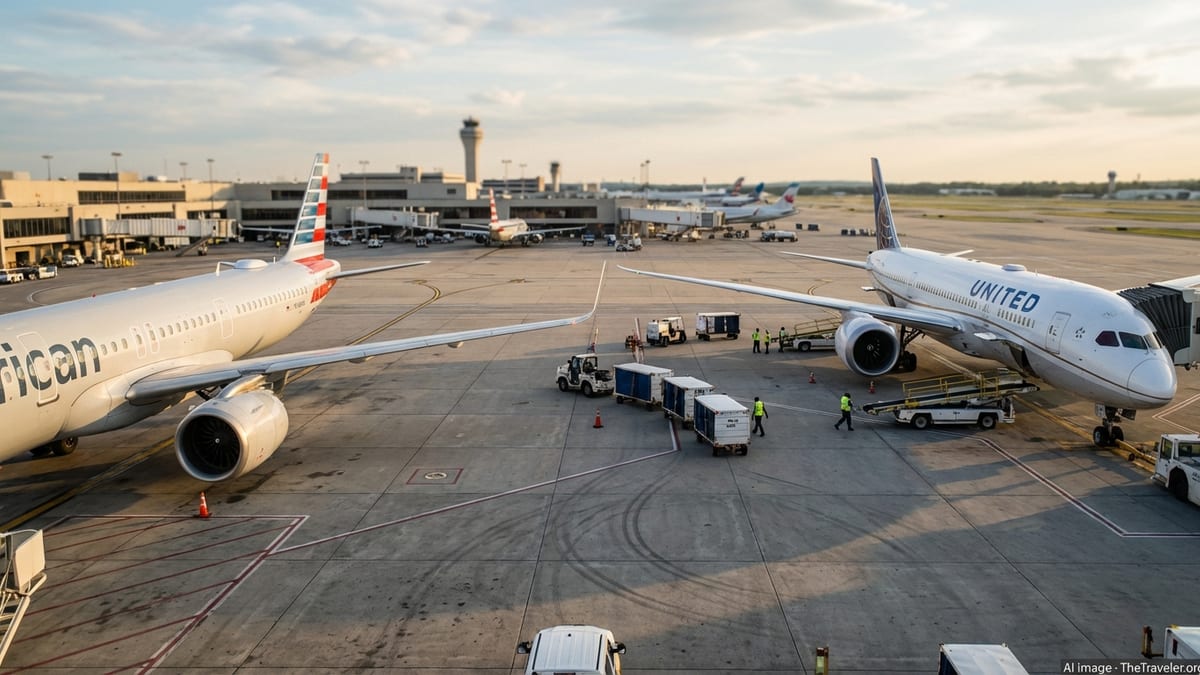
FAA Flight Caps Extended at O’Hare
Publicly available regulatory notices and recent coverage indicate that the Federal Aviation Administration has extended temporary caps on flight operations at Chicago O’Hare for another year, citing the need to ease chronic congestion and reduce extensive delays at one of the country’s busiest hubs. The caps limit the number of scheduled takeoffs and landings airlines can operate in peak periods, restricting how much capacity carriers such as United and American can add from the airport.
The restrictions follow several years of operational strain at O’Hare, where passenger forums and industry commentary describe long taxi times, aircraft waiting for gates and frequent rolling delays during peak travel seasons and disruptive weather. The current cap extension is framed as a short term step while airport construction and air traffic management improvements continue, but it has immediate implications for airlines’ network plans.
O’Hare is United’s second largest hub and a key connecting point for midwestern, transcontinental and some international traffic. As a result, changes imposed at the airport reverberate widely across United’s domestic system, affecting both large coastal markets and smaller regional communities that rely on Chicago for onward connections.
Ten New Routes Put on Hold
According to recent schedule updates referenced in aviation industry coverage, United has responded to the extended caps by delaying the launch of ten routes that were slated to begin from O’Hare in the coming months. These routes target smaller and mid sized cities that depend heavily on hub connectivity for both business and leisure travel, and several were marketed as part of United’s broader effort to expand its midwestern footprint.
Instead of launching as advertised in the upcoming season, the new services have been pushed back until at least late 2026, with specific start dates yet to be firmed up in public timetables. In some cases, the routes have been removed from near term schedules entirely, while in others they remain visible in booking systems but blocked from sale beyond a certain date, signaling that they are on hold rather than fully cancelled.
Network analysts note that delaying new routes is one of the few levers United has to comply with the cap while preserving its highest demand, highest revenue services from Chicago. Rather than trimming large mainline flights on trunk routes to cities such as New York, Los Angeles or Denver, the airline is prioritizing those markets and deferring new or thinner connections that would be more exposed to schedule disruptions.
Impact on Travelers and Regional Airports
For travelers in the affected cities, the delay means fewer nonstop options and continued reliance on existing connections via other hubs or rival airlines. Some of the communities targeted by the postponed Chicago services have limited air service overall, and the promised United flights were seen as a way to restore or strengthen links to the national network after earlier regional cuts.
Travel planning from these markets will now remain more complex, with passengers forced to connect through alternative hubs or drive to larger airports for more choice. Fare competition may also be slower to develop, since the deferred United flights would have added new capacity that could pressure prices on existing routes.
At O’Hare itself, the decision underscores the tension between expanding access and managing congestion. While caps are designed to reduce ground holds, long taxi times and schedule meltdowns, they also make it harder for airlines to add marginal routes that serve smaller communities. Industry observers point out that this dynamic can entrench service at larger, proven markets while leaving thinner routes more vulnerable to delay or cancellation.
Operational Constraints and Competitive Pressures
The situation at O’Hare is unfolding against a backdrop of heightened scrutiny of airline reliability in the United States, as travelers voice frustration over repeated delays and cancellations. Reports from passenger groups and aviation commentators highlight how constrained gate space, runway work and air traffic control limitations at the airport can quickly cascade into system wide disruptions, particularly for carriers with a heavy concentration of flights such as United and American.
By deferring new routes, United is effectively choosing to consolidate its existing schedule rather than stretch its infrastructure and operating teams further. Analysts suggest that this approach may help the carrier maintain completion rates and on time performance metrics from Chicago, even if it slows near term growth. The decision also reflects the reality that, under a cap, any new flight requires a trade off somewhere else in the network.
Competitive dynamics are also at play. With all airlines subject to the same cap, each carrier is seeking to protect its most valuable slots and flights. Coverage of the cap extension notes that regulators have also been focused on encouraging competition at O’Hare, which complicates efforts by a single airline to grow its share of operations despite being the dominant hub carrier.
What Travelers Should Watch Next
For passengers who had been eyeing the new United routes from Chicago, the most immediate step is to review existing bookings and monitor airline schedule updates. While most of the delayed services had not yet begun, some customers may have purchased future itineraries that will need to be rebooked if start dates move again or flights drop out of sale entirely.
Travelers using O’Hare as a connecting point should continue to factor in potential congestion, particularly during peak hours and storm prone seasons. Even with caps in place, the airport remains one of the busiest in the country, and operational data and traveler reports continue to describe significant day of travel variability in departure and arrival times.
Looking ahead, the trajectory of United’s Chicago expansion will depend on how long the FAA maintains the current limits and how quickly infrastructure projects and air traffic management upgrades can improve the airport’s capacity. Until those factors become clearer, further incremental adjustments to schedules, including additional route delays or frequency changes, remain possible as United and other carriers work within the cap to balance reliability with demand.