


More news on this day
United Airlines has extended the suspension of its flights to Tel Aviv’s Ben Gurion Airport, with schedule filings and public statements indicating that nonstop services from the United States will not fully return until at least early 2027, deepening a prolonged gap in direct connectivity on one of the region’s busiest long-haul corridors.
Get the latest news straight to your inbox!
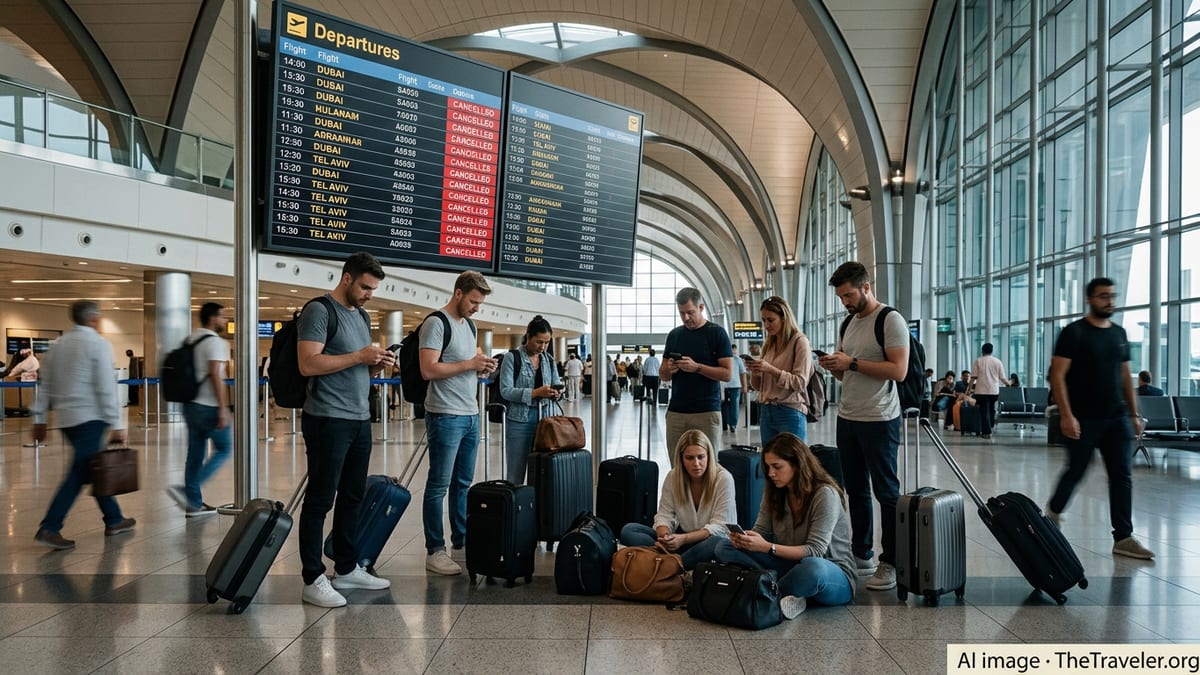
Tel Aviv Dropped From United’s Near-Term Schedule
Publicly available timetables and operational bulletins show that United’s departures to Tel Aviv have been repeatedly pushed back as security conditions and airspace restrictions around Israel remain volatile. Earlier travel waivers and advisories framed the halt as a temporary measure, but more recent updates state that all United-operated flights to Tel Aviv “remain suspended” and have been removed from the near-term schedule.
Industry data and advisory notices circulated to travel agents indicate that the carrier’s Tel Aviv services from key US hubs, including Newark, Chicago O’Hare, Washington Dulles and San Francisco, are not being sold for most of 2026, effectively extending the suspension through at least late 2026. In contrast to early assumptions of a short disruption, the absence of bookable inventory highlights how long the airline now expects the interruption to last.
Independent reporting from Israeli and international outlets has tracked a pattern of rolling extensions. In previous phases, the suspension was stretched first to mid-June, then through early September, as Israel’s airspace remained restricted and foreign carriers reassessed their risk exposure. These incremental moves have culminated in a much longer pause than many travelers initially anticipated.
Earliest Firm Return Date Tied to March 2027
While United has not published a detailed public roadmap for all routes to Tel Aviv, announcements in late August 2026 about the airline’s 2027 international expansion provide a key signal. In that material, the company highlights plans to restart service from San Francisco to Tel Aviv as part of its long-haul growth, grouping the resumption with a slate of new transatlantic and transpacific destinations for the 2027 season.
Separate coverage in Israeli business media specifies that the San Francisco–Tel Aviv route is scheduled to resume on March 28, 2027, with three weekly flights. Those reports describe the restart as United’s return to Israel following a multiyear absence and note that the service will offer a substantial business-class cabin compared with competing options. Taken together, these reports indicate that March 2027 is the earliest firmly dated relaunch of a United nonstop to Tel Aviv.
Other US–Tel Aviv routes previously operated by United, particularly from Newark, are not yet listed with concrete restart dates in publicly accessible schedule databases beyond rolling placeholders. Travel-industry commentary suggests that any broader rebuild of the network is likely to follow the initial relaunch from San Francisco, further reinforcing the expectation that a full return will not occur before early 2027.
Security Environment and Competitive Pressure Shape Decisions
The prolonged suspension reflects a mix of security and commercial considerations. The halt was initially triggered when Israel’s airspace was temporarily closed to many foreign airlines during escalations involving Iran and regional missile attacks. As the situation evolved, United maintained a conservative stance, repeatedly extending its travel waivers and declining to reinstate regular operations even as some other carriers experimented with limited resumptions.
At the same time, United faces a shifting competitive landscape on the Israel market. Israeli flag carrier El Al has moved to strengthen its long-haul network, including plans to open its own service between Tel Aviv and San Francisco from October 2026. That timing places El Al on the route several months before United’s anticipated return, effectively giving the Israeli airline first-mover advantage on the restored West Coast link.
Analysts following the transatlantic and Middle East sectors note that this dynamic could influence how and when United rebuilds capacity. With El Al and various European and Gulf carriers providing one-stop alternatives between the United States and Israel, United’s planners must balance the strategic value of a nonstop presence in Tel Aviv against aircraft availability and opportunities in other growth markets highlighted in its 2027 expansion plan.
Impact on Travelers and the US–Israel Air Corridor
For travelers, United’s extended absence from Tel Aviv has meant fewer nonstop options and more reliance on connections through Europe and the Gulf. Passengers who previously favored United’s hub-to-hub structure, especially from Newark and Chicago, have been rebooked or have shifted to itineraries on partner and competitor airlines, including carriers in the Lufthansa Group and regional operators that continue to serve Israel.
Travel waivers issued over the past two years have allowed affected customers some flexibility to change dates or reroute without standard change fees, but many itineraries still incur fare differences, particularly during peak travel periods. Travel agents report that high-demand windows such as Jewish holiday seasons and summer breaks have seen constrained seat availability and elevated prices, compounded by the prolonged pause in nonstop US carrier capacity.
The broader US–Israel air corridor has also been reshaped. American Airlines has publicly indicated that it does not plan to resume its own Tel Aviv flights before late March 2027, leaving Delta and foreign carriers to cover most nonstop demand in the medium term. With both United and American largely out of the market until at least early 2027, the competitive balance on these routes is tilting toward non-US airlines and Israeli operators, at least temporarily.
Tel Aviv Suspension Contrasts With United’s Wider Global Growth
The long pause on a marquee Middle Eastern destination stands in contrast to United’s broader international growth strategy. In an August 2026 network announcement, the airline highlighted what it described as the largest international expansion in its history for 2027, including new or expanded services to cities in Japan, Italy and France. The Tel Aviv restart from San Francisco is positioned within that narrative as a selective return to markets where the carrier sees strong long-term demand.
Industry observers point out that such selective redeployments underscore United’s willingness to leave high-profile routes dormant for extended periods when conditions are uncertain, even as it adds capacity elsewhere. By removing Tel Aviv flights from its schedule until at least early 2027, the airline frees widebody aircraft for other long-haul routes that may offer more predictable returns in the near term.
How quickly United rebuilds beyond the single San Francisco service, and whether Newark or other US gateways regain their previous frequency to Tel Aviv, will depend on both the security backdrop and competitive pressures at the time of the 2027 relaunch. For now, the available evidence points to a continued suspension of most, if not all, United nonstop flights to Tel Aviv until that early 2027 window.
United Airlines 2027 international expansion announcement
Coverage of United’s planned San Francisco–Tel Aviv restart in March 2027