


More news on this day
UAE travellers are navigating another week of uneven flight operations, as Emirates, Etihad Airways, Air Arabia and flydubai balance high demand with rolling delays and targeted cancellations linked to regional tensions and overseas airspace disruptions.
Get the latest news straight to your inbox!
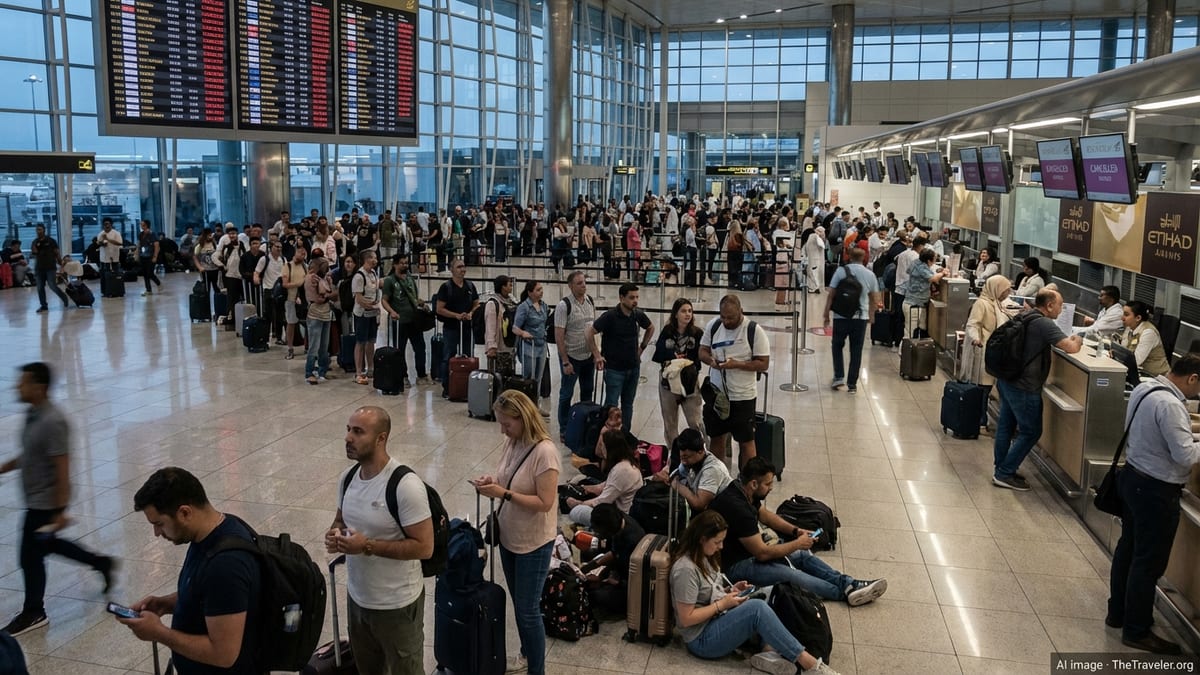
Mixed operations at Dubai and Abu Dhabi airports
Recent days have brought a patchwork of flight outcomes for passengers using Dubai International Airport and Abu Dhabi’s Zayed International Airport, with most services operating but a noticeable number of delays and cancellations on certain routes. Coverage from UAE-based outlets indicates that local carriers are largely maintaining near-full schedules while adjusting timings and aircraft deployments to account for changing risk assessments and overseas restrictions.
Reports show that Emirates and flydubai have continued to operate a broad network of services from Dubai, including high-demand regional routes, even as some flights to neighboring states such as Kuwait and Bahrain have been rescheduled or cancelled at short notice. Similar patterns are visible in Abu Dhabi, where Etihad has kept the bulk of its long-haul network intact but has reported punctuality issues on select services to Europe and Asia.
Air Arabia, which serves a wide range of destinations from Sharjah and Abu Dhabi, has also made tactical schedule adjustments, including cancellations on some Kuwait and Bahrain flights highlighted in recent travel advisories. Despite these disruptions, publicly available data and local media coverage describe airports in Dubai, Abu Dhabi and Sharjah as fully open, with passenger volumes remaining high as residents return from summer travel.
Regional security tensions and airspace warnings
The latest wave of disruption is closely tied to heightened tensions between the United States and Iran, which have prompted a series of international flight suspensions and regulatory warnings covering parts of Gulf airspace. A recent conflict-zone bulletin from European aviation regulators extended guidance on operating in certain Gulf corridors, while several global airlines have temporarily halted or reduced services to Dubai and other regional hubs.
Coverage in Gulf-based business media over the past two weeks links fluctuating UAE flight schedules to these security assessments, noting that carriers have routed aircraft around sensitive areas and occasionally cancelled flights where suitable alternatives are not available. Some foreign airlines, including European long-haul operators, have extended suspensions on Dubai services into mid-September, citing ongoing monitoring of the security environment.
For UAE flag carriers and low-cost operators, the impact has been more limited but still visible in day-to-day operations. Airlines are maintaining key regional routes while allowing extra flight time on certain sectors and retaining flexibility to retime or reroute flights if risk levels or airspace restrictions change. Travellers have been advised in public updates to allow more time at airports and to monitor bookings closely as conditions can shift within hours.
Airline-by-airline snapshot: Emirates, Etihad, Air Arabia, flydubai
Emirates has continued to operate a wide global schedule, with its own flight-status pages indicating services to 130-plus destinations. Travel updates on the carrier’s website and in local media note that flights to and from the United Kingdom and certain European points have been affected by a recent technical issue at the UK’s air traffic control provider, leading to knock-on delays and aircraft rotations across the network.
Etihad Airways has seen a comparable pattern of limited but persistent disruption. Recent daily round-ups from UAE news outlets list delays on specific services from Abu Dhabi to European and Asian cities, as well as late arrivals from North America. However, most of its core Gulf routes, including Bahrain and Kuwait, have been described as operating close to normal, even on days when other airlines recorded cancellations on similar sectors.
Air Arabia’s updates point to a slightly higher concentration of cancellations on select short-haul routes, particularly to Kuwait and Bahrain on some days this week. The low-cost carrier has otherwise kept its Middle East and South Asian network functioning, responding to demand by maintaining frequencies where possible while trimming flights in corridors affected by airspace constraints.
Flydubai appears to sit between the full-service and low-cost models in terms of disruption, with recent reporting highlighting sporadic delays and some cancellations on services to the wider region, including Pakistan and India. Despite those issues, schedules published through UAE media and airport information feeds still show a substantial number of flydubai departures operating on or close to time each day.
International knock-on effects and UK disruption
While regional security remains a core driver of uncertainty, not all disruption is originating in the Gulf. Emirates has flagged issues stemming from a recent technical problem at the United Kingdom’s air traffic control service, which has affected flights into and out of UK airports and created capacity constraints on certain days. Publicly available advisories urge passengers booked on UK routes to check for schedule changes frequently before travelling.
UAE-focused travel coverage also notes that some routes connecting to Indonesia and other parts of Southeast Asia have faced interruptions linked to volcanic ash and weather-related airspace restrictions. These issues, combined with existing security-related rerouting, have added further complexity to network planning for UAE airlines and their international partners.
As a result, travellers on itineraries involving European or Southeast Asian connections may experience schedule changes even if their flights begin or end in the UAE without any local disruption. Advisories recommend that passengers with tight connections build in additional buffer time where possible or consider more flexible ticket options.
What passengers flying from the UAE should do now
Across the major UAE airlines, a consistent message in publicly accessible updates is that passengers should not rely solely on original booking confirmations when planning travel over the coming days. Instead, travellers are being encouraged to use airline apps, manage-booking tools and official flight-status pages to verify departure times and gate information on the day of travel.
Carriers have also highlighted the importance of keeping contact details current so that email and SMS notifications about changes or cancellations reach passengers quickly. In several recent advisories, airlines have indicated that some flights may remain listed as scheduled for a period even after adjustment decisions are made, underscoring the value of direct communication and repeated status checks in the hours before departure.
For those whose flights are cancelled or significantly delayed, airline policies published online outline a mix of rebooking options, complimentary date changes within ticket validity and refund procedures. Travellers are directed to request changes through official channels, whether directly with the airline or via their travel agent, as call centres and airport desks may be handling higher-than-usual volumes during disruption peaks.
Key sources for this report include the latest UAE flight disruption round-ups and travel advisories from Gulf News, Khaleej Times and official airline information pages:
Gulf News: UAE flights delays and cancellations as Air France extends Dubai suspension
Gulf News: UAE flight status disruptions continue as airlines adjust schedules
Khaleej Times: UAE travel advisory on flight delays and cancellations