


More news on this day
Passengers flying in and out of the UAE are facing a patchwork of delays and cancellations at Dubai and Abu Dhabi airports this week, as regional tensions and overseas air traffic problems ripple through otherwise busy schedules.
Get the latest news straight to your inbox!
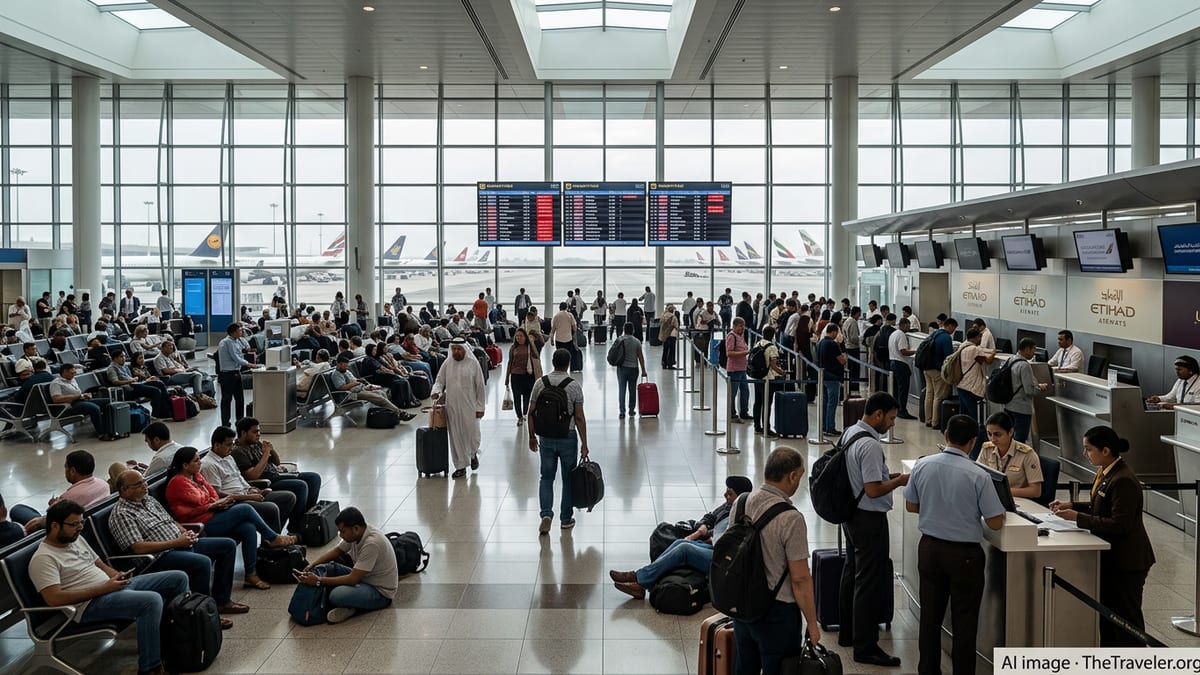
Scattered disruption at Dubai and Abu Dhabi hubs
Publicly available flight tracking boards show that Dubai International Airport has recorded a modest uptick in delays and cancellations over recent days, although overall operations remain stable for one of the world’s busiest hubs. Data compiled over the past week indicates average departure delays of under 10 minutes and several dozen cancelled departures in a seven day period, out of hundreds of daily movements.
Separate live departures and arrivals boards for Dubai list a normal volume of traffic, with most flights departing close to schedule. However, a minority of services are marked as delayed or cancelled, particularly on select regional and South Asian routes. Airport information pages advise travellers to use airline websites and flight status tools to confirm timings before leaving for the terminal.
At Abu Dhabi’s Zayed International Airport, schedules also appear largely intact, with targeted delays rather than widespread disruption. Recent coverage of UAE operations describes flights operating at near full capacity, even as airlines adjust timings or cancel specific services in response to events beyond the country’s borders.
In both cities, the pattern points to disruption that is noticeable to affected passengers but far from a shutdown. The airports continue to function as major transfer hubs, with airlines recalibrating individual flights rather than implementing broad schedule cuts.
Regional tensions and airspace restrictions shape schedules
Recent reporting from UAE-based media links part of the disruption at Dubai and Abu Dhabi to the wider security environment in the Gulf. Airlines serving the UAE have been navigating airspace advisories and evolving risk assessments following flare-ups involving Iran and other regional actors. Some international carriers have kept UAE routes suspended or reduced, while local airlines have maintained most services.
One widely cited roundup of flight changes notes that Emirates, Etihad, flydubai and Air Arabia are still operating key routes but with occasional cancellations and delays, particularly on services touching nearby states that have imposed temporary airspace closures. Flights to Kuwait and certain other destinations have been among those most affected, according to recent travel advisories.
The same reports indicate that UAE carriers are attempting to preserve connectivity where possible, adding or maintaining capacity on high-demand corridors even as they trim or retime flights on more exposed routes. This has resulted in a mixed picture for travellers: those flying on core trunk routes often experience only minor timing changes, while passengers booked on services crossing constrained airspace may encounter longer delays or cancellations.
Industry analyses of the current Middle East travel environment describe UAE airspace as open but subject to partial restrictions and reroutings, which can add time to some journeys and complicate airline scheduling. These constraints, alongside high seasonal demand, leave little margin when additional shocks occur.
Knock-on effects from overseas air traffic and airport issues
Flight disruption in the UAE this week is also being driven by external problems far from Dubai and Abu Dhabi. A recent technical failure in the United Kingdom’s air traffic control system has produced delays and cancellations on routes between the UK and Gulf airports, including services to Dubai and Abu Dhabi. Airlines with large long haul networks have warned of residual delays as they work through the backlog of affected flights.
Operational updates from major Gulf carriers highlight that while the UK issue has been contained, aircraft and crew rotations remain under pressure. Services linking London and other British cities with the UAE are operating, but some have been retimed or consolidated. Travellers on these routes are being advised through public channels to monitor booking management tools and email notifications for last minute changes.
Beyond Europe, temporary closures and restrictions at airports in South and Southeast Asia, such as Jakarta’s Soekarno Hatta International Airport during recent volcanic ash events, have also led to delays and cancellations on connecting UAE flights. Coverage of recent days lists several services between the UAE and Indonesia, Pakistan and India among those delayed.
These overseas events reinforce how quickly disruptions in one part of the global network can cascade into the UAE’s hub operations. Even when local conditions at Dubai and Abu Dhabi are stable, incoming aircraft arriving late or departing airports under restriction can create same day schedule changes for onward flights.
Weather conditions and operational resilience in the UAE
While summer weather in the UAE often brings high temperatures, aviation meteorology data for Dubai and Abu Dhabi shows broadly favourable flying conditions this week, with good visibility and light winds. No significant local weather advisories have been issued that would typically force extended ground stops or large scale diversions at the main hubs.
The absence of severe local weather disruption places more focus on how airports and airlines manage external shocks. Both Dubai and Abu Dhabi have built up experience in handling regional crises and overseas air traffic problems, using contingency schedules, flexible crew planning and rapid passenger rebooking tools to limit the impact on travellers.
Despite the current mix of headwinds, several airlines are pressing ahead with network plans, including the gradual restoration or launch of services to and from Dubai later this year. Announced schedules include new or resumed flights by some European carriers, which are set to lift capacity into the UAE during the northern winter season, subject to operational conditions.
Aviation analysts observing the region note that this combination of resilience and caution is likely to persist. As long as regional tensions remain elevated and overseas infrastructure remains vulnerable to outages, Dubai and Abu Dhabi can expect periodic clusters of delays and cancellations rather than completely smooth operations.
Advice for passengers traveling through Dubai and Abu Dhabi
Given the fluid situation, publicly available advisories from airlines and airports consistently urge passengers to verify flight status close to departure. Travellers are encouraged to check official airline websites, mobile applications and flight tracking tools on the day of travel, since timetables can change at short notice when overseas issues or regional security events develop.
Some carriers are allowing limited rebooking flexibility on affected routes, particularly where airspace closures or foreign airport disruptions are driving schedule changes. Passengers connecting through Dubai or Abu Dhabi may wish to build in additional buffer time between flights, especially when travelling to or from areas currently experiencing operational constraints.
At the airport, passengers are advised to arrive in line with airline recommendations, as check in and security processes continue to operate on normal timelines despite the patchy disruption. With most flights still running, terminal congestion can remain significant at peak times, even on days when specific routes are delayed or cancelled.
Overall, the latest information suggests that Dubai and Abu Dhabi airports continue to function as major global hubs, with a relatively small but persistent share of flights experiencing disruption. For travellers, close monitoring of flight status and flexible planning remain the most effective tools for navigating the current period of uncertainty.
Khaleej Times: UAE flight updates for Dubai and Abu Dhabi