


More news on this day
United Airlines is set to remain absent from one of its highest-profile international routes, with publicly available information indicating the carrier will not fully restore nonstop service to Tel Aviv until at least early 2027, prolonging a suspension that has already stretched across multiple seasons of U.S.–Israel travel.
Get the latest news straight to your inbox!
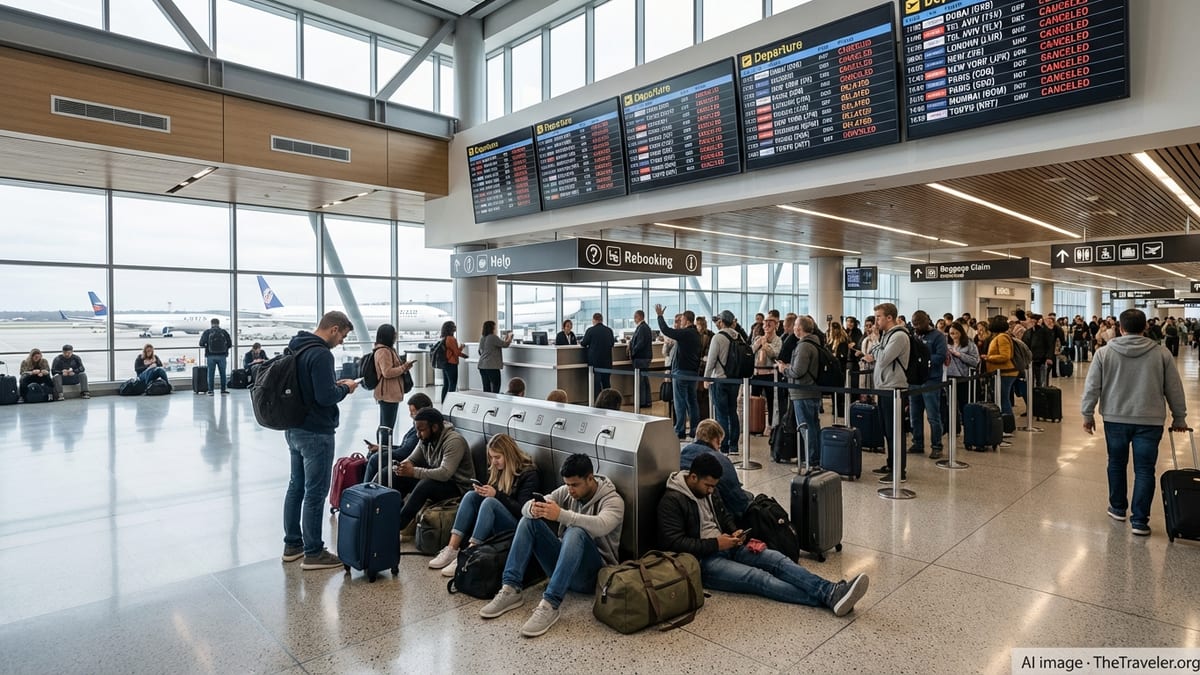
Multi-year halt to a key United long-haul market
Tel Aviv has historically been one of United’s most prominent overseas destinations, supported at various points by departures from Newark, Chicago, Washington Dulles and San Francisco. Prior to the current regional instability, the airline positioned itself as the largest U.S. carrier serving Israel, highlighting double-daily Newark service and additional flights from other hubs as a core part of its transatlantic strategy.
The situation shifted dramatically after the outbreak of conflict affecting Israel’s airspace, when multiple international airlines curtailed or stopped flights to Tel Aviv. Public reporting shows that United initially suspended operations on safety and operational grounds, aligning with broader industry pullbacks on eastern Mediterranean and Middle East routes. Timetables and network filings since then indicate that what began as a short-term pause has evolved into a long-running absence from the market for several of United’s U.S. gateways.
Timeline details compiled from aviation schedules and news coverage show repeated extensions of the suspension through 2025 and 2026. Industry route trackers list Chicago O’Hare to Tel Aviv, for example, as canceled at least through late October 2026, illustrating how long-haul links that were previously marketed year-round have been withdrawn from the schedule well beyond a single season.
While select services such as Newark to Tel Aviv have seen plans for staged resumptions over time, the overall pattern remains one of a significantly reduced footprint compared with pre-crisis operations. For many U.S.-based travelers who once relied on United’s connecting network to reach Israel, the practical effect is that the carrier is functionally out of the market until new start dates arrive.
Earliest full restart tied to spring 2027
The clearest signal on when United expects to regain a regular presence in Tel Aviv comes from its most recent network announcements. In late August 2026, the airline’s international expansion plans for 2027 included a commitment to restart three-times-weekly service between San Francisco and Tel Aviv, with flights scheduled to begin March 28, 2027. That route had previously been suspended after the escalation of regional conflict, and its return is now framed as part of a broader long-haul rebuild.
Separate coverage in Israeli and U.S. business media confirms that the San Francisco route is planned as a spring 2027 relaunch, positioned alongside a slate of new destinations across Europe and Asia. The carrier emphasizes premium demand on the West Coast link, noting that the restored service would offer a high number of business-class seats relative to competitors on the city pair.
Industry commentary around this announcement highlights its timing: by placing the return of San Francisco to Tel Aviv in late March 2027, United effectively signals that its West Coast–Israel connection will remain unavailable for at least another 18 months. For corporate travelers and tech-sector passengers who previously favored the nonstop, the schedule points to a continued reliance on alternative routings through Europe or on other airlines.
Although certain U.S. hubs may see earlier resumptions or limited operations before that date, the company’s own published plans indicate that a full restoration of network breadth, including West Coast service, will not occur before early 2027. This places United’s Tel Aviv strategy on a longer recovery track than many of its traditional transatlantic markets.
Travelers face extended disruption and rerouting
The prolonged suspension has tangible consequences for leisure and business travelers on both sides of the Atlantic. Before the conflict, United’s schedule made it possible to reach Tel Aviv from many U.S. cities with a single connection at Newark, Chicago, Washington, or San Francisco. With several of those routes now off the board into 2026 and beyond, itineraries that were once straightforward often require additional stops, longer travel times or entirely different carriers.
Refund and waiver information referenced in consumer reporting shows that passengers whose flights fall within the extended suspension window have generally been offered options that include rebooking on alternate United services on different dates or destinations, or receiving full refunds for canceled trips. However, the practical challenge for many travelers is the scarcity and higher cost of remaining nonstop options, particularly on peak dates tied to holidays, religious events and summer tourism.
For Israel-bound passengers in major U.S. tech hubs such as the San Francisco Bay Area, the multiyear suspension of direct United flights has coincided with a broader reshaping of corporate travel patterns. Companies that previously routed staff almost exclusively on a single U.S. carrier are now mixing routings across European partners, regional airlines, and Israel’s flag carrier, depending on availability and risk assessments.
Travel advisors and online forums monitored by news outlets point to a landscape where advance planning has become more critical. With schedules into 2027 still subject to change, many travelers are watching airline communications and third-party route trackers closely for updates on when suspended city pairs will definitively return.
Competitive landscape on U.S.–Israel routes shifts
United’s extended withdrawal from several Tel Aviv routes is altering the competitive balance among carriers serving Israel from North America. While all major Western airlines reduced flying at the height of the security crisis, some have returned more quickly on specific city pairs or have announced earlier target dates for resuming suspended services. At the same time, Israel’s own flag carrier has continued to serve key markets, absorbing a larger share of traffic than before.
Comparative reporting on transatlantic capacity shows that other U.S. airlines have made similar route-by-route decisions, with some planning resumptions in late 2026 and others delaying their own returns into 2027. In that environment, United’s timeline for San Francisco and certain other hubs leaves the carrier competing more heavily through Newark and partner connections, rather than a full slate of nonstop options.
Industry analysts note that extended absences can have lasting effects on customer behavior. Travelers who shift loyalty programs or build new habits around different connection points may not automatically revert to their pre-suspension choices, even once flights are restored. This dynamic is particularly relevant on high-yield corporate traffic, where schedule reliability and perceived stability often matter as much as onboard product.
At the same time, United’s decision to fold the Tel Aviv restart into what it describes as its largest-ever international expansion suggests that the airline still views Israel as strategically significant over the long term. The question for the market is how quickly demand and confidence will rebound once regular operations are back in place and whether competitive carriers will retain some of the share they have picked up during the suspension period.
What United’s decision reveals about geopolitical risk
The drawn-out suspension of United’s Tel Aviv services underscores how closely global airline networks are now linked to geopolitical events. After initial cancellations in response to security concerns, subsequent extensions into 2026 and the early 2027 timeframe illustrate a cautious approach to re-entering a market where operational risks and insurance costs remain elevated.
Aviation observers point out that the Tel Aviv situation follows a broader pattern seen on routes over conflict zones or near active fronts, where carriers weigh commercial opportunity against airspace restrictions, potential diversions and the complexity of crisis response. For U.S. airlines, decisions about returning to affected markets increasingly involve coordination with regulators, aircraft lessors and corporate customers.
For travelers, the lesson is that long-haul connectivity to politically sensitive regions can take significantly longer to normalize than other parts of the network. Even when individual flights resume, full schedules and multiple daily options may lag by months or years, as evidenced by United’s staggered plans that place some Tel Aviv capacity firmly in the 2027 horizon.
As airlines, insurers and governments continue to monitor conditions in the region, United’s timeline offers a visible case study in how a major global carrier manages prolonged disruption to a flagship international route. For now, the message embedded in its published schedules is clear: for many U.S. departure points, nonstop United flights to Tel Aviv will remain unavailable until at least early 2027.
Sources: United Airlines 2027 international network announcement; Globes coverage of United’s San Francisco–Tel Aviv restart; Jerusalem Post report on the SFO–Tel Aviv route; JNS reporting on extended suspensions to Israel; AeroRoutes analysis of United’s intercontinental schedule changes