


More news on this day
Passengers flying through Dubai International and Abu Dhabi’s Zayed International Airport are facing fresh disruption, as a combination of regional weather and overseas operational issues leads to a new round of delays and cancellations across key routes.
Get the latest news straight to your inbox!
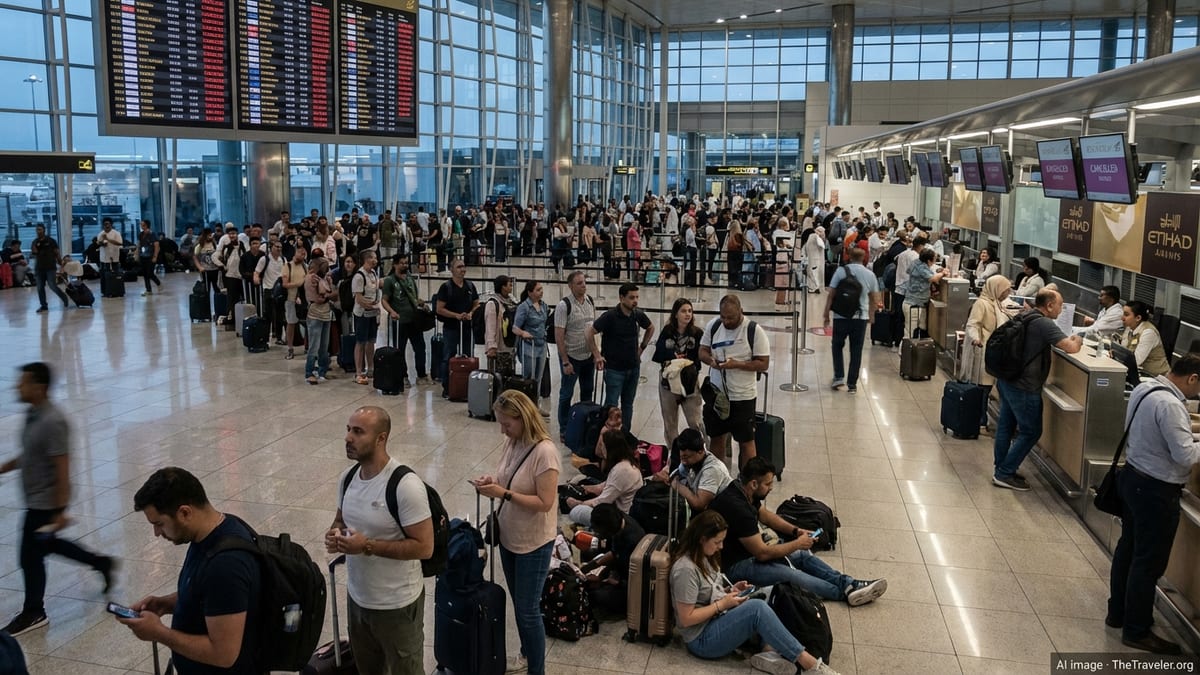
Fresh delays at Dubai International after overseas disruptions
Flight-status boards at Dubai International Airport on September 10 show a mix of on-time operations alongside a noticeable cluster of delayed and cancelled services, according to publicly available flight information. Several departures and arrivals on regional and long-haul routes are affected, reflecting a knock-on impact from wider network disruption.
Recent published coverage highlights that both Dubai International and Abu Dhabi’s Zayed International Airport experienced waves of schedule changes after IT issues at London Heathrow and renewed tensions in the Middle East led to airspace and operational constraints earlier in the week. A number of flights from the Gulf to European and regional destinations were delayed or scrubbed as airlines adjusted schedules and repositioned aircraft.
At Dubai International, some services to Riyadh, Bahrain and Tehran were cancelled or heavily delayed, while selected flights to European hubs operated later than originally scheduled. The pattern suggests that carriers are still working through a backlog created by Tuesday’s disruptions, with aircraft and crew allocation continuing to normalise.
Dubai Airports’ live flight-status page, updated throughout the day on September 10, indicates that while the majority of services are operating, travellers can expect scattered delays of between 30 minutes and several hours on certain routes. Passengers booked on evening departures are being advised, via airline channels, to monitor their flight status closely before setting out for the airport.
Abu Dhabi sees continued knock-on effects at Zayed International
Abu Dhabi’s Zayed International Airport is also reporting ongoing delays and selected cancellations following the same series of external disruptions. According to regional travel coverage, a number of services from Abu Dhabi to European cities and regional capitals experienced schedule changes, with some flights either retimed or cancelled outright.
The pattern of disruption in Abu Dhabi mirrors Dubai’s experience, with affected services concentrated on routes that connect through or near recently congested or restricted airspace. Airlines using Abu Dhabi as a hub have been rebalancing their networks, which can lead to late aircraft arrivals, shortened ground times and shifting departure slots.
Live operational data from UAE aviation platforms shows that, while the majority of flights from Abu Dhabi are still departing broadly on schedule, there is a persistent tail of late-running flights. Some departures are leaving more than an hour behind timetable, particularly during peak evening banks when the hub handles dense waves of connections.
Travellers connecting through Zayed International are therefore facing a higher risk of missed connections and extended transit times. Publicly available guidance from airlines encourages passengers with tight connections to check updated itineraries online and to be prepared for potential gate or timing changes on the day of travel.
Fog alerts and intense heat add pressure to UAE flight schedules
Meteorological data from the UAE’s national aviation weather service shows high temperatures and localized fog risks for Dubai and Abu Dhabi on September 10, with forecasts indicating highs above 40°C and reduced visibility in some areas overnight. A recent UAE weather bulletin flagged early-morning fog patches and haze as potential factors for transportation slowdowns, particularly around coastal and low-lying districts.
For airports, such conditions can require increased spacing between aircraft movements, temporary reliance on low-visibility procedures and occasional holding patterns for inbound flights. Although both Dubai and Abu Dhabi are equipped to handle hot and hazy conditions, even short-lived visibility drops can ripple through tightly packed schedules, especially during early-morning arrival waves.
When combined with the residual effects of overseas disruptions, this weather backdrop raises the chance of additional minor delays through the day. Aviation meteorology tools tracking conditions at Dubai International and Zayed International indicate that visibility and temperature are being closely monitored, with forecasts updated frequently to support flight-planning decisions.
Travelers with early-morning or late-night flights, when fog is more likely, may see minor schedule adjustments as airlines and air-traffic controllers respond to the latest weather data. In many cases, these take the form of short hold times or revised departure slots rather than full cancellations, but they can still extend overall journey times.
Airlines issue guidance as passengers seek clarity
Major carriers operating from Dubai and Abu Dhabi have updated their travel-advice pages this week to reflect the current operational environment. Publicly available information from Emirates, Etihad and other regional airlines underscores the importance of checking real-time flight status before leaving for the airport, especially for routes passing through recently disrupted hubs.
Emirates’ travel updates, refreshed on September 8, note that customers may face changes to flight times on selected services and encourage passengers to review email and SMS notifications as well as online booking tools for the latest details. Similar guidance appears on other carriers’ channels, where travelers are reminded that departure boards and mobile apps are the primary sources for last-minute schedule changes.
For travelers already at the airport, airline websites and apps continue to provide the most current view of delays, gate reallocations and rebooking options. In some cases, re-accommodation on later flights or alternative routings may be available when cancellations occur, though availability can fluctuate quickly during peak disruption periods.
Passengers are also being encouraged to arrive early, particularly for long-haul departures, to allow additional time for check-in, security and potential queueing at service desks. While airport operations teams in Dubai and Abu Dhabi are working to maintain normal processing times, spikes in rebooking requests can occasionally lengthen lines at check-in counters and ticket offices.
What passengers traveling today should do
For those flying on September 10 or in the coming days, the most practical step is to monitor flight information across multiple channels. The live flight-status pages for Dubai Airports and Zayed International, together with airline apps and email notifications, offer the fastest indication of whether a flight is operating on time, delayed or cancelled.
Travelers transiting through the UAE on complex itineraries may wish to build in additional buffer time between connections where possible, particularly if routes involve onward travel to regions that have recently experienced operational or geopolitical turbulence. Booking flexible fares or ensuring that accommodation and ground transport can be adjusted without heavy penalties can also reduce the impact of unexpected schedule changes.
Those departing in the late evening and early morning, when fog risk is typically higher, should pay particular attention to pre-departure updates. Even modest meteorological changes can result in revised departure slots, especially at busy hubs that manage large volumes of wide-body traffic within narrow time windows.
Overall, the picture at Dubai and Abu Dhabi airports on September 10 is one of broadly functioning operations tempered by localized disruption. Most passengers are still departing close to schedule, but a significant minority are encountering delays or cancellations linked to a combination of overseas issues and local weather factors, making vigilance and flexibility key for anyone traveling through the UAE today.
Dubai and Abu Dhabi flight delays and cancellations coverage
Live flight status at Dubai International Airport