


Landing in Los Cabos usually means sunshine, resort check-in, and that first margarita. Before any of that, though, you have to clear immigration, collect your bags, and make it through customs at Los Cabos International Airport (SJD). Wait times here can range from a breezy 20 minutes to well over an hour depending on when you land, the season, and how many flights arrive at once. This guide uses recent traveler reports and current 2026 conditions to explain what to expect from the moment you step off the plane until you meet your driver outside.
Get the latest updates straight to your inbox!
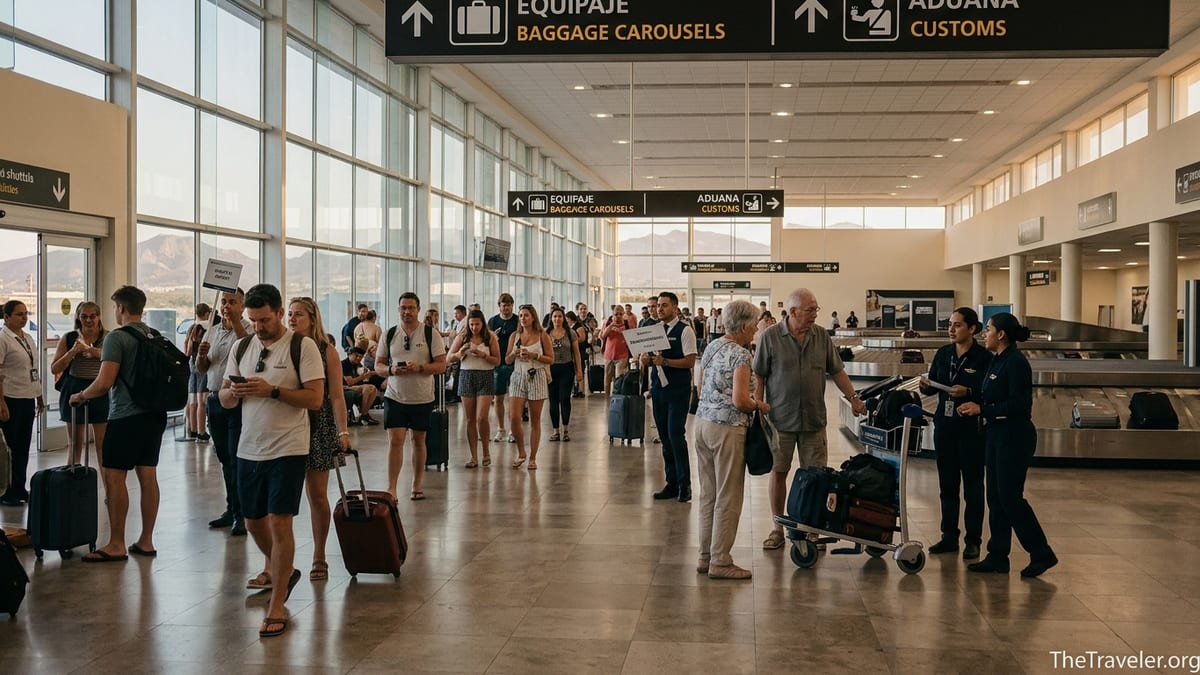
First Steps After Landing at Los Cabos International Airport
Most international travelers to the region arrive at Los Cabos International Airport, known by its code SJD, just outside San José del Cabo. It is one of Mexico’s busiest leisure airports and has seen passenger numbers grow significantly in recent years, which can put pressure on arrivals during peak hours and seasons. In practice, that means your experience can feel either efficient or very crowded depending on when you land and how many other planes touch down at the same time.
After your aircraft parks at the gate, you will usually disembark via a jet bridge rather than stairs on the tarmac. From there, overhead signs guide you directly toward “Immigration / Migración.” Walking time from the gate to immigration in the international terminal is typically 5 to 10 minutes at a normal pace, including a few escalators or ramps. Travelers with limited mobility or strollers can use elevators that are clearly marked along the route.
On busy days, such as winter holiday Saturdays, this walk can already feel crowded as passengers from multiple flights funnel into the same corridor. Couples and families should agree on a meeting point just before the immigration hall doors in case someone needs a quick restroom stop, as restrooms immediately before and after passport control can get lines of their own during peak arrivals.
Generally, there are no services to stop at before immigration, so your best strategy is to walk directly and calmly to the passport control area. Any delays at this stage are almost entirely due to queuing, not the complexity of the checks themselves.
Passport Control: Typical Wait Times and What Affects Them
Immigration is usually the longest single step in the arrival process at SJD, especially for North American visitors arriving from hubs like Los Angeles, Dallas, Denver, or Vancouver on late morning or early afternoon flights. Recent traveler reports from the 2025–2026 seasons suggest that off-peak weekday flights can see immigration lines of 5 to 20 minutes, while peak Saturday and holiday afternoon flights can push waits closer to 30 to 45 minutes, particularly when several widebody or full narrow-body jets arrive within the same hour.
In the last few years, Mexican airports including Los Cabos have added more automated passport readers and upgraded immigration booths, which has helped reduce some of the longest lines that were common pre-pandemic. However, staffing levels at individual booths still vary by day and shift. For example, travelers arriving midweek in May or early June often describe “walking straight up to the desk,” while those arriving the last week of December or during spring break report snaking lines that move steadily but slowly, especially if only a portion of the booths are open.
What you can do is mostly about preparation rather than speed tricks. Have your passport open to the photo page before you reach the front, remove hats and sunglasses, and keep your family together in line. Some officers process families together, while others prefer one person at a time; just follow their direction. If you have a connection onward on a domestic flight to another Mexican destination (such as a rare onward flight via Mexico City), being visible and ready can sometimes encourage agents to wave you forward if time is tight, although this is not guaranteed policy.
There are VIP or concierge meet-and-greet services at SJD that advertise faster arrival experiences. These typically include being met at the gate, escorted through immigration using separate lanes when available, and assisted at baggage claim. Travelers who have booked these services in 2025 and 2026 often report saving 20 to 30 minutes during peak hours, although you still must wait for your checked luggage like everyone else.
Baggage Claim and Customs: Where Delays Often Happen
Once you clear passport control, you will follow signs downstairs or through a corridor to baggage claim. Here you will pass several carousels, each assigned to one or more flights. Overhead monitors list flight numbers and origin cities. Most passengers find their bags begin appearing 15 to 30 minutes after landing during normal operations, but recent summer 2026 reports from local travel media note that on very busy Saturdays, travelers sometimes wait 30 to 45 minutes before the first bags appear, particularly for full flights from major U.S. hubs.
Importantly, long waits in baggage claim are common worldwide and are unrelated to whether you used a fast-track immigration service. Even travelers who breeze through passport control can find themselves stuck watching an empty carousel if ramp operations are backed up. To use the time, locate nearby restrooms, refill water bottles at fountains, and position yourself strategically near the carousel exit rather than clustering at the drop point.
After collecting your bags, you proceed directly to customs. Mexico uses a simple system where officers may ask a few brief questions about what you are bringing into the country and may direct you to an inspection area. Travelers carrying large amounts of electronics, professional camera gear, or bulky boxes of food often get extra scrutiny. Most tourists with standard luggage and no high-value goods are waved through quickly, especially if lines are long.
A few years ago, many Mexican airports used a red/green light “button” system to randomly select passengers for closer inspection. Procedures have been slowly modernizing, and in some terminals this has been reduced or replaced by more targeted checks and x-ray scans of luggage. At SJD, you may still see variations of this system, but in all cases customs typically adds only 5 to 15 minutes unless you are selected for a full bag inspection or are carrying items that require declaration, like large quantities of alcohol or expensive new electronics still in boxes.
Seasonality, Peak Days and Times: When Lines Are Worst
Los Cabos is a highly seasonal destination. Peak arrival periods now center on U.S. and Canadian winter getaways from roughly late November through March, the Christmas and New Year holiday period, Easter and spring break weeks, and the core summer vacation months. Local coverage of 2026 travel patterns notes that Saturdays in winter and summer are currently the single busiest days at SJD for international arrivals, as weekly resort stays often begin and end on weekends. Multiple midday and afternoon flights from cities like Los Angeles, Phoenix, Dallas, Chicago, and Toronto converge during these periods, straining both immigration and baggage operations.
For example, a Saturday in late December typically sees clusters of arrivals between about 11 a.m. and 4 p.m. With several aircraft landing within short intervals, immigration lines can spill back into the approach corridor, and baggage carousels may be serving two or three simultaneous flights. Travelers arriving on a similar Saturday afternoon in mid-July 2026 have reported total airport exit times of around 60 to 90 minutes from touchdown to curb, even when everything runs smoothly, simply because of volume.
By contrast, shoulder-season weekdays in May, early June, September, and early October often produce much lighter crowds. On a Tuesday in early May, for example, a typical arrival from Houston landing around 1 p.m. may find only a handful of people at passport control, clearing immigration and customs in 20 to 30 minutes and meeting a shuttle driver before bags from a second flight begin to appear. Early morning flights that land before 10 a.m. outside of major holidays also tend to see shorter waits than midday and afternoon banks.
Weather is less of a factor at SJD than at some tropical airports, although the late-summer and early autumn hurricane season can disrupt arrivals when storms pass nearby. Heavy rain or strong winds may cause diversions or temporary ground stops, which compress delayed flights into new arrival banks once operations resume. On those rare days, it is wise to expect significantly longer queues at every stage.
Forms, Documents and Entry Rules: Being Prepared Helps
Mexico has simplified some entry paperwork in recent years, but rules can vary by nationality and by changes in immigration policy. Most North American and European tourists arriving for short stays are admitted visa-free but must still complete Mexican entry formalities at passport control. As of 2026, some Mexican airports rely primarily on digital entry records, while others may still use a paper form for immigration or customs, especially if systems are down.
Because policies can evolve, it is best to check with your airline and the Mexican consulate website shortly before your trip for the latest entry form requirements for your nationality. In practice, for recent flights into Los Cabos many U.S. and Canadian travelers report that they are not asked to fill out lengthy arrival cards before landing. Instead, the immigration officer records details electronically from your passport and may stamp it with your authorized length of stay. That said, keep a pen handy in your personal item in case a paper form is distributed, especially if you are traveling from smaller or regional airports.
For customs, you may be given a short declaration form on the plane or asked to answer questions verbally upon arrival. To avoid delays, know what you are carrying. Typical tourist items like a couple of bottles of wine, personal electronics such as laptops and cameras, and standard quantities of clothing are rarely problematic. Problems generally arise when travelers bring sealed boxes of commercial goods, drones without proper registration, or high-value jewelry and electronics obviously intended for resale. If in doubt, declare and be ready to show receipts.
Families should complete forms together and keep passports for children organized in a single folder. Immigration officers may ask who each child is traveling with and for how long they are staying. If one parent is traveling alone with a minor, especially when surnames differ, carrying a notarized letter of consent from the other parent is a common recommendation, though not always requested, and can prevent stressful discussions at the desk.
Family Travel, Mobility Needs and Stress Reduction
Arriving in a busy leisure airport with kids or older relatives after a long flight can be overwhelming, but a few simple strategies can keep the process manageable. Families with young children will often find that airport staff and fellow passengers are accommodating when queues are long. Although there is no official, consistently applied “family lane” at SJD immigration, officers occasionally wave parents with strollers or very small children forward when lines are backed up, especially on evenings when multiple flights have landed.
To minimize meltdowns in a 30-minute immigration line, keep small snacks that are allowed through customs, such as sealed granola bars or crackers, in your personal bag. Many families arriving on mid-afternoon flights report that their children become restless at this stage if they skipped a proper meal during the journey. Make sure tablets or phones are charged and loaded with offline games or shows, as mobile data connections in the immigration hall can be unreliable.
If you or someone in your group has reduced mobility, request wheelchair assistance through your airline at least 48 hours before travel. At SJD, contracted staff usually meet wheelchair passengers at the aircraft door and escort them through immigration, baggage claim, and customs, often using side lanes or lifts that can shorten walking distance and standing times even if they do not formally skip the line. This assistance can be especially valuable during the high season when corridors and escalators are crowded.
Once you exit customs, you will pass through an arrivals hall where timeshare salespeople and tour representatives may call out to arriving tourists. While this gauntlet has reportedly become less aggressive than years past, it can still feel intense after a long travel day. If you already have a pre-booked transfer, ignore offers and walk straight through to the outer curb area where prearranged transportation companies like shared shuttle operators and private car services typically hold signs with passenger names or hotel logos.
How Much Time to Allow Before Your Transfer or Next Step
The most practical planning question for many travelers is how long it will take from landing to meeting a driver or beginning a rental car contract. Based on recent experiences in 2025 and 2026, most visitors should budget 45 to 90 minutes from the scheduled landing time to exiting the airport, with the shorter end of that range more typical on weekday mornings in shoulder seasons, and the longer end common for Saturday and holiday afternoon arrivals.
As a rule of thumb, if you are landing on a peak season Saturday between roughly 11 a.m. and 4 p.m., plan on 75 to 90 minutes door-to-curb. For example, a family landing from Los Angeles at 1 p.m. in late December might spend 25 minutes in the immigration line, 30 minutes waiting for bags, and another 10 minutes to clear customs and find their shuttle, reaching the curb around 2:15 to 2:30 p.m. In contrast, a couple landing on a Wednesday in early May on a similar flight time may find themselves outside within 35 to 45 minutes.
If you are pre-booking a private transfer, most reputable companies familiar with SJD operations already build these patterns into their dispatching. They will often ask for your flight number rather than a fixed pick-up time and monitor actual arrival times. Shared shuttles and resort buses may batch passengers from several flights together; during the busiest weeks, this can mean an additional 15 to 30 minutes waiting on the curb while other passengers clear the airport. If you prefer not to wait in the heat, consider paying a bit more for a private transfer that departs as soon as your group is ready.
Travelers connecting onward the same day by air should be especially conservative. Domestic connections through other Mexican airports are relatively rare from SJD, but if you do have one, aim for at least a 2.5 to 3-hour buffer between scheduled arrival and your onward departure to account for immigration, baggage claim, customs, re-checking bags, and security. Many seasoned travelers to Los Cabos simply avoid same-day onward connections altogether, preferring an overnight stay if they must continue elsewhere in Mexico.
The Takeaway
Arriving at Los Cabos International Airport is rarely chaotic by global standards, but it is a busy, growing leisure gateway where timing matters. On a light Tuesday in May, you may be in your resort pool within an hour of touchdown. On a packed Saturday in late December or during summer holidays, it may take closer to 90 minutes just to get from your seat on the plane to the curb outside arrivals, even when operations go smoothly.
With realistic expectations and a bit of preparation, the process is straightforward. Have your passport ready, keep any required forms and pens handy, pack patience for immigration and baggage claim, and give yourself ample time before any transfer or onward plans. Families and travelers with mobility needs should arrange assistance through their airline and rely on simple comforts like snacks and charged devices to keep everyone comfortable during waits.
Most importantly, avoid planning tight commitments in the first couple of hours after landing. Check-in at your resort, that first dinner at the marina, or a sunset cruise will all be more enjoyable if you are not racing the clock from the immigration line. Once you clear customs and step into the Baja sun, you can finally relax and let the vacation properly begin.
FAQ
Q1. How long does it usually take to get through immigration at Los Cabos Airport?
On a typical day it takes around 15 to 35 minutes to clear immigration, but during peak Saturday or holiday arrivals it can stretch closer to 45 minutes when several flights land together.
Q2. How much total time should I allow from landing to meeting my transfer?
Most travelers should plan 45 to 90 minutes from touchdown to reaching the curb, with the shorter end more likely on weekday mornings and the longer end on busy weekend and holiday afternoons.
Q3. Are there VIP or fast-track services that let me skip the lines?
Several private meet-and-greet services operate at SJD and can sometimes use separate lanes or priority handling, which may save 20 to 30 minutes during very busy periods, but they cannot bypass baggage claim delays.
Q4. Do I still need to fill out a paper immigration form when arriving in Los Cabos?
Many recent arrivals report that immigration is handled electronically using your passport, though procedures can change, so it is wise to bring a pen and follow any instructions from your airline or cabin crew.
Q5. How long does baggage claim usually take at SJD?
Under normal conditions, bags start appearing about 15 to 30 minutes after landing, but on peak Saturdays or holidays, travelers sometimes wait 30 to 45 minutes before their luggage reaches the carousel.
Q6. What can cause extra delays at customs in Los Cabos?
Carrying large quantities of alcohol, new electronics in boxes, commercial goods, or items that must be declared can lead to secondary inspection, adding 10 to 20 minutes or more compared with a standard walk-through.
Q7. Is Los Cabos Airport family-friendly for arrivals with young children?
Yes, but lines can be long at busy times, so snacks, charged tablets, and a collapsible stroller are very helpful; staff sometimes informally prioritize families with very young children when queues are heavy.
Q8. What if I have limited mobility or need a wheelchair on arrival?
Request wheelchair assistance through your airline before you travel; staff usually meet you at the aircraft door and escort you through immigration, baggage claim, and customs, reducing walking and standing time.
Q9. How much connection time do I need if I have another flight after arriving at SJD?
If you must connect onward the same day, aim for at least 2.5 to 3 hours between flights to cover immigration, baggage claim, customs, re-checking bags, and going back through security for your next departure.
Q10. When are wait times shortest at Los Cabos Airport?
Waits are generally shortest on midweek days outside of major holidays and school breaks, especially for flights landing before late morning or in shoulder seasons like early May or mid-September.