


More news on this day
Hong Kong travel and employment agencies are warning clients to brace for lingering delays on Jakarta routes after Indonesia’s main international gateway reopened following a major volcanic eruption that grounded thousands of flights.
Get the latest news straight to your inbox!
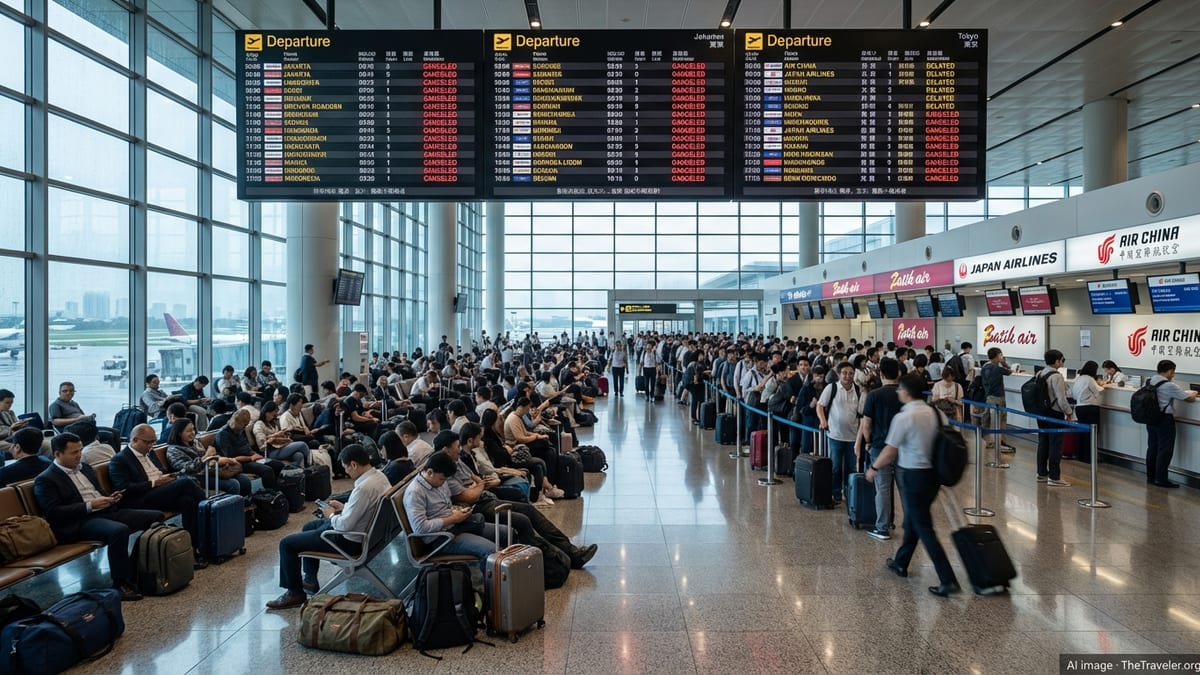
Airport reopens but disruption continues on Jakarta routes
Indonesia’s Soekarno-Hatta International Airport serving Jakarta has resumed operations after ash from the Anak Krakatau volcano forced a two-day shutdown that halted nearly 3,000 flights across western parts of the country, according to international news reports and Indonesian government updates. Published coverage indicates that ash detected in the airport’s airspace on 6 September led to the suspension of take-offs and landings, with knock-on effects for both domestic and international routes.
Services have since restarted, but schedules remain uneven as airlines work through extensive backlogs. Some flights that were due to operate between Hong Kong and Jakarta during the closure window were cancelled, while others were rerouted or significantly delayed. Flight-tracking data for selected services between the two cities shows cancellations on key dates at the height of the ash disruption.
Publicly available information from Indonesian aviation authorities and international media indicates that several regional airports remained closed or on limited operations even after the main Jakarta hub reopened, complicating crew rotations and aircraft positioning. That operational complexity is contributing to continued timetable adjustments on routes that connect via the Indonesian capital.
Travel industry reporting notes that while the eruption has eased, sporadic ash emissions and the need to respect restricted airspace around the volcano continue to influence flight planning. Airlines are adjusting routings and altitudes to avoid contaminated airspace, decisions that can affect block times and departure slots on already crowded schedules into Jakarta.
Hong Kong agencies urge flexible plans and buffer time
Coverage in regional media and travel trade outlets describes how Hong Kong-based travel and employment agencies have begun advising clients bound for Indonesia to maintain flexible plans for the coming days. Agencies that routinely coordinate flights for foreign domestic workers traveling between Hong Kong and Jakarta are flagging the risk of last-minute schedule changes as carriers clear stranded passengers and reposition aircraft.
According to summaries of that coverage, some intermediaries are delaying new bookings on the Hong Kong Jakarta corridor where travel dates are not urgent, or are opting for routings via alternative Indonesian gateways when feasible. Others are advising travelers who must fly imminently to build in additional connection time if their journeys involve onward domestic sectors within Indonesia.
Publicly available information about recent eruptions in the region suggests that even after an airport reopens, flight rosters can remain unstable for several days while airlines re-accommodate passengers from cancelled services. Hong Kong agencies are relaying that pattern to customers, emphasizing that a return to normal operations is likely to be gradual rather than immediate.
Reports also highlight that employers expecting new hires or returning staff from Indonesia are being told to prepare for staggered arrivals. With seats on the first wave of restored flights prioritised for those whose journeys were previously disrupted, some routine labour-mobility travel between Jakarta and Hong Kong may be pushed into later dates.
Airlines rebuild schedules as backlogs ease
Major regional carriers serving the Hong Kong Jakarta route, including Cathay Pacific and other Asian airlines, are progressively restoring their scheduled services as conditions allow. Airline booking and timetable pages viewed on 10 September show direct flights between Hong Kong International Airport and Jakarta’s Soekarno-Hatta International Airport on sale for mid to late September, indicating that core connectivity is returning.
However, flight-history data for recent days illustrates how quickly conditions can change. At the peak of the ash disruption around 6 September, at least one Hong Kong to Jakarta service listed on flight-tracking services was recorded as cancelled, while others experienced substantial delays. Aviation data platforms also show adjustments in departure times and aircraft types as carriers reshuffle assets to meet demand.
Published airline guidance generally advises passengers to monitor flight-status tools closely and ensure contact details are up to date so that carriers can issue notifications about schedule revisions. Past travel disruptions in the region demonstrate that once restrictions ease, airlines often operate additional or larger aircraft on affected routes for a limited period to help clear backlogs.
Industry analyses of the current situation point out that the scale of the initial shutdown, combined with high seasonal demand between Indonesia and Greater China, means it may take several days before on-time performance indicators on the Hong Kong Jakarta corridor approach typical levels. Travelers who are able to shift their trips by a few days may find more predictable schedules once the first wave of displaced passengers has been accommodated.
Guidance for travelers transiting Jakarta from Hong Kong
Travel forums and advisories shared in recent days suggest that passengers using Jakarta as a transit point after flying from Hong Kong should pay particular attention to minimum connection times. Even modest arrival delays on the Hong Kong leg could jeopardise onward domestic connections while operations remain constrained at Indonesian airports handling diverted or rescheduled traffic.
Several posts from travelers affected by the Anak Krakatau eruption describe longer than usual queues at rebooking desks and customer-service counters at Jakarta’s airport during the closure period. While the most acute congestion is expected to ease as more flights depart, the experience underlines the importance of allowing extra time between connections and holding confirmed seat assignments on all segments.
Consumer travel guidance produced in the wake of recent weather and volcanic events in the region also emphasizes the value of travel insurance that covers natural hazards and associated delays. Policies that provide compensation for extended waits, missed connections, or additional accommodation can help offset unexpected costs if Jakarta-bound itineraries from Hong Kong are disrupted again by renewed ash activity.
Advisers recommend that passengers who have not yet departed monitor both airline updates and local airport announcements in the days leading up to travel. Given the dynamic nature of volcanic ash clouds and their impact on aviation, conditions can evolve between ticket purchase and departure, making up-to-date status checks a key part of pre-trip planning.
Outlook: gradual normalization with an eye on Anak Krakatau
Geological assessments cited in international media indicate that the eruption of Anak Krakatau has subsided from its most intense phase, with ash emissions and seismic activity declining compared with the peak period that triggered airport closures. Even so, monitoring agencies continue to track the volcano closely and maintain alert levels that reflect the potential for further episodes.
For the Hong Kong Jakarta air corridor, this means that while immediate large scale shutdowns are less likely as long as ash stays away from key flight paths, localized disruptions remain possible if wind patterns shift or activity picks up again. Aviation safety protocols require aircraft to avoid volcanic ash because of its potential to damage engines and onboard systems, so route planners will remain cautious until risk assessments return to baseline.
Travel industry observers expect that, barring renewed volcanic intensity, seat availability and on time performance on Hong Kong Jakarta services should continue to improve over the coming week. However, published commentary from agencies and airlines alike stresses that passengers should keep contingency plans in mind, particularly for travel involving tight schedules, work commitments, or fixed event dates.
For now, the message emerging from publicly available travel advisories is one of cautious optimism. Connectivity between Hong Kong and Jakarta is coming back online, but lingering effects from the Anak Krakatau eruption mean that flexibility, advance preparation, and close attention to airline communications remain essential for anyone planning to fly between the two cities.
South China Morning Post coverage of Hong Kong agencies and Jakarta delays
Associated Press report on Anak Krakatau eruption and airport closures