


More news on this day
Air France has extended the suspension of its Paris–Dubai flights as evolving security risks and airspace restrictions across parts of the Middle East continue to unsettle travel plans for passengers heading to and from the UAE.
Get the latest news straight to your inbox!
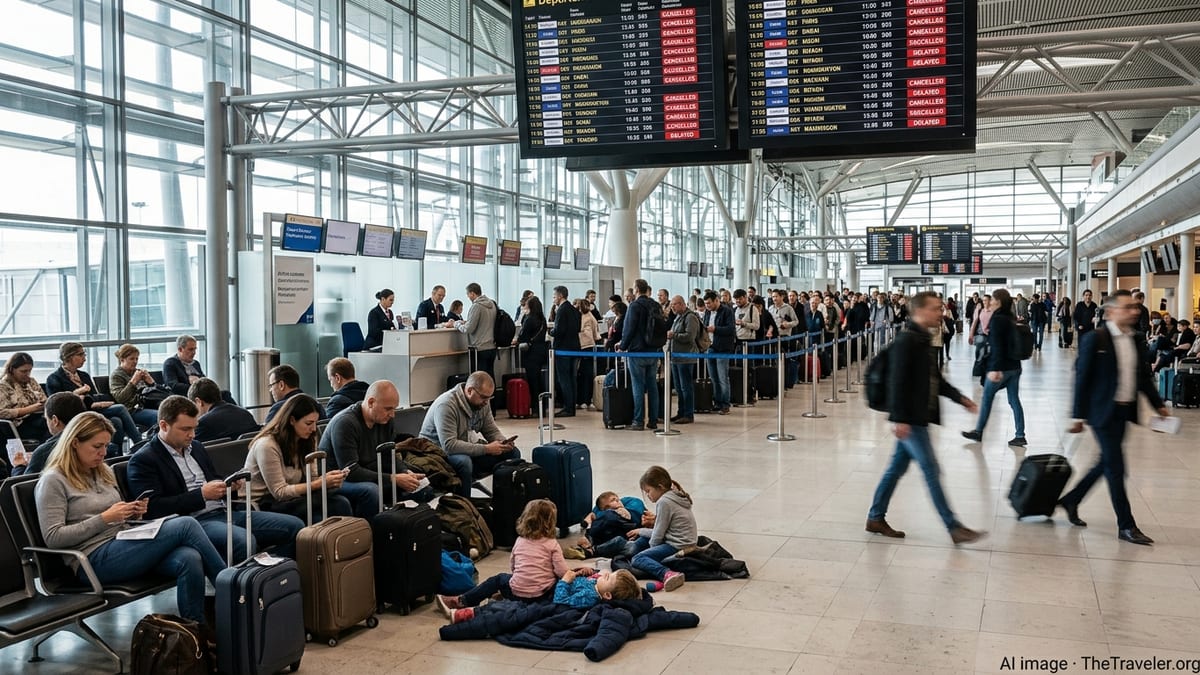
Suspension Window Pushed Back Again
Publicly available schedules and regional media coverage indicate that Air France has repeatedly prolonged its pause on Dubai services in recent weeks, shifting from short initial suspensions to a rolling series of extensions as the situation in Gulf airspace evolves. Initial cuts to the Paris–Dubai route were framed as temporary, but the airline has kept flights off sale and off schedule for longer than first anticipated.
Coverage from Gulf-based outlets shows that the carrier moved from an early suspension window in late July to a further extension into mid-August, citing the broader security situation in the Near and Middle East and constraints on overflight options. One subsequent update indicated that flights to and from Dubai were to remain suspended until at least August 18, in line with an extended halt on Beirut and Riyadh services as well.
More recent reports focused specifically on the UAE suggest that the pause has continued to be pushed forward, with Paris–Dubai rotations removed from active timetables into early September. A travel advisory-style update noted that the carrier had already gone beyond an initial September 4 timeframe, reflecting a cautious approach amid continued uncertainty over airspace stability and routing.
While some regional reports now point to a gradual restoration of Air France operations elsewhere in the Middle East, Dubai remains subject to intermittent schedule changes. Factbox-style updates tracking airline responses to the Iran-related conflict describe Air France as moving toward a broader resumption in the region but still subject to route-by-route assessments based on the latest conditions.
Security Climate Shapes Airline Decisions
Publicly available statements and reporting attribute the extended Dubai suspension primarily to the security situation linked to US–Iran tensions and associated hostilities in parts of the Middle East. Airlines operating in and over the Gulf have faced a shifting pattern of airspace closures, risk advisories, and routing restrictions, prompting many carriers to review the viability of certain city pairs.
Updates from July and August highlighted that Air France’s Dubai decision was part of a wider regional adjustment that also affected Beirut and Riyadh. The airline referenced an evolving geopolitical environment and airspace constraints, with regional hostilities and missile- or drone-related risks prompting heightened caution around certain flight paths. Industry coverage has consistently underscored that carriers are weighing not only destination security but also the safety of overflight corridors.
Alongside Air France, several European and Asian airlines have either suspended Dubai flights outright or implemented extended cancellations through the autumn travel period. Comparative tracking of schedules shows carriers such as Lufthansa Group, British Airways, Singapore Airlines, Wizz Air and Air Canada maintaining significant suspensions on Dubai routes, highlighting that the French flag carrier is not alone in taking a measured stance on services into the UAE hub.
In public-facing materials, Air France has stressed that the resumption of suspended routes depends on continuous risk assessment, including local conditions at destination airports and the status of intermediate airspace. This framework has enabled relatively rapid adjustments but has also led to rolling changes that can be challenging for travelers to anticipate far in advance.
Mixed Picture at UAE Airports
Even as Air France keeps its Dubai flights on hold for parts of the current season, major UAE-based airlines continue to operate extensive networks from Dubai International and Abu Dhabi’s Zayed International Airport, albeit with periodic disruption. Recent Gulf-focused aviation coverage describes a “mixed flight picture,” with some routes running on time while others see delays or short-notice cancellations.
Reports from Dubai note that Emirates, Etihad, flydubai and Air Arabia are maintaining key regional connections to destinations such as Bahrain and Kuwait, although schedules remain subject to change as conditions shift. While these carriers have not mirrored Air France’s full suspension of Dubai services, they have adjusted frequencies and routings in response to broader regional developments and airspace considerations.
For passengers on the ground in the UAE, this creates a patchwork of operational status. Some travelers can proceed with plans largely unaffected, while others encounter rebooking queues, extended layovers, or last-minute changes. The absence of Air France from the Dubai–Paris corridor adds pressure on alternative European and Gulf carriers that still serve the route, particularly during peak travel periods.
Airport authorities and airlines across the region continue to signal, through public channels and travel advisories, that schedules may evolve at short notice. This has made real-time information and app-based flight tracking an essential part of trip planning for those moving through the UAE’s hubs.
Options and Advice for Affected Travelers
Passenger-focused guidance compiled from airline notices and media reports indicates that customers booked on Air France’s suspended Dubai services generally have access to a mix of refunds, travel credits, or rebooking options. In earlier stages of the disruption, the airline introduced commercial measures that allowed travelers to cancel or postpone trips without additional fees, even when flights had not yet been formally canceled, as long as travel fell within specified dates.
For current and upcoming itineraries, publicly available advice encourages passengers to monitor their booking via the airline’s website or app, or through travel agents where applicable. Many travelers are being offered the choice of moving their journey to a later date or rerouting via other cities in the Gulf or Europe, subject to seat availability and fare conditions.
Industry coverage also highlights the importance of checking connecting flights, especially for itineraries that combine Air France with partner airlines on multi-leg routes. With some Gulf and European carriers still operating to Dubai, certain passengers may be able to reach the UAE through alternative hubs, but these options can involve longer travel times and more complex routings.
Travel experts quoted in public reporting stress that policies differ by airline and ticket type, so affected passengers are advised to review the specific rebooking and compensation rules that apply to their fare. In many cases, decisions to shift travel dates or request refunds are time-sensitive, tied to the evolving suspension windows that Air France and other carriers continue to update.
Broader Impact on Middle East Aviation
The extended Air France suspension on the Paris–Dubai route forms part of a wider pattern of disruption and cautious recovery across Middle East aviation. Fact-based roundups of airline responses to the Iran-related conflict describe a region where some routes are returning while others remain paused well into the upcoming travel seasons.
Several leading carriers outside the Gulf continue to keep Dubai flights suspended through October and beyond, reflecting a conservative reading of risk in certain air corridors. At the same time, Gulf-based airlines are gradually rebuilding networks and capacity, betting that demand for travel to and through hubs such as Dubai will recover as security assessments improve.
For Dubai specifically, the absence or partial return of a number of foreign carriers affects competition and connectivity on certain long-haul markets. Air France’s repeated extensions of its Dubai suspension underscore how even marquee routes can be subject to prolonged uncertainty when regional tensions intersect with aviation risk assessments.
Looking ahead, publicly available information suggests that the situation remains highly fluid. While some airlines, including Air France, are described in recent coverage as moving toward broader regional resumptions, firm timelines for fully restoring pre-crisis schedules into Dubai are not yet clear. Travelers planning trips into the UAE over the coming months are likely to face an environment in which flexibility, up-to-date information and contingency planning remain essential.
Gulf News: Air France extends Dubai flight suspension again
Khaleej Times: Air France extends Dubai, Riyadh flight suspensions
Anadolu Agency: Air France extends Beirut suspension, halts Dubai and Riyadh
Reuters: Airlines gradually restore Middle East services after Iran conflict