


More news on this day
United Airlines is accelerating the rollout of Starlink-powered inflight Wi-Fi, putting the US carrier in direct competition with European operators Wizz Air, Lufthansa Group and International Airlines Group as global airlines race to offer faster, more reliable internet on international routes.
Get the latest news straight to your inbox!
United Accelerates Starlink Rollout Across Key Fleets
Publicly available information shows that United announced an accelerated timeline for introducing Starlink connectivity in early 2025, positioning the low Earth orbit satellite service as the backbone of its next-generation onboard Wi-Fi. Initial test flights are planned on Embraer E175 regional jets, with the first commercial services targeted for the spring travel season.
Enthusiast and industry tracking indicates that United is already outfitting parts of its long-haul fleet, including Boeing 777-300ER and 777-200ER aircraft, with Starlink hardware. These widebody jets operate many of the airline’s transatlantic and transpacific routes, making them a priority for travelers who rely on stable, high-bandwidth connectivity for work, streaming and communication on flights lasting more than eight hours.
According to published coverage and customer-facing materials, United plans to make high-speed Starlink Wi-Fi free for members of its MileagePlus loyalty program. That policy mirrors a broader trend in the North American market, where several large carriers are shifting from slow, paid connectivity to faster access bundled into fares or loyalty schemes, particularly on long-haul and premium-heavy routes.
United’s deployment strategy appears to focus first on dense hubs and heavily trafficked business corridors. As more aircraft are retrofitted with Starlink terminals, travelers on international routes from centers such as Newark, Chicago and San Francisco are expected to see a growing share of flights offering low-latency, streaming-grade internet rather than the bandwidth-limited systems that have dominated inflight connectivity for the past decade.
Lufthansa Group Bets on Fleetwide Starlink Coverage
In Europe, Lufthansa Group has outlined one of the most ambitious Starlink programs so far. Company statements and industry reports indicate that the group plans to fit high-speed Starlink Wi-Fi across roughly 850 aircraft, spanning Lufthansa, Swiss, Austrian Airlines, Brussels Airlines and Eurowings. The scale of that rollout would make Lufthansa Group one of the largest Starlink-equipped airline families worldwide.
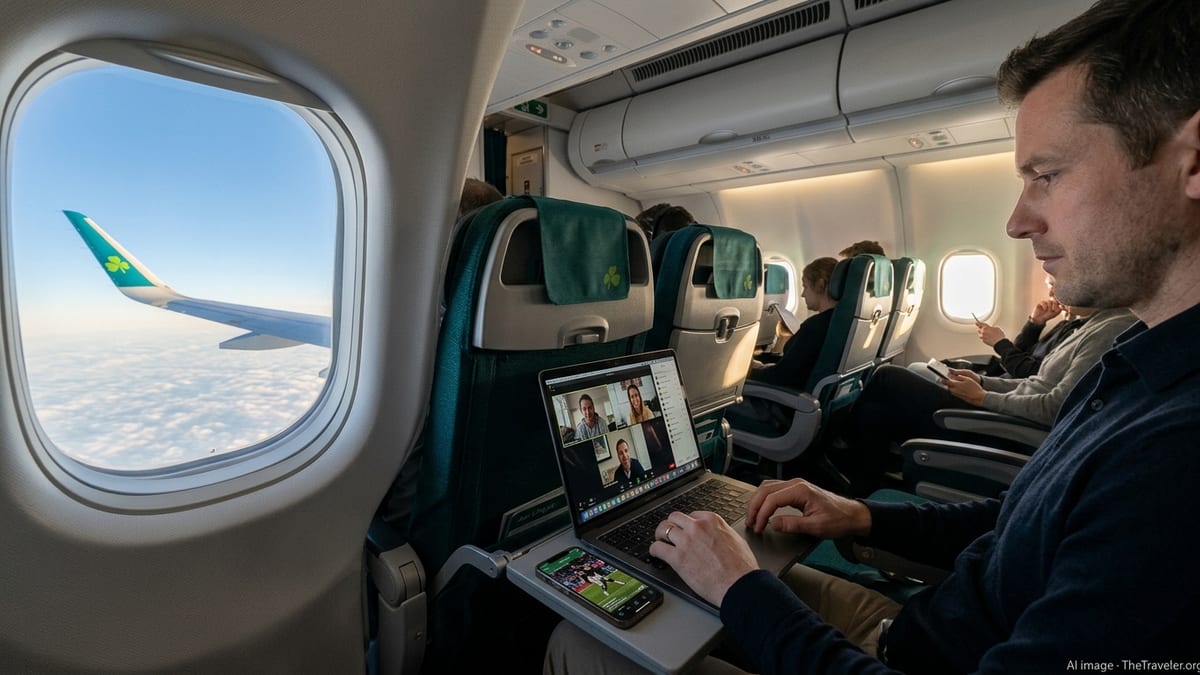
The group is positioning the new service as a significant upgrade over its existing inflight connectivity. Publicly available information shows that Starlink will be offered on both short-haul intra-European services and long-haul intercontinental routes, aiming to give passengers a home-like online experience that supports video calls, cloud-based work tools and high-definition streaming.
Industry analyses suggest the strategy is about more than passenger comfort. High-capacity, low-latency connectivity can also support airline operations, from real-time aircraft health monitoring to dynamic flight planning and crew communications. By standardizing on a single high-bandwidth platform across multiple brands, Lufthansa Group is expected to unlock operational synergies while also sharpening its appeal on competitive business and leisure routes.
For travelers, the practical impact will be felt first on long-haul flights connecting major European hubs such as Frankfurt, Zurich and Vienna with cities in North America, Asia and Africa. As aircraft are progressively retrofitted, the gap between ground and air connectivity is likely to narrow, particularly for passengers accustomed to working online throughout their journeys.
IAG Plans Starlink on 500-plus Aircraft Across Global Network
International Airlines Group, parent of British Airways, Iberia, Aer Lingus, Vueling and Level, has also committed to Starlink for a large portion of its fleet. Company announcements describe the project as a strategic investment in Wi-Fi that will cover more than 500 aircraft, with the first Starlink-equipped planes expected to enter service from 2026.
Reports indicate that the rollout will span both short-haul and long-haul operations. That means Starlink connectivity is planned not only for European point-to-point services but also for transatlantic and other intercontinental routes operated by British Airways, Iberia and Aer Lingus. IAG has highlighted that passengers should be able to use the connection for high-bandwidth activities such as streaming and online gaming without the congestion issues that have plagued legacy systems.
Some IAG airlines have already begun spotlighting Starlink as a differentiator in their onboard product. British Airways and Iberia, in particular, serve high-yield corporate markets where reliable inflight internet increasingly influences airline choice. With Starlink, these carriers are aiming to deliver a level of performance that allows customers to work in cloud-based environments, join video conferences and access collaboration platforms with far fewer interruptions.
The scale of IAG’s project underlines how rapidly inflight connectivity is shifting from a premium add-on to an expected core service. As the group moves toward implementation across multiple brands and aircraft types, passengers flying between key hubs such as London, Madrid, Dublin and major destinations in North America and Latin America are likely to see more flights marketed around high-speed Wi-Fi as a standard feature.
Wizz Air Brings Starlink to the Ultra-Low-Cost Segment
While full-service and network carriers are leading much of the early Starlink adoption, ultra-low-cost operator Wizz Air is preparing to reshape expectations in its own segment. Recent coverage in European aviation media describes an agreement for Wizz Air to equip its Airbus fleet with Starlink connectivity, with installations planned to start from 2027.
For a carrier built on minimal extras and tight cost controls, adding a high-bandwidth Wi-Fi product marks a notable shift. Industry commentators note that Starlink’s relatively compact antennas and efficient data architecture can make next-generation connectivity more accessible even to low-fare airlines that previously viewed inflight internet as too expensive or complex.
Wizz Air’s network stretches across Central and Eastern Europe, the Middle East and parts of Asia, with a growing number of medium-haul routes. Bringing Starlink on board would give passengers traveling on traditionally budget-focused leisure and migrant-worker routes access to connectivity standards closer to those on full-service rivals, narrowing the experience gap without completely changing the carrier’s low-cost model.
How Wizz Air will price the service remains an open question. Market observers are watching to see whether the airline opts for a paid model, a limited free tier, or a loyalty-linked approach similar to that used by some larger network carriers. Whatever the commercial strategy, the presence of Starlink on ultra-low-cost flights is expected to put additional pressure on competitors that still lack a modern connectivity product.
A New Baseline for Inflight Connectivity on International Routes
The combined moves by United, Lufthansa Group, IAG and Wizz Air illustrate a broader pivot in how airlines treat onboard connectivity, particularly on international services. Where early inflight Wi-Fi often delivered slow speeds and restrictive data caps, the new generation of Starlink-powered systems promises more consistent performance that can support modern digital habits at cruising altitude.
For business travelers, the shift means long-haul flights are becoming more viable as productive workspaces. Reliable access to corporate networks, cloud applications and video conferencing tools can reduce the perceived downtime associated with transoceanic journeys and may influence corporate travel policies and airline preferences.
Leisure travelers are also set to benefit from the ability to stream entertainment from their own subscriptions, stay in touch with family and friends via video calls or messaging, and manage travel plans in real time through airline and booking apps. As more airlines move toward offering high-speed Wi-Fi without additional fees, connectivity may soon be viewed in the same category as seatback power or on-demand entertainment: a basic component of the long-haul experience.
At the same time, the rapid adoption of Starlink raises competitive questions for legacy connectivity providers and for airlines that have invested in earlier-generation systems. Industry analysts expect to see more retrofit programs, partnership reshuffles and new pricing models as carriers weigh the cost of upgrading against the risk of being left behind in a market where passengers increasingly expect the internet in the sky to feel much like the internet at home.