


More news on this day
Australia has eased elements of its travel warning for Israel in the wake of a United States–Iran peace agreement aimed at ending months of conflict, a shift that signals cautiously improving security perceptions in one of the world’s most closely watched flashpoints.
Get the latest news straight to your inbox!
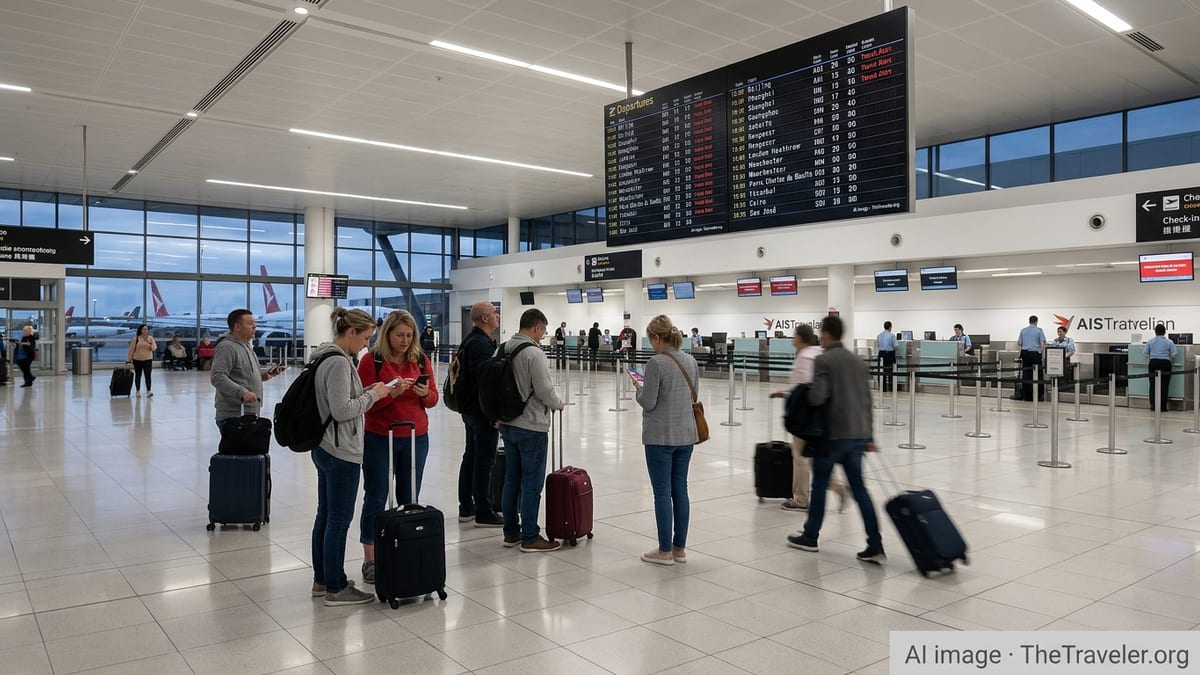
Advisory Shift Follows Breakthrough in US–Iran Relations
Publicly available government advisories indicate that Australia has moved Israel off its strictest “do not travel” footing for some categories of visitors, days after Washington and Tehran announced an agreement designed to halt hostilities and reopen key trade routes in the region. The change marks the first meaningful softening of Canberra’s guidance on Israel since the conflict escalated into a broader regional crisis.
Reports on the peace deal describe a framework that extends an earlier ceasefire and seeks to secure shipping lanes through the Strait of Hormuz, developments widely viewed as reducing the risk of further missile and drone exchanges. In that context, Australia’s updated messaging on Israel is being interpreted by analysts as an acknowledgment that the immediate threat to civilian aviation and major urban centers has eased, even as officials continue to warn that conditions remain volatile.
Travel advisories for nearby countries, including Lebanon and parts of the broader Middle East, are understood to remain at more restrictive levels, underscoring Australia’s view that the regional security picture is uneven. The easing for Israel is therefore being characterized as targeted rather than across-the-board, reflecting both the specific dynamics of the US–Iran accord and Israel’s own security posture along its borders.
Policy observers note that Australia’s move aligns with a pattern seen among several Western governments, which have begun to recalibrate travel guidance in response to reduced cross-border fire and fewer large-scale attacks. While no major power is treating the peace deal as a guarantee of long-term calm, the advisory adjustments suggest a growing confidence that the most intense phase of the conflict has passed, at least for now.
What the New Guidance Means for Australian Travelers
The updated advice for Israel signals that certain types of travel, such as pre-planned tours to major cities and religious sites away from active front lines, may be viewed as more feasible than during the peak of the fighting. Travel specialists following the region say this is likely to revive interest from Australians who postponed pilgrimages, family reunions, or heritage trips when the conflict escalated.
Despite the easing, the language used in public advisories continues to stress the need for heightened caution, particularly in areas near Gaza, the northern border with Lebanon, and locations that have previously been targeted by rocket fire or drone activity. Australians are still being urged to monitor official channels closely, maintain flexible itineraries, and be prepared for rapid changes to local security conditions.
Insurance conditions also remain a key consideration. Industry bulletins circulated earlier in the conflict highlighted exclusions related to war and civil unrest, and some providers have yet to fully reinstate comprehensive coverage for travel in and around Israel. Travelers are being advised by consumer advocates to read policy wording carefully and seek confirmation that medical evacuations, trip interruptions, and civil-unrest scenarios are explicitly covered.
For airlines and tour operators, Australia’s revised stance may provide an opening to gradually restore suspended routes and packages, although many companies are expected to move cautiously. Industry commentary suggests that carriers will likely wait for sustained stability and consistent guidance from multiple governments before committing additional capacity to Israeli destinations.
Tourism Sector Sees Early Signs of Recovery
The recalibration of Australia’s Israel advisory comes as global tourism bodies report tentative signs of recovery in travel to the Eastern Mediterranean. Booking platforms and regional tourism boards have noted a modest uptick in search interest and preliminary reservations following announcements that the US–Iran agreement has reduced missile threats and stabilized energy markets.
Israel’s tourism industry, which has endured repeated shutdowns and cancellations during the conflict, is positioning the easing of foreign advisories as an important psychological turning point. Public-facing statements from tourism authorities emphasize efforts to reassure visitors about security arrangements around major attractions, hotels, and transportation hubs, even as they acknowledge that some areas remain restricted.
Australian travel agencies that specialize in the Middle East report that clients are asking more nuanced questions than in previous cycles of unrest. Instead of abandoning trips altogether, many are seeking tailored advice on which regions within Israel are currently considered lower risk, how close they can travel to sensitive borders, and what contingency plans should be built into itineraries.
Analysts caution that any rebound is likely to be gradual. Group tours may return first, as operators can coordinate closely with local partners on security briefings and route planning. Independent travelers, especially those unfamiliar with the region, may wait longer for clear evidence that the peace framework between Washington and Tehran is holding and that spillover tensions with non-state actors are contained.
Regional Security Still Fragile Despite Peace Deal
Security experts emphasize that Australia’s revised Israel travel advice reflects a reduction in risk, not an end to it. Coverage of the US–Iran agreement points to ongoing concerns about armed groups operating in Lebanon, Syria, and elsewhere, whose actions could undermine the ceasefire or ignite new flashpoints around Israel’s borders.
Recent reports from Lebanon describe a noticeable drop in large-scale exchanges of fire since the deal was announced, but also note sporadic incidents and a continuing military presence near the frontier. For Australia and other governments, these conditions justify maintaining firm restrictions on travel to certain neighboring areas, even as guidance for Israel itself inches toward a more permissive stance.
Domestic debates within Australia about the wider conflict, including questions over alliance commitments and humanitarian responsibilities, are also shaping the context in which travel decisions are made. Parliamentary discussions, public demonstrations, and commentary from civil society groups have kept attention on the risks facing civilians across the region, reinforcing the caution embedded in official advisories.
Given this backdrop, observers expect Australia to review its Israel guidance frequently in the weeks ahead. Any significant breach of the ceasefire, renewed attacks on urban centers, or disruption to commercial aviation routes could prompt another tightening of advice, while a sustained period of calm might pave the way for further easing.
What Travelers Should Watch in the Coming Weeks
For Australians considering travel to Israel, the critical factor now is how durable the US–Iran peace arrangement proves to be. Analysts following the negotiations note that implementation will unfold in stages, with milestones tied to the withdrawal of certain forces, verification of compliance, and the reopening of strategic corridors for trade and energy shipments.
Changes to flight schedules, insurance coverage, and tour offerings are expected to track closely with each step in that process. Aviation observers point out that airlines typically respond quickly to improvements in risk assessments but can just as swiftly reverse course if conditions deteriorate. Travelers planning trips for later in the year may therefore benefit from booking options that allow re-routing or postponement without heavy penalties.
Publicly available guidance continues to encourage Australians to register their details before travel to higher-risk destinations and to maintain direct contact with family or friends while overseas. Seasoned travelers to the region recommend having basic contingency plans, such as knowing where the nearest shelter or secure facility is located and staying informed through multiple, credible news sources.
While the easing of Australia’s Israel travel warning is being welcomed by parts of the tourism sector as a sign of normality returning, it also highlights how quickly global mobility can be reshaped by geopolitical developments. The trajectory of the US–Iran agreement, and how key regional actors respond to it, will determine whether this latest shift becomes the start of a sustained reopening or a brief respite in a conflict-prone part of the world.