


More news on this day
Australian travellers are facing some of the strictest official warnings in years for journeys to and through the Middle East, after a sweeping update to government advice elevated many destinations to the highest risk categories amid ongoing conflict and airspace disruption.
Get the latest news straight to your inbox!
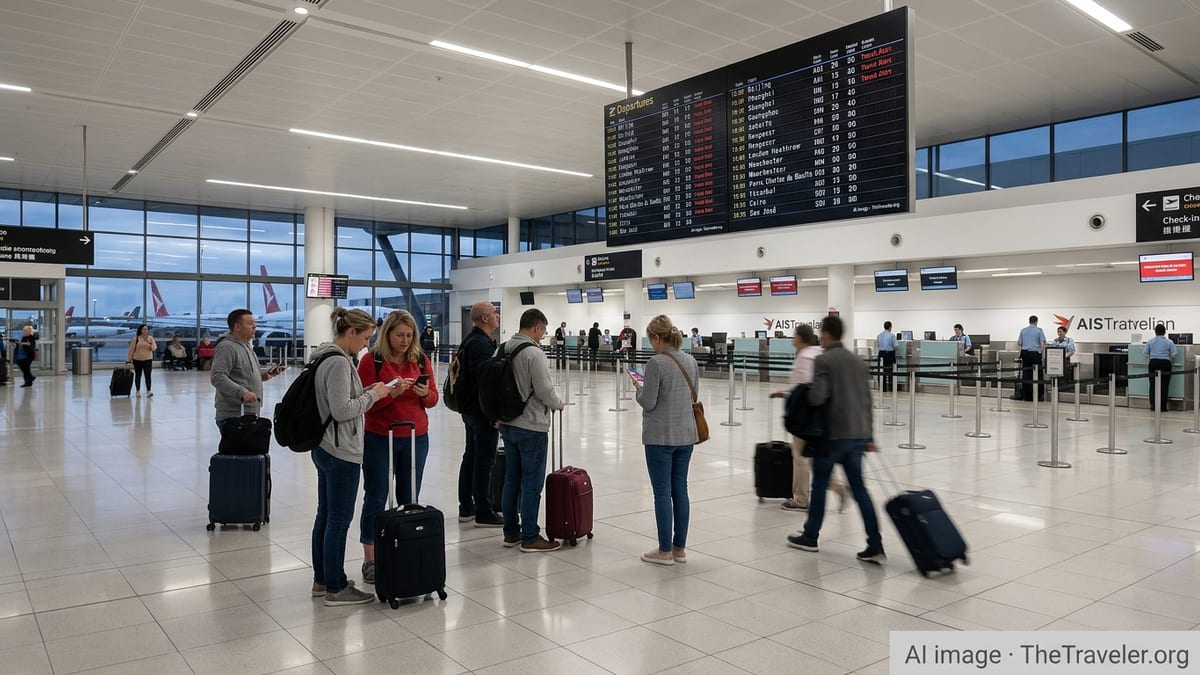
Multiple Middle East Destinations Now Rated ‘Do Not Travel’
Australia’s Smartraveller advisory system has shifted to an increasingly restrictive stance across the Middle East in June 2026, with many key destinations now listed at the highest warning level. The consolidated destination table shows a cluster of countries in the region carrying an overall “Do not travel” rating following recent updates during May and June.
Publicly available summaries indicate that destinations such as Israel, Lebanon, Iran, Iraq, Syria and Yemen remain in the most severe category because of armed conflict, terrorism threats and the risk of further sudden escalation. More recently, some Gulf hubs including Bahrain and other nearby states have also moved into the “Do not travel” band as regional tensions and missile activity have affected both security on the ground and the integrity of regional airspace.
The same tables show that a handful of states, including Saudi Arabia and parts of the wider Gulf, are now under “Reconsider your need to travel” advice, signalling that non-essential trips should be deferred. While not an outright prohibition, that level marks a significant tightening compared with conditions before the current phase of the Iran–Israel–US confrontation and the renewed conflict on the Israel–Lebanon front.
According to guidance on how the advisory system is compiled, such upgrades are only applied when the perceived risk to Australian travellers has materially worsened. The latest changes reflect a judgment that the security environment for much of the Middle East is now volatile, with limited capacity to assist travellers who run into difficulty.
Conflict, Missiles and Airspace Disruptions Driving the Shift
The tougher stance for Australian travellers is closely linked to the evolving regional conflict that has pitted Israel and the United States against Iran and its allied groups. News coverage over recent months has detailed Israeli and US strikes against targets in Iran, followed by retaliatory missile and drone attacks aimed at Israeli cities and United States bases across the Gulf.
Those exchanges have had direct consequences for civil aviation. Reports from international and Australian media outlets describe repeated, short-notice airspace closures over Iran, Iraq, Israel and parts of the Gulf, along with diversions and cancellations affecting major hubs such as Dubai and Doha. Travellers have recounted being stranded for days as airlines re-routed aircraft around conflict zones or temporarily suspended services.
Analyses by travel-industry consultancies and business travel publications note that the current pattern of missile launches and cross-border strikes has raised the baseline risk of flying through large swathes of Middle Eastern airspace. While most international carriers continue to operate modified routings, the possibility of sudden closures and the presence of military activity at cruising altitudes have prompted many governments, including Australia, to adopt a more conservative posture in their advice.
Regional political developments have added another layer of uncertainty. Coverage of the fragile Israel–Lebanon ceasefire process suggests that cross-border fire and military operations in southern Lebanon have persisted despite repeated diplomatic efforts to stabilise the front. That dynamic has influenced the decision to keep both countries in the highest-risk category for Australian travellers.
What the Updated Advice Means for Aussie Holidaymakers and Transit Passengers
For Australian travellers, the practical effect of the latest Middle East advisories is a strong signal to avoid new leisure trips into the region and to think carefully before booking itineraries that rely on transits through high-risk hubs. The Smartraveller framework notes that when a destination reaches “Do not travel,” many travel insurance policies may limit or exclude cover for events linked to security conditions or government warnings.
Travel trade bulletins and airline policy summaries show that carriers have been periodically waiving change fees or offering credits for passengers booked to, from or through the worst-affected countries. However, those measures are often time-limited and may not extend to every itinerary that simply overflies the region. Australians who booked well in advance, particularly for peak northern summer travel, are being urged by consumer advocates and industry commentators to review their tickets and insurance terms in light of the escalated government advice.
Backpacker resources and independent travel guides associated with Australian organisations are also emphasising the importance of monitoring official updates while on the road. They stress that itineraries involving overland routes, adventure activities or budget carriers can be particularly exposed if border conditions or flight patterns change at short notice, leaving travellers with limited alternatives and potentially significant out-of-pocket costs.
For those already overseas, publicly available guidance recommends updating contact details on advisory subscription services and registering plans where possible, so they can receive fresh alerts about changes to security levels, curfews, protests or transport disruption affecting transit points in the Middle East.
Business Travel, Aviation Hubs and the Wider Ripple Effect
The heightened Australian warnings are also reshaping corporate travel and aviation planning. Executive travel publications report that multinational firms with regional operations are scaling back non-essential visits to conflict-adjacent markets and re-routing staff away from hubs that now fall under “Do not travel” advisories. Some companies are shifting meetings and conferences to alternative locations in Europe or Asia to avoid the uncertainty.
Airlines and airport operators in the wider region are dealing with a complex mix of reduced demand, higher operating costs and schedule volatility. Strategic briefings for the travel and hospitality sector highlight that carriers are burning extra fuel to detour around sensitive airspace, while some inbound tourism flows from markets like Australia have dropped sharply following the advisory changes.
At the same time, industry analysts point out that a few Middle East destinations continue to function as major connectors for traffic between Australia, Europe and Africa, even if they now sit within higher-risk categories. This creates a tension for both airlines and governments: maintaining critical global links while acknowledging that the risk profile for those routes is higher than in previous years.
Travel-management companies say corporate clients are increasingly requesting bespoke risk assessments that factor in government advisories, airline safety practices and contingency options for rapid evacuation if conditions deteriorate further in any of the key transit hubs.
How Travellers Can Navigate the New Risk Landscape
In response to the rapidly changing situation, Australian government communications are encouraging citizens to stay closely informed before and during any overseas trips that could intersect with the Middle East. The Smartraveller platform allows travellers to subscribe to specific destination alerts, which are updated whenever advice levels change or new security information becomes available.
Consumer guidance from Australian media and travel organisations suggests that would-be travellers should scrutinise the fine print of insurance policies, checking how coverage is affected when a destination is listed as “Reconsider your need to travel” or “Do not travel.” Some policies may still offer limited benefits, while others exclude claims that arise from ignoring official warnings.
Experts quoted in public forums and analysis pieces also recommend building additional flexibility into itineraries over the coming months. That can include choosing fares with more generous change conditions, allowing extra connection time in alternative hubs outside the region, and having a contingency budget in case unexpected hotel nights or rebooking fees arise from last-minute disruptions linked to the conflict.
Above all, the latest Australian travel advisories for the Middle East underline that the region’s security environment remains fluid. Australians planning to travel internationally in the near term are being encouraged to factor that uncertainty into their destination choices, transit routing and risk tolerance, rather than assuming that long-favoured hub airports or tourism hotspots will operate as usual.