


More news on this day
United Airlines is moving to deploy Starlink satellite Wi-Fi across parts of its fleet, joining Wizz Air, Lufthansa Group and International Airlines Group in a rapidly expanding push to offer faster, more reliable inflight internet on international routes.
Get the latest news straight to your inbox!
United Accelerates Starlink Rollout for Long-Haul Travelers
Publicly available information from United Airlines shows the carrier has set an accelerated timetable to introduce Starlink connectivity, initially on regional jets before expanding to larger aircraft. Testing is expected to begin in early phases on Embraer E175 aircraft, with commercial flights following once performance and integration milestones are met.
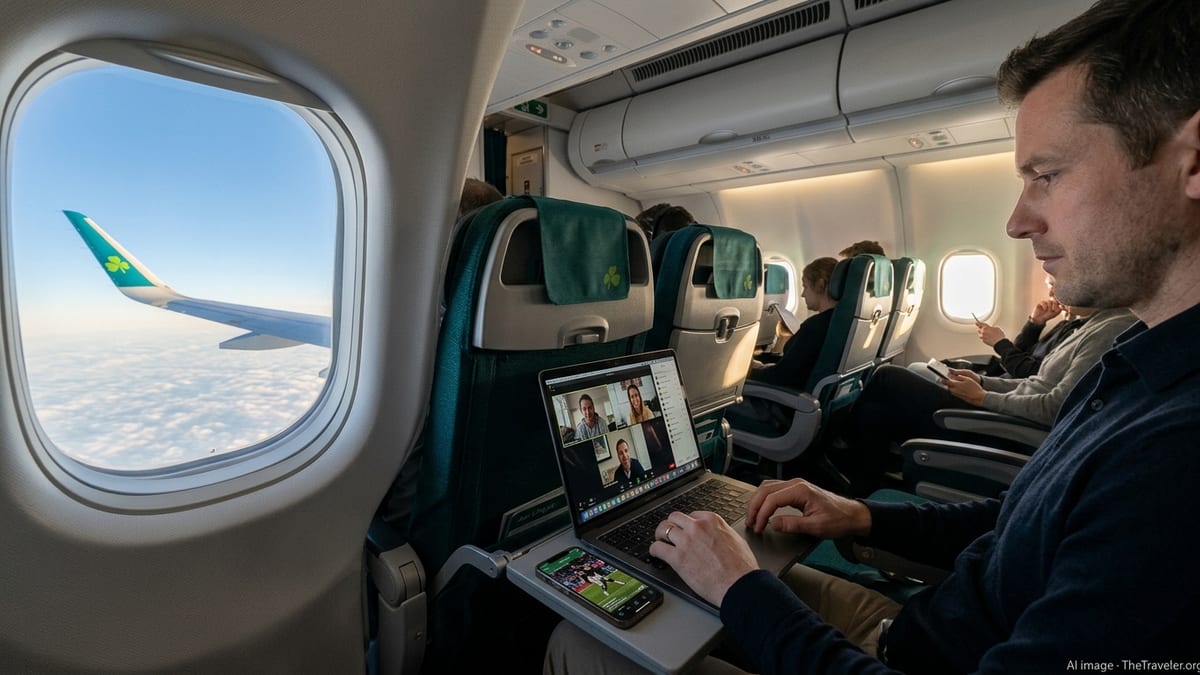
The airline is positioning the service as a major upgrade over legacy inflight connectivity, highlighting the potential for streaming, video conferencing and real-time collaboration at cruising altitude. Reports indicate that Starlink access will be integrated into United’s broader digital strategy, including its MileagePlus program and onboard entertainment platform.
United’s move aligns closely with growing passenger expectations for home-like connectivity, particularly on transcontinental and international routes where travelers often want to work, stay connected with family, or stream entertainment throughout long sectors. The carrier is also under pressure to match or surpass rivals in North America and Europe that are signing multi-year Starlink and next-generation connectivity deals.
Industry coverage suggests that United is exploring options to make Wi-Fi access more seamless for frequent flyers, reflecting a wider trend among global carriers to use connectivity as a loyalty and revenue lever rather than a stand-alone paid amenity.
Lufthansa Group Commits to Fleet-Wide Starlink Upgrade
Lufthansa Group has announced a wide-ranging collaboration with Starlink that will see high-speed satellite internet introduced across all its airlines and fleets. Group communications describe the project as one of the largest single Starlink deployments in commercial aviation, covering hundreds of aircraft operated by brands such as Lufthansa, Swiss, Austrian Airlines, Brussels Airlines and Eurowings.
The European group is positioning the investment as a competitive differentiator in both short-haul and long-haul markets, particularly on dense intra-European routes and transatlantic services. Published information indicates that Starlink hardware will be installed progressively, with a focus on minimizing aircraft downtime while ensuring consistent cabin coverage and performance.
Analysts note that Lufthansa Group’s commitment underscores a shift in how network airlines view connectivity, treating it less as an optional service and more as critical infrastructure comparable to in-seat power or entertainment screens. As installation advances, the group is expected to highlight use cases ranging from business travelers holding video meetings to leisure passengers streaming high-definition content without buffering.
The scale of the Lufthansa Group rollout also demonstrates growing confidence among full-service carriers in low-orbit satellite solutions, which promise lower latency and higher throughput than many legacy systems that relied on geostationary satellites or ground-based towers.
IAG Plans Starlink on More Than 500 Aircraft
International Airlines Group has laid out plans to equip more than 500 aircraft with Starlink connectivity across its portfolio of carriers, including British Airways, Iberia, Aer Lingus, Vueling and Level. Group statements describe a phased implementation beginning in the second half of the decade, with both short-haul and long-haul aircraft targeted.
Reports indicate that IAG’s Starlink program will cover European routes as well as transatlantic and other international services, giving travelers more consistent access to high-speed Wi-Fi across the network. The upgrade is being framed as part of a broader digital transformation that includes modernized cabins, improved entertainment options and enhanced mobile and loyalty features.
British Airways and Iberia are expected to be among the highest-profile beneficiaries of the program, as both carriers rely heavily on long-haul traffic where reliable connectivity can influence booking decisions. Low-cost subsidiary Vueling and long-haul low-cost brand Level are also slated to receive the technology, signaling that high-speed inflight internet is moving beyond premium flag carriers into the value-focused segment.
By committing hundreds of aircraft, IAG is helping to create scale for Starlink within commercial aviation, which industry observers suggest could lower unit costs over time and accelerate technological refinements that benefit passengers across all partner airlines.
Wizz Air Brings Starlink to Ultra-Low-Cost Operations
Wizz Air has announced plans to introduce Starlink inflight internet across its fleet starting in 2027, becoming one of the first European ultra-low-cost carriers to adopt the system on a large scale. Coverage in aviation and financial media notes that the move marks a significant shift for a carrier that historically has offered a pared-back onboard product to keep fares low.
The rollout is expected to encompass the airline’s Airbus A320 and A321 family aircraft, which serve a network stretching across Europe, the Middle East and parts of Central Asia. Until now, Wizz Air has operated largely without onboard Wi-Fi, so the adoption of Starlink represents a step-change in passenger experience, particularly on longer sectors.
Industry analysts suggest that Wizz Air’s decision reflects both competitive pressure and growing demand from digitally dependent travelers who expect to stay connected regardless of ticket price. The carrier has not publicly detailed pricing or packaging, but observers anticipate a mix of free messaging, tiered paid access or promotional bundles aligned with the airline’s ancillary revenue model.
Wizz Air’s entry into the Starlink ecosystem also broadens the technology’s geographic reach, supporting connectivity on point-to-point leisure routes that may not be served by traditional network carriers but still carry large volumes of passengers accustomed to always-on digital services.
A New Standard for Inflight Connectivity on International Routes
The combined commitments from United, Lufthansa Group, IAG and Wizz Air are helping to establish Starlink-powered Wi-Fi as a new benchmark for inflight connectivity on international routes. Together, these groups represent hundreds of aircraft and vast global networks spanning North America, Europe, the Middle East, Africa and the Americas.
For travelers, the impact is expected to be most visible in the ability to use bandwidth-intensive applications that previously struggled at altitude. Streaming services, cloud-based productivity tools, online gaming and real-time messaging are all set to benefit from the higher speeds and lower latency associated with Starlink’s low-orbit satellite constellation.
From an industry perspective, the rapid expansion of Starlink partnerships suggests a broader realignment of the inflight connectivity market, with airlines prioritizing providers that can deliver consistent performance across diverse route structures. As more aircraft come online, carriers are likely to experiment with new digital services, from e-commerce and advertising to personalized content and real-time operational data sharing.
While installation timelines and service models vary by airline, the direction of travel is clear. High-speed, reliable Wi-Fi is emerging as a core feature of modern air travel, and the latest commitments from United, Wizz Air, Lufthansa Group and IAG indicate that the competition to deliver the best connected cabin is entering a new, globally scaled phase.