


More news on this day
The United Kingdom remains one of the world’s most recognizable destinations, blending historic cities and rural landscapes with a services-driven economy and an evolving role in European and global affairs.
Get the latest news straight to your inbox!
Geography, make-up and population
The United Kingdom of Great Britain and Northern Ireland occupies the northwestern edge of Europe and brings together four constituent parts: England, Scotland, Wales and Northern Ireland. It is surrounded by the Atlantic Ocean, the North Sea, the English Channel and the Irish Sea, with only one land border, between Northern Ireland and the Republic of Ireland. Major urban centers include London, Birmingham, Manchester, Glasgow and Cardiff, alongside extensive rural regions that remain central to the country’s image abroad.
Publicly available demographic data show a population of around 67 million people, making the UK one of Europe’s more densely populated states. England accounts for the clear majority of residents, while Scotland, Wales and Northern Ireland each maintain distinct cultural and linguistic traditions. English is the main language, but Welsh, Scottish Gaelic and Irish are protected minority languages and visible in public life, particularly in devolved regions.
The UK’s position between North America and continental Europe has long shaped its transport links. London’s airports, particularly Heathrow and Gatwick, operate as major international hubs, while regional airports in Manchester, Edinburgh, Glasgow and Belfast connect visitors directly to the devolved nations and English regions. An extensive rail network, including high-speed links from London to other major cities, underpins domestic travel and supports multi-stop itineraries for overseas visitors.
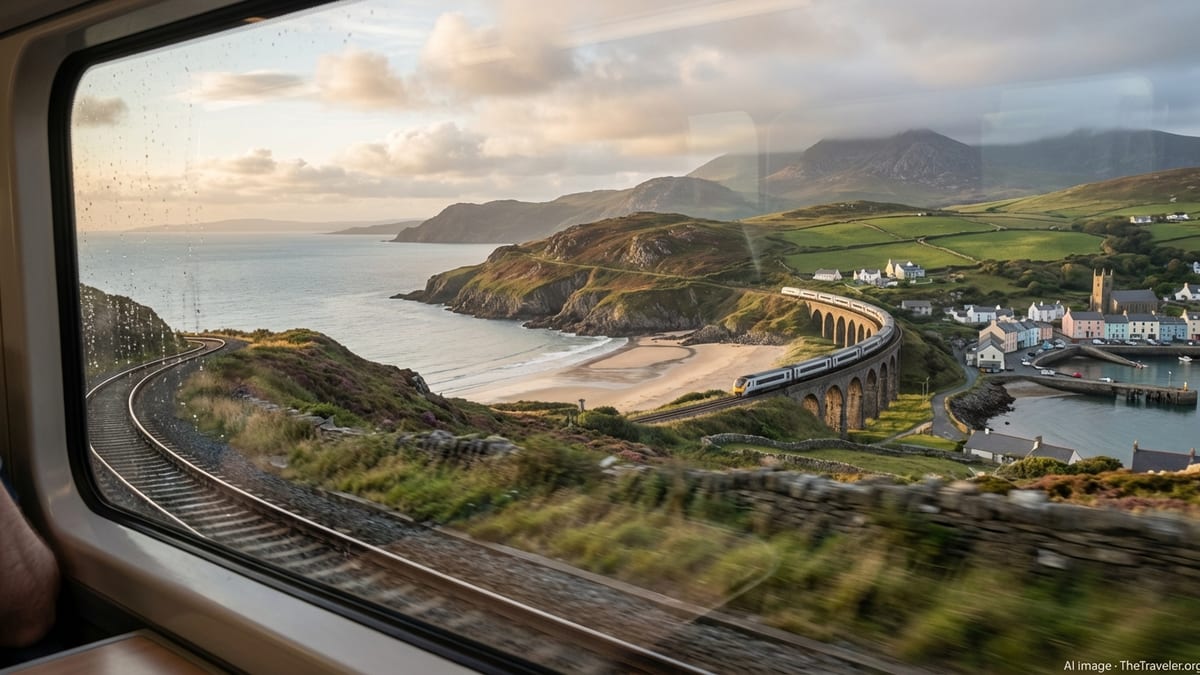
For travelers, this geography creates a compact but varied destination. Coastal paths, national parks such as the Lake District and Snowdonia, and historic cities including Edinburgh, York and Bath sit within relatively short travel times, reinforcing the UK’s reputation as a place where multiple landscapes and histories can be visited on a single trip.
Political system and governance
The United Kingdom operates as a constitutional monarchy with a parliamentary democracy centered on Westminster in London. The monarch is head of state, while executive authority is exercised by the UK government led by the prime minister. Published background materials on the UK constitution highlight the long-standing role of the Crown within the system of government, particularly in the legislative process and ceremonial functions.
Current information indicates that the Labour Party leads the government, with Keir Starmer serving as prime minister since July 2024. The UK Parliament is bicameral, comprising the elected House of Commons and the unelected House of Lords. Public debate on reform of the Lords and broader constitutional change, including the balance of power between London and the devolved institutions, continues to feature in domestic politics and media coverage.
Devolution remains a defining feature of the modern UK state. Scotland, Wales and Northern Ireland each have their own legislatures and executives with varying powers over areas such as health, education and certain transport and tourism policies. England does not have its own parliament, but city-regions and combined authorities, particularly around major cities, now host directly elected mayors with growing responsibilities for local development and visitor strategies.
For visitors, this political structure is most visible in differing regulations and public services between the UK’s nations, from health arrangements to cultural funding. Major political events, including elections or referendums, can influence travel sentiment in the short term, but international assessments still generally describe the UK as a stable democracy with a developed rule-of-law system and a wide range of media outlets.
Economic profile and sector strengths
Recent economic assessments describe the United Kingdom as one of the world’s largest economies by nominal gross domestic product, with services accounting for the overwhelming share of output. Financial services, professional and business services, creative industries and higher education are all identified as major contributors. London retains its status as a leading global financial center, while other cities such as Edinburgh, Manchester and Leeds are highlighted for growing roles in finance, digital and media.
Manufacturing and advanced engineering continue to play a role, particularly in aerospace, automotive and pharmaceuticals, though employment in heavy industry is far smaller than during the 20th century. Publicly available data show that trade with the European Union remains a significant part of the UK’s external economic relationships after Brexit, while officials in multiple reports emphasize efforts to deepen ties with North America and the Asia-Pacific region.
The labor market has seen periods of tightness, with unemployment figures in recent years broadly consistent with other advanced economies. Inflation that spiked after the pandemic and energy shocks has eased, though the cost of living, especially in London and the southeast of England, is still a central issue in domestic politics. For travelers, this translates into comparatively high accommodation and dining costs in key city destinations, alongside more moderate pricing in many regional areas.
Tourism itself represents a substantial segment of the services economy. Parliamentary research and national statistics publications estimate that visitor spending supports hundreds of thousands of jobs across hospitality, transport and cultural institutions. The sector’s performance is often treated as a barometer of wider economic confidence, particularly in regions that rely heavily on domestic holidaymakers and inbound visitors.
Tourism trends, visitor numbers and regional appeal
Official tourism statistics and industry briefings indicate that inbound travel to the UK has largely recovered from the pandemic shock, with 2024 marking the first year in which overseas visits exceeded 2019 levels. Data compiled by the national tourism agency suggest inbound visits in 2025 continued to grow at a modest pace, while a recent forecast points to an estimated 45.5 million international visits in 2026 and spending in excess of 35 billion pounds.
Government and parliamentary analyses describe tourism as one of the UK’s most valuable export sectors, driven by a combination of cultural attractions, heritage sites and English-language education. London remains the primary gateway and most visited destination, but domestic surveys also highlight strong demand for city-breaks in Edinburgh, Glasgow, Manchester and Liverpool, as well as coastal and countryside trips to Cornwall, the Scottish Highlands and the national parks of England and Wales.
Domestic tourism plays a major role alongside international arrivals. The Great Britain Tourism Survey, which tracks overnight trips and day visits, continues to show substantial volumes of residents traveling within England, Scotland and Wales for leisure. Many regional economies depend on this domestic market, particularly in areas where international connectivity is limited or highly seasonal.
Industry outlook documents underline both opportunities and headwinds. The UK competes with other Western European destinations that may offer lower prices or warmer climates, while currency fluctuations and air connectivity affect affordability for long-haul markets. At the same time, continued investment in cultural institutions, major sporting events and heritage conservation is presented as a way of keeping the country on the shortlist for global travelers planning multi-stop European itineraries.
Outlook for travelers and the tourism economy
Looking ahead, the UK tourism sector is framed by a mix of structural strengths and emerging challenges. The concentration of world-renowned museums, theaters and historic landmarks, combined with English as a global lingua franca, underpins strong baseline demand. New data releases from national statistical agencies point to ongoing refinement of how visitor flows are measured, with an emphasis on more timely and granular information to guide policy and marketing decisions.
Sustainability is increasingly prominent in local and national discussions about tourism. Cities and national parks are examining visitor management, transport emissions and the protection of historic and natural sites, echoing global debates about balancing tourism growth with environmental and community concerns. Publicly available policy papers show that some local authorities are exploring measures to spread demand beyond traditional hotspots and peak seasons.
Infrastructure projects, including rail upgrades and airport improvements, continue to attract political and public attention, with implications for how easily visitors can move between regions. Combined with ongoing debates about visa rules, border controls and post-Brexit travel arrangements for European visitors, these factors are likely to influence the pattern of arrivals in the coming years.
For travelers, the overall picture is of a mature, globally significant destination that is adjusting to new political and economic realities while remaining deeply embedded in international tourism flows. From a country-profile perspective, the United Kingdom’s blend of constitutional continuity, service-led prosperity and cultural visibility ensures it stays central to travel planning and industry analysis alike.