


More news on this day
Switzerland continues to draw global attention not only for its Alpine scenery and precision industries, but also for a distinctive political model, resilient economy and evolving climate agenda that are reshaping life and travel across the country.
Get the latest news straight to your inbox!
Geography, population and language
Switzerland is a landlocked country at the heart of Europe, bordered by France, Germany, Italy, Austria and Liechtenstein. Its terrain is dominated by the Alps and the Jura, with the densely populated Swiss Plateau running between the two ranges. This geography underpins both the country’s long tradition of mountain tourism and the engineering required to maintain year-round connectivity through tunnels and high-altitude passes.
The population has passed 8.9 million residents, according to recent national statistics, and continues to grow modestly, driven in part by immigration. The country is highly urbanised, with major centres such as Zurich, Geneva, Basel, Bern and Lausanne acting as hubs for finance, diplomacy, research and culture, even as smaller resort towns remain crucial to the tourism economy.
Switzerland recognises four national languages: German, French, Italian and Romansh. German-speaking cantons account for the majority of residents, while French is dominant in the west and Italian in the southern canton of Ticino. This linguistic diversity is reflected in public life, from multilingual signage to the way national votes and campaigns are conducted across different regions.
The country’s political structure is federal, with 26 cantons enjoying significant autonomy over areas such as education, policing and local taxation. This strong regionalism, layered over linguistic and cultural differences, has encouraged a consensus-driven approach to national policy and a tradition of devolved decision-making that visitors often notice in the prominence of local rules and regulations.
Federal politics and direct democracy
Switzerland is a federal republic with a unique combination of parliamentary institutions and extensive direct democracy. The bicameral Federal Assembly consists of the National Council, representing the population, and the Council of States, representing the cantons. Elections in October 2023 produced a fragmented but familiar party landscape, with the right-of-centre Swiss People’s Party remaining the largest force in the National Council, alongside strong showings from liberal, centrist and green parties.
The seven-member Federal Council functions as a collective head of state and government, with portfolios distributed among its members. A routine renewal in December 2023 confirmed the broad cross-party composition often referred to as the “magic formula,” reflecting a long-standing preference for power-sharing and continuity. This collegiate system, combined with relatively modest political turnover, is often cited in international assessments of Switzerland’s institutional stability.
Direct democracy remains central to the country’s political identity. Citizens regularly vote in nationwide referendums and popular initiatives on topics ranging from pension reform and climate legislation to immigration and infrastructure spending. Recent ballots have included high-profile debates over climate policy and limits on long-term population growth, illustrating how environmental and demographic pressures are moving to the forefront of public discussion.
For visitors and investors, this system can mean gradual but deeply anchored policy shifts. Measures such as the 2023 Climate and Innovation Act, adopted in a popular vote, signal long-term commitments that shape planning in energy, transport and tourism, even if short-term change appears cautious.
Economic strength and shifting sectors
Switzerland’s economy ranks among the world’s wealthiest on a per-capita basis, built on a combination of advanced manufacturing, financial services and a strong innovation ecosystem. Pharmaceuticals, medical technology, precision instruments and watchmaking remain flagship export industries, supported by high research spending and dense networks linking universities with private firms.
The services sector, including banking, insurance and professional services, continues to generate a substantial share of gross domestic product. At the same time, regulators and international partners have pushed for greater transparency in financial markets, prompting gradual adjustments in banking secrecy and tax practices. Publicly available economic data indicate low unemployment compared with many European peers, although high living costs, particularly in housing and health care, are frequent topics in domestic debate.
Tourism is a vital pillar of the Swiss economy and has undergone a rapid recovery from the pandemic shock. Federal Statistical Office figures show that Swiss hotels registered approximately 41.8 million overnight stays in 2023, a historic record since data collection began in the 1930s. In 2024 the sector climbed further, reaching about 42.8 million overnight stays, with reports indicating strong demand from European neighbours and a renewed influx of visitors from North America and Asia.
This expansion is not evenly distributed. Mountain and lake destinations benefited from the surge, while some cities continue to recalibrate business travel and conference segments. Analysts note that tourism revenues, when adjusted for inflation, remain under pressure, encouraging destinations to focus on higher-value stays, off-season travel and products that appeal to environmentally conscious visitors.
Tourism landscape from Alps to cities
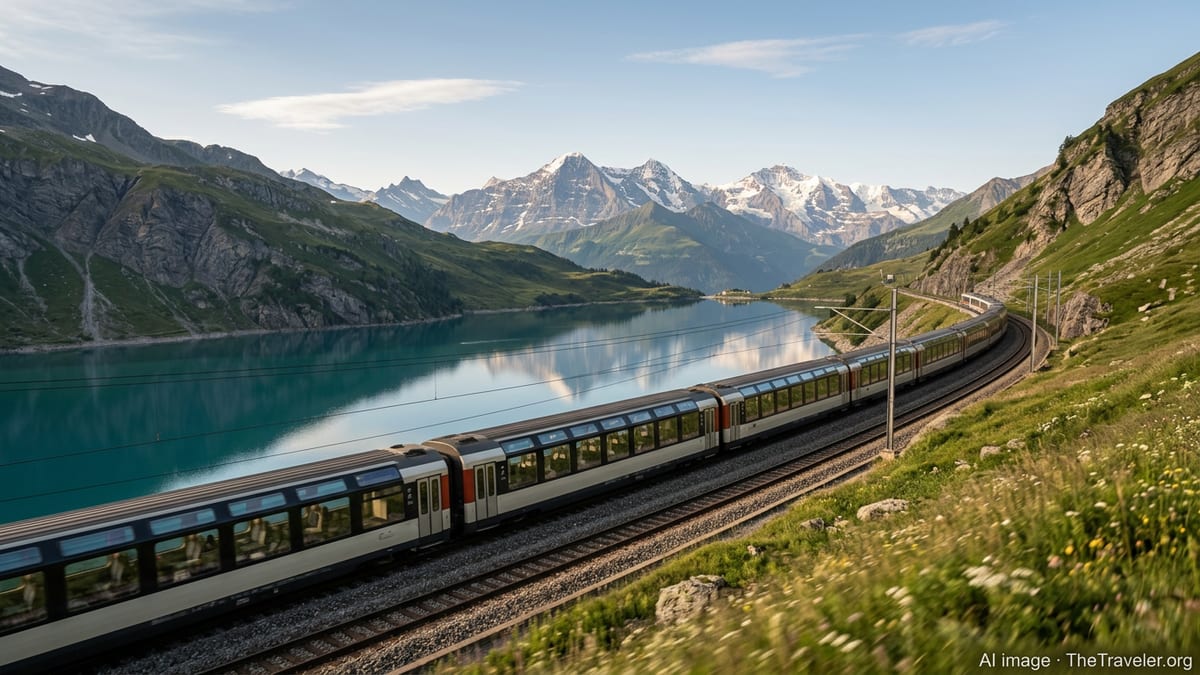
Switzerland’s tourism appeal rests on a blend of Alpine landscapes, historic towns and well-developed transport. Classic mountain resorts such as Zermatt, St. Moritz and Grindelwald draw skiers, hikers and mountaineers, while lakeside cities like Lucerne and Geneva attract visitors seeking cultural experiences and conference facilities. The country’s extensive rail network, frequent regional trains and integrated ticketing are frequently cited as reasons travelers can rely less on cars compared with many other destinations.
Recent tourism statistics show that 2024 was another record year for overnight stays during the summer season, helped by warm-weather travel, events and a strong US dollar that made Swiss trips relatively more attractive for American visitors. Forecasts from research institutes and government-linked advisory bodies suggest that the positive trend is likely to continue into 2025, though at a slower pace, as European source markets stabilise and long-haul travel patterns normalise.
At the same time, several popular destinations are openly debating how to balance visitor numbers with quality of life for residents. Public discussions in cities such as Lucerne and Interlaken highlight concerns over crowding, housing pressure and the limited local benefits of same-day tourism. Proposals range from targeted tourist taxes and caps on short-term rentals to incentives that encourage longer stays and more spending with local businesses.
Tourism boards are increasingly promoting lesser-known regions, such as the Jura, Eastern Switzerland and rural Ticino, in an effort to spread demand beyond a few iconic hotspots. Campaigns emphasize rail-based itineraries, regional food and wine, and activities outside the peak ski season, including cycling, spa travel and cultural festivals.
Climate goals, environment and mobility
Climate policy has moved to the centre of Switzerland’s long-term planning. The Climate and Innovation Act backed by voters in 2023 enshrines a national goal of net-zero greenhouse gas emissions by 2050. Government strategies presented since then call for a progressive phase-out of fossil fuels in heating, greater energy efficiency in buildings and industries, and expanded use of hydropower, solar and other renewables.
Country profiles published by European environmental agencies report that Switzerland intends to halve its emissions by 2030 compared with 1990 levels, with transport and buildings seen as key levers. Despite its relatively low-emission electricity mix, the country faces challenges in managing mobility-related emissions, particularly from private cars and aviation, as well as in adapting winter sports infrastructure to shorter and less predictable snow seasons.
For the tourism sector, these goals are already influencing investment decisions. Mountain resorts are assessing the long-term viability of lower-altitude ski areas and exploring all-season offerings such as hiking, wellness and cultural programming. Some destinations provide free or discounted public transport for overnight guests, a measure that research suggests can encourage visitors to leave cars at home and rely on trains and buses instead.
Switzerland’s membership in the border-free Schengen area and its dense network of international rail connections, including high-speed links to France, Germany and Italy, position it to benefit from the broader European shift toward lower-carbon travel. Industry observers expect that how the country balances growth in tourism with climate commitments and local concerns will shape its international image over the coming decade.