


More news on this day
Sweden, the largest Nordic country by population and economy, is reshaping its global profile as a high-tech, climate-conscious society while positioning itself as a safe, sustainable and increasingly year-round travel destination.
Get the latest news straight to your inbox!
Geography, people and governance
Stretching from the temperate south up to the Arctic Circle, Sweden covers much of the Scandinavian Peninsula and offers a striking mix of archipelagos, dense forests and mountain landscapes. Publicly available demographic data show that most of Sweden’s roughly 10.7 million residents are concentrated in the milder south and along the Baltic Sea, while the far north remains sparsely populated.
The country operates as a parliamentary monarchy, with a constitutional monarch as head of state and an elected Riksdag that forms the government. Sweden is a member of the European Union and joined the North Atlantic Treaty Organization in 2024, deepening its security alignment with other Western states after decades of military non-alignment.
Sweden’s society is often described in international assessments as highly open, with strong protections for civil liberties and political rights. Reports indicate that the rule of law is robust, voter turnout is high by global standards and public institutions enjoy relatively strong levels of trust, even as debates continue over migration, crime and the pace of economic and climate reforms.
The population has diversified significantly in recent decades, with the share of residents born abroad rising to about one fifth. This shift is reshaping urban culture, labor markets and public policy discussions, especially around integration, housing and education.
Economic strengths and current headwinds
Sweden has one of Europe’s most advanced and export-oriented economies, with a 2024 gross domestic product estimated at around 610 billion US dollars. According to recent European Commission and OECD outlooks, the country remains a high-income, knowledge-based economy with strong positions in manufacturing, green technology, digital services and life sciences.
Economic forecasts published in 2026 describe a recovery taking hold after a period of subdued growth linked to higher energy costs and global inflation. Analysts note that domestic demand and exports began to strengthen in the second half of 2025, although households have felt pressure from higher interest rates and elevated living costs.
Sweden’s long-standing model combines open markets with an extensive welfare state and high labor-force participation. Publicly available information highlights consistent investment in research and development, digital infrastructure and education as key competitive advantages. The country also ranks high in international comparisons for ease of doing business, governance quality and innovation capacity.
Debate continues over future monetary and fiscal choices, including renewed discussion of potential euro adoption. Analysts point out that any shift from the Swedish krona would carry political, economic and symbolic implications, given the country’s tradition of policy autonomy and a previous referendum in which voters rejected the single currency.
Climate leadership and environmental priorities
Sweden’s modern identity is closely linked to climate action and environmental stewardship. National and European assessments portray the country as a frontrunner in low-carbon development, with relatively low emissions per unit of economic output and ambitious long-term climate targets aligned with the 2030 Agenda and national environmental objectives.
Government documents and independent evaluations underline that reaching these goals will require deeper changes in energy, mobility and land use. Recent policy adjustments, such as changes to incentives for low-emission vehicles, have sparked domestic debate over how to balance affordability, industrial competitiveness and emissions reduction.
The country’s varied climate, from mild coastal areas to subarctic Lapland, is already shaping adaptation strategies. Authorities and research institutions are monitoring impacts on forests, hydropower, agriculture and winter tourism, as well as on urban resilience during heavier rainfall and occasional heatwaves.
Environmental considerations are increasingly woven into Sweden’s international image. National tourism promotion materials emphasize low-impact travel, electrified transport, access to nature and the appeal of cooler summer temperatures at a time when heatwaves are intensifying in many other parts of Europe.
Tourism trends and Sweden’s visitor economy
Tourism accounts for a modest but significant share of Sweden’s economy, supporting jobs in accommodation, transport, food services and culture. Pre-pandemic figures from European and OECD profiles showed tourism contributing several percentage points to GDP, and more recent policy documents describe the visitor economy as an important growth sector with room to expand.
Visit Sweden, the state-owned company tasked with promoting the country abroad, has in 2026 framed its strategy around “a destination of a different nature,” highlighting the Swedish way of life, responsible outdoor experiences and local culture. Corporate material from the agency notes that tens of millions of international travelers express interest in visiting, suggesting substantial untapped potential.
New assessments of tourism patterns across the OECD indicate that more than half of overnight stays in Sweden are still concentrated in just three peak summer months. Analysts see scope for growth in shoulder seasons through urban culture, meetings and events, culinary experiences and northern lights or winter activities in Lapland.
Publicly available tourism guidance for 2026 emphasizes practical information for visitors, including seasonal weather advice, sustainable transport options such as extensive rail networks and regulations on activities like drone flying and wild camping. These efforts are part of a broader attempt to distribute visitor flows more evenly and to support smaller destinations beyond Stockholm, Gothenburg and Malmö.
Travel practicalities, safety and international mobility
For international travelers, Sweden is widely perceived as a safe and orderly destination, with reliable public transport and high standards in healthcare and consumer protection. While media coverage has focused at times on gang-related violence in certain urban areas, comparative assessments still place the country among the safer destinations in Europe, and crime rarely affects tourists directly.
Entry conditions vary by nationality, but Sweden participates in the Schengen system, allowing short-stay visitors from many countries to move freely between most EU states once admitted. According to global passport rankings published in 2026, Swedish citizens enjoy visa-free or visa-on-arrival access to a large number of destinations, reflecting the country’s strong international standing and extensive network of agreements.
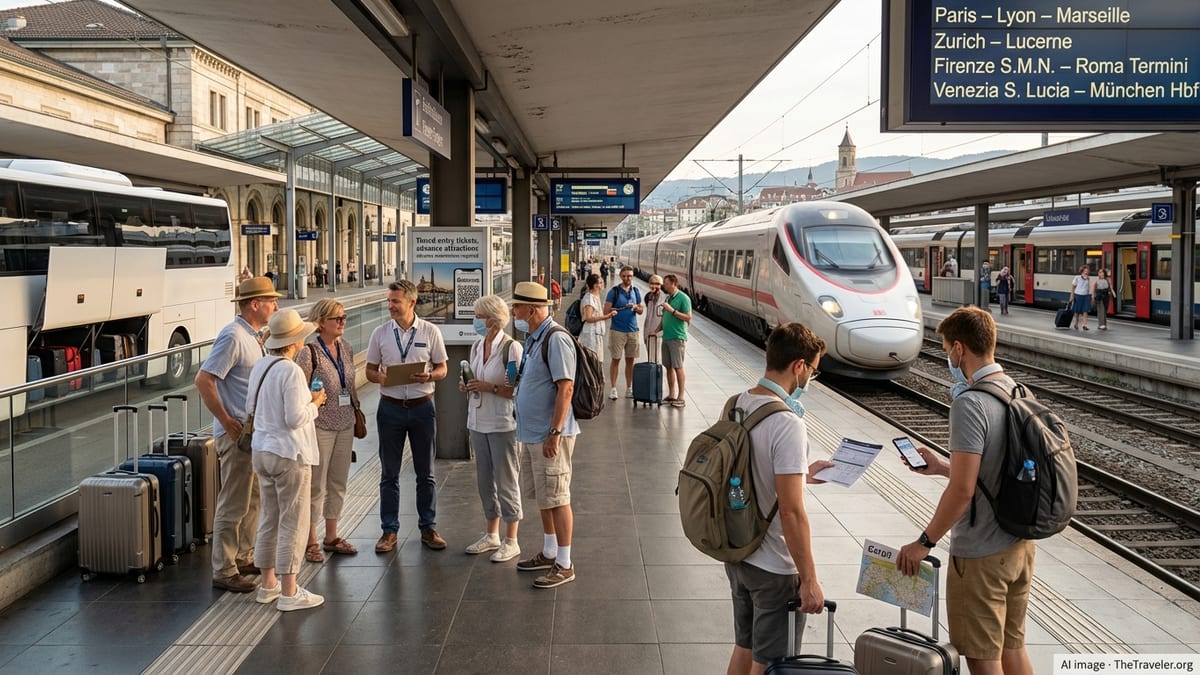
Travel information platforms draw attention to Sweden’s modern transport infrastructure, including major international airports, efficient intercity trains and frequent regional services that connect even relatively small towns. There is growing promotion of rail as a climate-friendly way to combine Sweden with neighboring Nordic countries, supported by cross-border routes to Denmark and Norway.
As climate concerns and shifting work patterns influence travel choices, Sweden is increasingly marketed as a place where visitors can combine urban culture with easy access to forests, lakes and coastlines. Industry reports suggest that the country’s blend of safety, environmental ambition and digital sophistication is helping to shape its image among international travelers in 2026.