


More news on this day
The United States is putting a renewed spotlight on long-distance rail tourism as the California Zephyr, one of Amtrak’s most celebrated routes, attracts travelers seeking slow, scenic journeys across the country.
Get the latest news straight to your inbox!
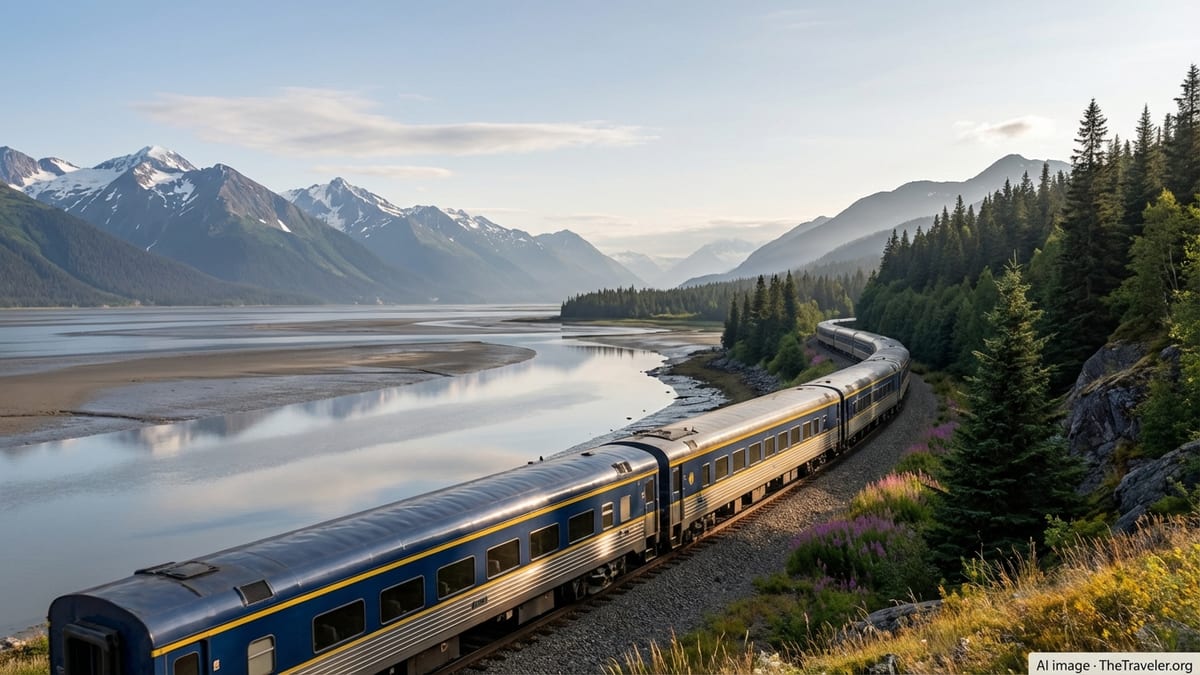
A Classic Route Recast as a Scenic Adventure
Stretching roughly 2,438 miles between Chicago and the San Francisco Bay Area, the California Zephyr has long been described in published coverage as one of the most scenic rail journeys in the United States. The route crosses the Great Plains before climbing into the Rocky Mountains and continuing through the desert canyons of Utah and the Sierra Nevada, giving passengers a cross-section of American landscapes in a single multi-day trip.
Recent travel and lifestyle reports have highlighted the train as a destination in its own right rather than just a means of transportation. Outlets including Travel + Leisure and regional travel magazines describe the Zephyr as an immersive way to experience dramatic scenery that is difficult to appreciate from highways or air corridors. The viewing lounges and large windows on the Superliner cars are frequently cited as a key part of the appeal for rail enthusiasts and first-time riders alike.
Publicly available ridership data and advocacy group fact sheets indicate that the Zephyr remains one of Amtrak’s best-known long-distance services. While passenger numbers dipped during the pandemic period, more recent documents and timetable information show the route continuing to operate daily, with interest supported by social media posts, trip reports and user-generated content that frame the journey as a bucket-list rail adventure.
Rail-focused publications and online communities have also contributed to renewed attention on the Zephyr. Trip reports shared on discussion forums in 2026 describe multi-day itineraries, often combining the Zephyr with other long-distance routes using rail passes, underscoring the way the train is being woven into broader scenic rail vacations across the United States.
From Chicago to California: Landscapes Along the Line
According to route guides and travel features, the Zephyr’s draw lies in its shifting scenery. Departing Chicago, the train moves through the farmlands of the Midwest before entering the plains of Nebraska and Iowa. These early segments set a contemplative tone, with wide horizons and small-town stations that emphasize the scale of the journey.
West of Denver, the experience becomes more overtly dramatic. Publicly available route descriptions and passenger accounts emphasize the climb into the Front Range and the passage through the Rockies, where the train follows the upper Colorado River and threads through canyons and tunnels. Many riders choose this portion specifically, timing trips to coincide with favorable daylight hours in order to see the mountain landscapes from the observation lounge.
Farther west, reports indicate that the Zephyr continues across Utah and Nevada, offering extended views of desert basins, high plateaus and distant ranges. Travel writers often note how the long, uninterrupted stretches highlight the remoteness of interior parts of the American West. The final approach into California includes mountain passes in the Sierra Nevada and a descent toward the Sacramento Valley and the Bay Area, often described in guidebooks as a fitting finale to the cross-country journey.
These changing backdrops have led multiple travel outlets and rail advocates to place the California Zephyr on lists of the most scenic routes in North America. The combination of river gorges, alpine terrain, agricultural heartland and coastal-adjacent endpoints positions the train as a compact overview of American geography for domestic and international visitors.
Comfort, Connectivity and Onboard Experience
As the Zephyr gains renewed attention as a scenic adventure, more coverage is focusing on what passengers can expect on board. Amtrak’s published information and independent travel guides describe a mix of coach seating and sleeping accommodations, plus dining and cafe services. The signature Sightseer Lounge, when available, remains a focal point for tourism-oriented travelers who want panoramic views and informal seating while the train traverses mountain and canyon segments.
Recent rail travel commentary points out that long-distance services, including the California Zephyr, offer a different kind of journey from corridor trains. Connectivity can be inconsistent in remote areas, and consumer travel sites advise riders to prepare for limited mobile data reception and varying onboard Wi-Fi performance. For some travelers, this limited connectivity is framed as part of the appeal, encouraging a slower pace filled with reading, conversation and landscape watching instead of screens.
Published reviews also highlight evolving food and beverage offerings and incremental upgrades elsewhere in the Amtrak network, suggesting a gradual effort to make long-distance trains more attractive to leisure travelers. Although improvements can vary by route and season, commentators note that enhancements to dining service and equipment on other lines contribute to an overall shift in expectations around long-distance rail in the United States.
Online trip reports from 2026 describe a wide range of experiences, from families booking roomettes to solo travelers riding in coach for the full journey between the Midwest and the West Coast. Many of these accounts portray the Zephyr as a shared social space where vacationers, backpackers and residents of smaller communities intersect, reinforcing its dual role as both scenic attraction and lifeline for intermediate towns.
Tourism Momentum and Wider Rail Travel Trends
Industry reports and travel features suggest that the California Zephyr’s growing profile fits into a broader surge of interest in rail-based tourism in the United States. National and regional media have noted that more travelers are exploring trains as lower-stress alternatives to air travel, especially for itineraries where the journey itself is part of the experience.
Coverage from outlets such as National Geographic and specialized rail publications indicates that, nationwide, new or upgraded services are appearing alongside existing long-distance routes. In this context, the Zephyr is frequently cited as a flagship example of the kind of slow travel many visitors are seeking, even as other scenic lines in the Pacific Northwest, the Southwest and along the California coast also market their views.
State and local tourism boards have increasingly incorporated long-distance rail into promotional messaging, emphasizing stations near national parks, mountain resorts and historic downtowns. Communities along the Zephyr corridor in Colorado, Utah, Nevada and California appear in travel articles that position the train as a convenient way to reach outdoor recreation hubs and cultural attractions without driving long distances.
At the same time, passenger rail advocacy organizations point to the Zephyr’s popularity as a case study in the potential for expanded service. Public presentations and reports argue that strong demand on established scenic routes can support investment in station improvements, accessibility upgrades and related infrastructure that benefit both residents and visitors.
Planning a Scenic Journey on the California Zephyr
For travelers considering a scenic rail adventure on the California Zephyr, current guides recommend careful planning to align expectations with the realities of long-distance travel. Because the route covers several states and crosses multiple time zones, trip planners advise building in flexibility for connections at either end, whether continuing on to San Francisco by bus from Emeryville or linking to other Amtrak routes from Chicago.
Publicly available timetables and unofficial route guides show that the most photogenic segments, particularly through the Rockies and Sierra Nevada, are generally scheduled during daylight. Travel writers therefore suggest choosing departure dates that maximize daylight during the sections that interest riders most, and considering seasonal factors such as snow in winter or longer days in summer.
Advisory articles also underscore the importance of booking accommodation types that match comfort needs on a journey that can last more than two days end to end. Coach passengers are often encouraged to bring travel pillows, snacks and layers, while those booking private rooms weigh the added cost against privacy and included meals. Many accounts emphasize that preparation can significantly enhance the enjoyment of the scenery and onboard experience.
As attention to rail travel grows, the California Zephyr is emerging as a focal point for travelers who want to experience the United States at ground level. With its combination of dramatic landscapes, classic rail culture and evolving onboard amenities, the route is poised to remain a leading option for scenic rail adventures as interest in slow, low-stress travel continues to build.