


More news on this day
Airline passengers in the United States are enduring the most unreliable year of flying in more than a decade, as new analysis of federal transportation data shows that flight delays and prolonged tarmac waits have climbed to their worst levels in years even while cancellation rates remain historically low.
Get the latest news straight to your inbox!
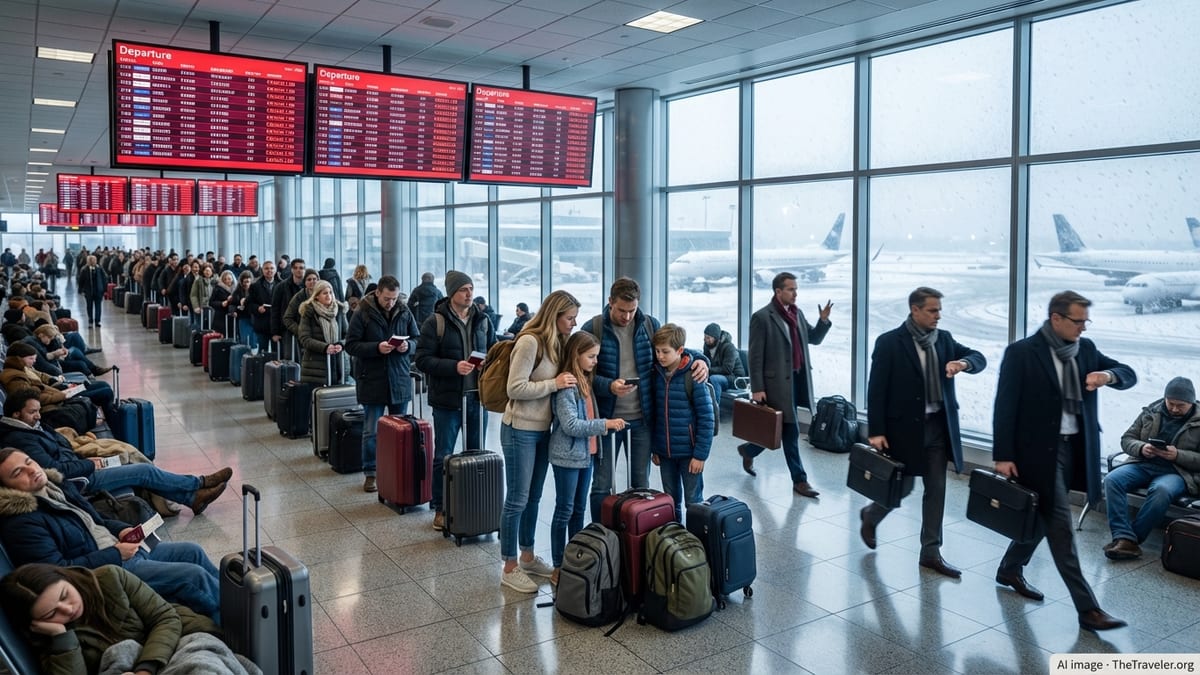
On-time performance slides as demand soars
Publicly available summaries of federal Air Travel Consumer Reports indicate that roughly 78 percent of US flights arrived on time in 2024, slightly below the previous year and marking a reversal of the post-pandemic improvement trend. Early assessments of 2025 performance suggest that the share of flights arriving on schedule dropped further, pushing overall punctuality to its weakest point since the mid-2010s, just as passenger volumes approached or exceeded record highs.
Industry analyses of the same government data describe 2025 as the most difficult year for on-time operations in more than a decade, with a greater proportion of flights arriving 15 minutes or more behind schedule and a noticeable uptick in severe delays. While travelers saw fewer outright cancellations than during the tumultuous summer of 2022, many more found themselves sitting in terminals or aboard aircraft waiting for late departures and congested arrival slots.
Transportation statistics compiled in recent federal reports show that delay levels had already exceeded pre-pandemic norms by 2023, and that congestion in busy hubs has intensified as airlines rebuilt their schedules. The latest consumer-focused analysis indicates that these strains deepened last year, underscoring how tightly stretched the system has become under sustained high demand.
Long tarmac waits surge to highest levels since rule took effect
The sharpest warning sign in the new report involves long tarmac delays, the extended on-ground waits that federal rules were designed to all but eliminate more than a decade ago. Those rules generally require airlines to give passengers the option to deplane if a domestic flight has been sitting on the tarmac for three hours, or four hours for most international services, subject to limited safety and operational exceptions.
According to recent public summaries of federal data, domestic flights exceeding the three-hour tarmac threshold jumped by more than 60 percent in 2025 compared with the previous year. Consumer advocates reviewing the same figures note that this represents the largest volume of extended tarmac waits since the current rules took effect around 2010, indicating that what was once considered an extraordinary failure of operations is again becoming more common.
Earlier Air Travel Consumer Reports covering 2024 already showed a steady rise in lengthy ground holds, listing dozens of domestic flights each month that remained on the tarmac beyond three hours and a smaller but persistent number of international services surpassing four hours. The latest analysis suggests that 2025 pushed these trends further, turning sporadic incidents into a systemic concern affecting tens of thousands of passengers.
Multiple pressures strain an aging, congested system
Transportation statistics and industry briefings point to a combination of factors behind the deteriorating reliability. Airlines scheduled aggressively into peak travel periods as demand rebounded, leaving less slack in daily operations to absorb storms, equipment issues or air traffic control restrictions. When one part of the network falters, late arriving aircraft ripple through subsequent flights, compounding delays across the day.
Federal transportation data show that a significant share of delays now fall into categories tied to factors within airlines’ control, including maintenance, crew scheduling and aircraft turnaround times. At the same time, national aviation system delays linked to nonextreme weather, heavy traffic and airport operations have remained elevated at major hubs, reflecting how crowded the skies and runways have become during busy travel windows.
Longer term trends also play a role. Transportation statistics compiled in recent annual reports highlight that the average age of US commercial aircraft has risen in recent years, which can contribute to more frequent maintenance needs. Meanwhile, staffing challenges, particularly in air traffic control, have prompted flow restrictions in certain regions during peak hours, adding another layer of constraints that can trap aircraft on the ground waiting for departure or arrival slots.
Consumer frustration grows despite stronger protections
The worsening reliability comes even as federal authorities highlight historically low cancellation rates and expanded consumer protections. Publicly available federal summaries note that outright cancellations declined notably after the disruptions of 2022, and that major airlines have adopted more generous policies for rebooking and providing meals or hotel accommodations when delays are attributed to carrier-controlled causes.
For travelers, however, the new figures on delays and tarmac waits help explain why flying can feel more punishing despite fewer canceled flights. Passengers may ultimately reach their destinations on the same day, but often after spending hours in crowded departure halls or confined aircraft cabins without clear information about when they will be able to move.
Consumer groups that regularly review federal data have called the latest delay and tarmac statistics a sign that enforcement of existing rules and scrutiny of carrier scheduling practices will remain central issues in the years ahead. With extended ground holds and missed on-time targets now at their worst levels in years, many advocates argue that measuring success purely by lower cancellation rates no longer reflects the day-to-day reality facing US flyers.
What travelers can expect heading into peak seasons
Analysts following federal performance metrics say they see little indication that delays will quickly return to pre-pandemic norms without broader changes in capacity, staffing and scheduling practices. High demand for leisure travel, combined with heavy summer and holiday traffic, suggests that pressure on the system will remain intense during peak periods.
Recent airport-level analyses show that congestion remains particularly acute at some of the nation’s busiest hubs, where a combination of frequent thunderstorms, crowded airspace and tightly timed banked schedules leaves minimal room for recovery when operations are disrupted. In those environments, even short gaps in staffing or minor technical problems can cascade into late-day waves of delays and longer ground holds.
Travel experts who monitor these trends suggest that passengers build additional time into itineraries that require connections, aim for earlier departures when feasible, and remain alert to schedule changes in the days leading up to departure. With the latest data indicating that both routine delays and extreme tarmac waits have reached their worst levels in many years, travelers heading into the next peak season may need to plan around a level of uncertainty that has become an embedded feature of US air travel rather than an exception.